
Find your next step from your current situation.
Read an article directly by symptom, or answer questions to organize contact order. For danger signs or uncertainty, switch to safety guidance. This is not diagnosis or a safety assessment.
Stop entering information if you are in danger.From safety, call 119 for fire or rescue and 110 for immediate danger. In disasters, prioritize municipal evacuation information.
What is troubling you now?
Open the closest symptom to find your first article. Technical work names are unnecessary.
Water dripping from the ceilingWorried about leaks or water stains
Keep away from wet electrical equipment or ceilings that may fall. Assess from a safe place.
Roof or gutter damageDisplaced roof tiles and overflowing rainwater
Do not climb onto the roof. Record what you can see from a safe place on the ground.
Home damaged by an earthquakeCracks, leaning and repair priorities
Do not judge access or safety alone; prioritize municipal guidance and building checks.
Home or crawl space floodingWorried about mud, drying and cleanup
Safety and municipal guidance first. Do not independently restore power to wet equipment.
Water supply or pipe leaksWater will not stop / Cause unknown
Stay away from wet electrical equipment. In rentals, tell management or the landlord.
Who can help with snow?Roof snow, pathways and snow hauling
Separate roof snow removal from ground shoveling and hauling to define the work needed.
I want to deal with garden weedsMowing, disposal and regrowth prevention
Clarify work scope and plants to keep. Check whether grass collection and disposal are included.
Worried about pests or a wasp nestI do not know the pest type or treatment cost
Do not approach or assume the species. Record where and when it was found.
Noises from the atticWorried about animals entering or returning
Record sound times and locations without entering the attic. Do not seal holes before confirming departure.
If smoke, falling debris or wet electrical equipment creates danger, move to safety before browsing articles. Read precautions for wet electrical equipment →
Move to safety; call 119 for fire or rescue. For flood or landslide risk, prioritize municipal evacuation information.
Check safety before reading the article
If there is danger or you cannot judge, move to safety.
Do not photograph or operate equipment in unsafe areas. Call 119 for fire or rescue.
Record times and symptoms, then contact management or a repair service. This is not a finding that safety is guaranteed.
Read the guide directly

What should you do first when rain leaks into your home?
When water drips from the ceiling, organize what you can and must not do: safety, moving belongings, photos, and explaining the problem to providers.

Tiles displaced or blown off by a typhoon: first steps and providers
If tiles or ridge flashing blow away: ground-level records, surrounding safety, and the order for temporary work, repairs, and insurance.
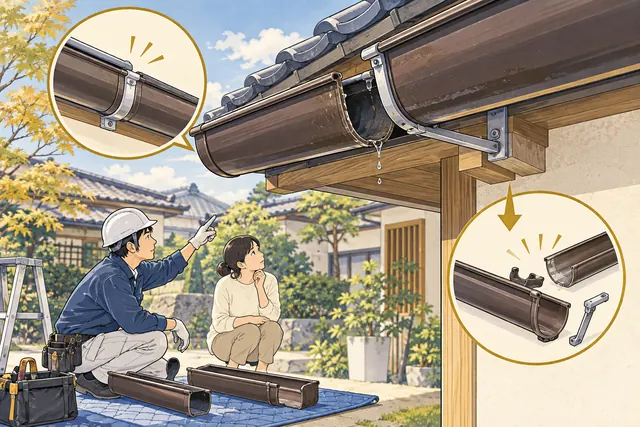
Detached gutters: who to hire and repair or replacement checks
Detached gutters, joint leaks, and overflow: contacts such as sheet-metal or roofing providers, and questions on repair versus replacement.

Flooded homes, restoration order before cleanup.
Evacuation, safety, damage records, cleanup/drying, electrical checks and interiors: steps for calm flood recovery.

Electrical equipment wet from leaks or flooding—do not touch; consult before powering.
Wet lights/outlets, flooded distribution boards and power restoration: avoid danger and know what to tell professionals.

Rental rain or plumbing leaks, contacts before ordering repairs yourself.
When tenants notice problems: contacting management or landlords, photos, costs, and emergency actions.
What you can do at home before a disaster.
Pre-typhoon steps, indoor earthquake measures, and local information: organize prevention alongside post-disaster restoration.
Choose disaster preparation articles →