
Prioritize evacuation information and building safety. Record once safe; restore interiors after cleaning, drying and electrical checks. Do not energize wet equipment yourself.
Understand this article's terms in plain language
- Cleaning and disinfection
- Dirt removal and disinfection are separate. Check official or specialist guidance for post-flood need and methods.
- Check drying inside
- Check necessary areas beyond floor or wall surfaces. Ask conditions for restoring finishes.
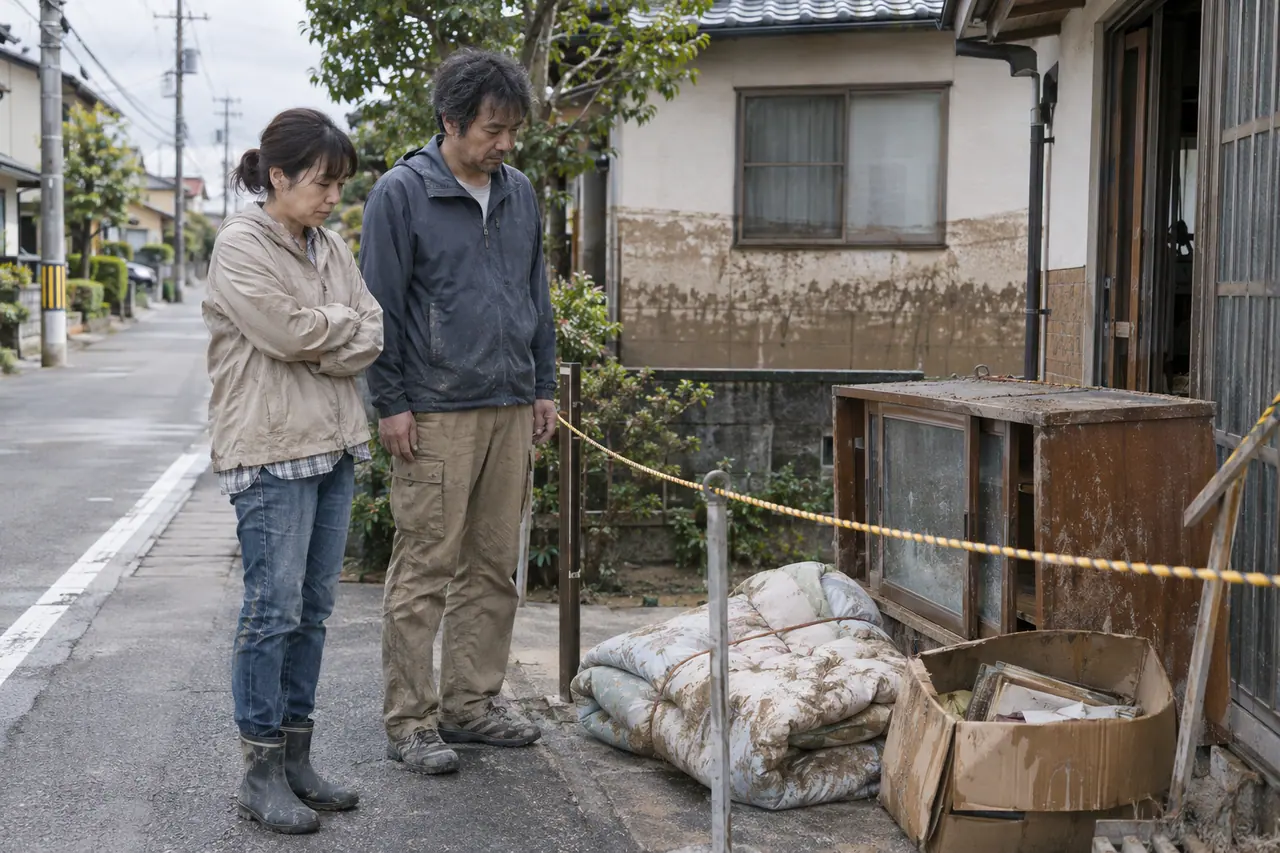
- 01
Follow evacuation information and check whether it is safe to return
- 02
Safely photograph flood marks and damage
- 03
Plan cleaning, drying and equipment checks
Water receding does not mean immediate reuse is safe
Hazards include electricity, damaged floors, sludge, and glass. Do not power equipment containing water or mud; have boards and wiring checked professionally. Do not enter underfloors or confined spaces yourself; discuss scope.
The water is back. Can you cook or flush the toilet?
Check drinking water and building drainage separately. Water coming out of the tap tells you only that water is flowing.
- Drinking and cooking
Check your local authority or water utility’s notice for 飲用可 (safe to drink). Use drinking water you have stored or another confirmed safe supply in the meantime. If a well flooded, have the water tested before drinking or cooking with it. - Food in the fridge or freezer
Discard food that needed refrigeration or freezing if it was unable to stay cold enough during the outage. Discard prepared food, raw produce and food in screw-top containers if floodwater may have reached them. - Toilets and sinks in an apartment building
Ask building management whether the drains are safe to use. While drainage is restricted, avoid flushing or pouring water down the sink and follow the building’s instructions.
Ministry of Agriculture guidance on food and water (Japanese) · Ministry of Land, Infrastructure, Transport and Tourism guidance on apartment drainage (Japanese PDF)
Separate stopping the cause from restoring the interior
Before restoring appearance, check the cause and plans for drying and inspections.
- 01Safety checks and cause investigation
List unusable areas and affected equipment
- 02Address causes and necessary inspections
Discuss leak causes, drying and equipment inspections
- 03Interior restoration and resuming use
Restore finishes and check conditions for resuming use
Records to keep before clearing up
Photograph walls showing water height, whole rooms, and damaged fittings and belongings. If possible, photograph and list items before disposal. Also check municipal disaster-waste rules, disaster-certificate applications, and assistance programs.
Consider cleaning and drying first
The Ministry of Health, Labour and Welfare says removing mud, thorough cleaning and drying come first after flooding. Do not rely on disinfectant alone; ask the public-health centre as appropriate for the contamination and intended use. Do not mix chemicals by your own method or spray large amounts without checking the need.
Checks before restoring interiors
Conditions underneath or inside floors and walls, not just visible surfaces, affect restoration work. Ask how far removal goes, how drying is verified and when finishes are restored. Resuming electricity, water, drainage or air conditioning is decided from each inspection result.
Divide responsibilities when combining requests
Clarify who handles cleanup, drying, electricity, plumbing, interiors, and coordination. The repairer may not guarantee every installation’s safety. Treat construction and government applications as separate procedures.
Separate support services from repair contractors
Frequently asked questions about this topic
Can wallpaper be applied once the floor looks dry?
The surface alone cannot reveal internal conditions. Check with a restoration professional before proceeding.
FAQ and related guidance checked October 4, 2026. Ask relevant contacts about individual conditions, current acceptance, and programs.
Content errors, rights concerns or service information changes:Contact Kaneyoshi Miwa (Japan Product Management). Include the page URL and relevant passage. This is for routine inquiries, not emergency reporting.
What to learn next
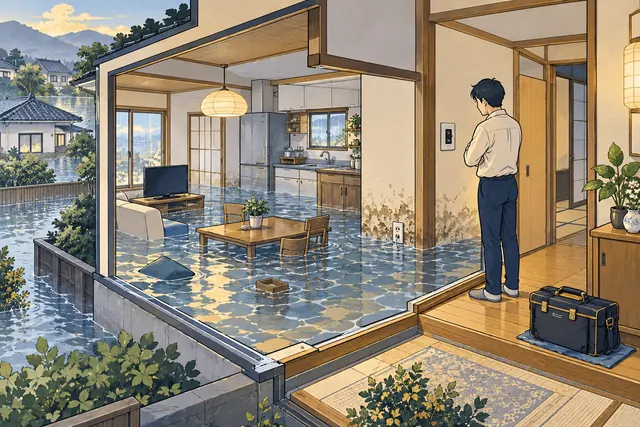
Electrical equipment wet from leaks or flooding—do not touch; consult before powering.
Wet lights/outlets, flooded distribution boards and power restoration: avoid danger and know what to tell professionals.
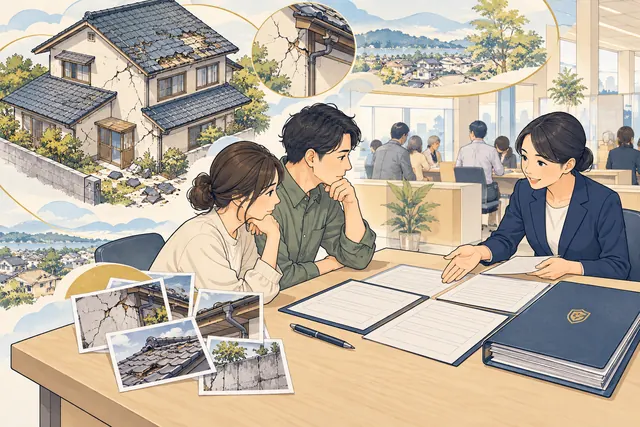
Disaster certificates, insurance and support: what to ask local government before repairs
Home damage certification, insurance claims and disaster support are separate procedures. Identify contacts and pre-work requirements.
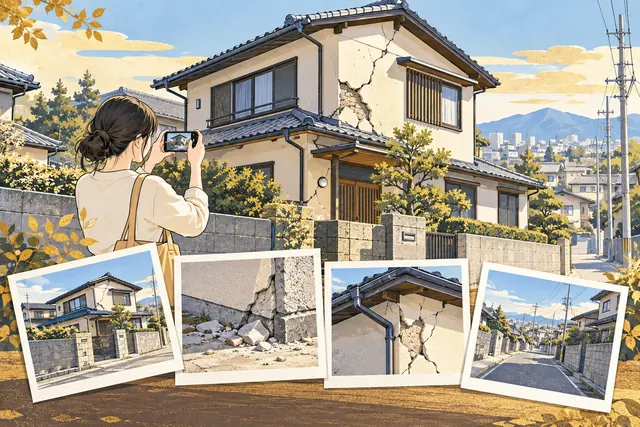
Pre-repair photos: building, location, close-ups, and wider views
Organize photos for provider consultations, damage records, and insurance checks. Avoid unsafe photography; show when, where, and what.
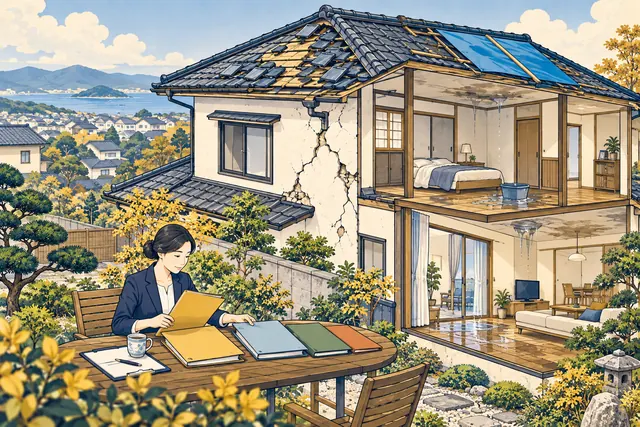
Multiple building damages: roof, wall and interior restoration
Multiple typhoon or flood damage: organize safety, investigation, restoration priorities, and coordination.
Things to know about housing in Japan
Rules differ by building and rental agreement. Ask your property manager or local municipality if you are unsure.
In a rented home, contact the manager before ordering repairs
Tell your property manager or landlord about the problem first. Before making your own contract, check who to contact, who pays and what work is covered.
Corridors and balconies may form part of an escape route
Keep shared corridors, balcony partitions (隔て板) and escape hatches (避難ハッチ) clear of belongings. Ask the property manager about your building's rules. Do not break partitions or open escape equipment for practice on your own.
An evacuation site and a shelter may serve different purposes
A designated emergency evacuation site (指定緊急避難場所) is a place to escape immediate disaster danger. A designated evacuation shelter (指定避難所) is a facility for staying after evacuation. Check the disaster type and your municipality's instructions.
Read current official disaster information in your language
JMA / English
Reference: Cabinet Office guidance on evacuation sites and shelters
Words used in this article
Short explanations, with the Japanese words you may hear in everyday life.
- Restoration 復旧(fukkyuu)
Work to make something usable again after a disaster or other damage.
Check the necessary order with professionals, including safety checks, finding the cause and repairs.
- Local authority 自治体(jichitai / shikuchouson)
The administration of your city, ward, town, village or prefecture.
Use your area's official website or office to check evacuation sites and post-disaster procedures.
- Property management company 管理会社(kanri gaisha)
A company appointed to manage a building and handle contact on the owner's behalf.
For a rented home or apartment building, check the contact details in your agreement or building notices.
- Landlord 大家(ooya / kashinushi)
The person or company renting out a room or home.
Check whether repairs should be reported to the landlord or management company before arranging work yourself.
- Shared corridor 共用廊下(kyouyou rouka)
A passage used by multiple residents in a multi-unit building, sometimes also an escape route.
Check rules for belongings and bicycles and do not block passage or evacuation.
- Balcony partition panel 隔て板(hedateita / shikiri ita)
A panel between neighbouring balconies; some are designed as part of an emergency escape route.
Ask the manager whether it is for escape and how to use it; keep it clear and do not break it for practice.
- Emergency escape hatch 避難ハッチ(hinan hacchi)
A covered opening in a balcony floor or similar location used for escape to a lower floor.
Check building instructions with the manager, keep it clear, and do not open or descend it alone for practice.
- Emergency escape equipment 避難器具(hinan kigu)
Equipment such as ladders installed to help people escape a building in an emergency.
Ask the manager about its location and use beforehand, keep it clear, and do not open or descend it alone just to practise.
- Designated emergency evacuation site 指定緊急避難場所(shitei kinkyuu hinan basho)
A place officially designated for escaping an immediate disaster danger.
Sites are designated by disaster type. Check suitability for the current hazard, not just distance.
- Evacuation shelter 避難所(hinanjo / shitei hinanjo)
A facility where people unable to return home after a disaster can stay temporarily.
Its purpose differs from an immediate escape site. Check which shelters are open with local authorities.
Plain-language explanations by Tatemono Fukkyu Note. They are not an assessment of your building or an individual evacuation decision.