
Stay off the roof and away from falling debris. Record safely and ask a contractor familiar with your roofing for temporary and permanent work separately.
Understand this article's terms in plain language
- Temporary measures
- Temporary measures to limit further damage. Check these separately from permanent repairs and fixing the cause.
- Cause investigation
- Investigation of water-entry routes and similar issues. Ask methods, cost, and uncheckable areas.
- Scaffolding and protection
- Scaffolding supports work at height; protection shields surrounding items and areas. Check quote scope.
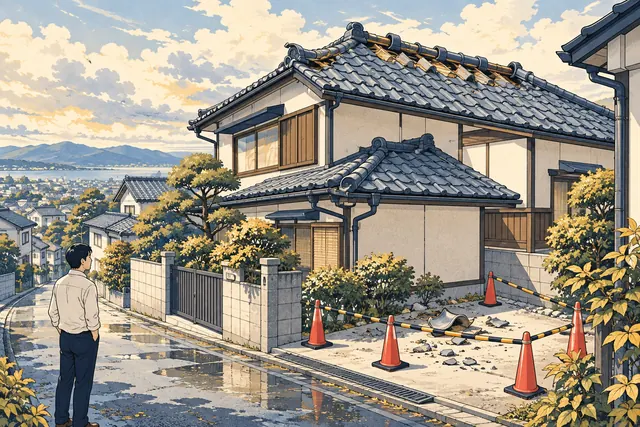
- 01
Keep away from areas at risk of falling or flying debris
- 02
Record photos and the discovery time from a safe place on the ground
- 03
Report the roof type and whether water is leaking indoors
Report roof damage together with the damage indoors
Even if roof tiles lie on the ground, you do not need to climb up to find where they came from. Record the whole building, visible damage and indoor stains. Stop outdoor checks while winds continue and prioritize local-authority and meteorological information.
Check safety before reading the article
If there is danger or you cannot judge, move to safety.
Do not photograph or operate equipment in unsafe areas. Call 119 for fire or rescue.
Record times and symptoms, then contact management or a repair service. This is not a finding that safety is guaranteed.
The right provider depends on roof material and damage
Check tile-roof experience for tiles, sheet-metal experience for metal roofing or ridge flashing, and waterproofing experience for waterproof layers. You can also consult a general builder. If walls or interiors are damaged too, ask how investigations and work will be coordinated.
Putting up a blue tarp is not the end
Temporary covering is an interim measure until permanent repairs. Check suitable weather, fastening methods, inspection or refitting, and the expected wait for repairs. Separately deciding on the covering fee and permanent repair contract helps avoid rushed decisions.
When you worry about neighbors or passersby
Do not pull unstable components yourself or step into the road to clear them. Notify the manager and relevant contacts of the danger and seek advice on securing safety. Liability and compensation depend on the cause and circumstances; do not decide them on the spot, and check with the insurer or other relevant party.
Frequently asked questions about this topic
Should repairs wait for the insurer's answer?
Prioritize avoiding danger. If safe, photograph and contact insurers before emergency work. If it cannot wait, save work details/receipts and ask about documents afterward.
FAQ and related guidance checked October 4, 2026. Ask relevant contacts about individual conditions, current acceptance, and programs.
Content errors, rights concerns or service information changes:Contact Kaneyoshi Miwa (Japan Product Management). Include the page URL and relevant passage. This is for routine inquiries, not emergency reporting.
What to learn next
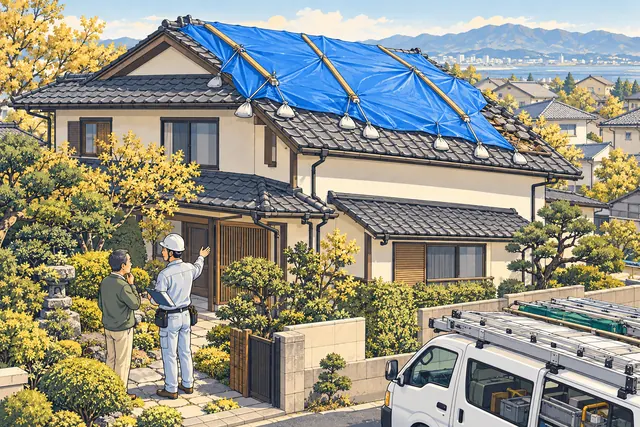
Whom to hire for roof tarps: temporary protection precautions
Temporary roof protection after typhoon or earthquake damage. Do not climb yourself; check scope, costs and upkeep until permanent repair.
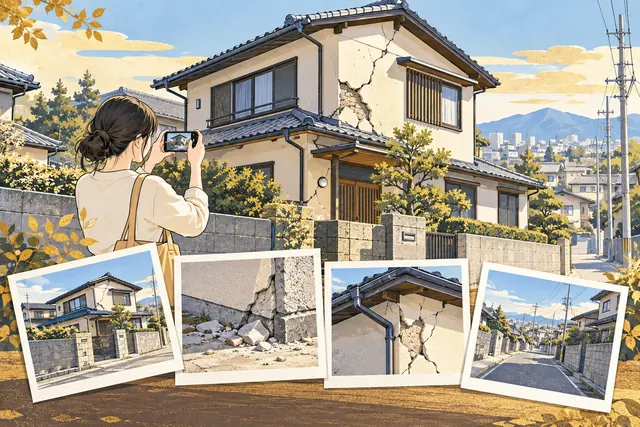
Pre-repair photos: building, location, close-ups, and wider views
Organize photos for provider consultations, damage records, and insurance checks. Avoid unsafe photography; show when, where, and what.

Does fire insurance cover rain leaks? Ask your insurer before signing
A rain leak alone does not establish insurance cover. Prepare questions about cause, policy terms, deductibles, photos and quotes.
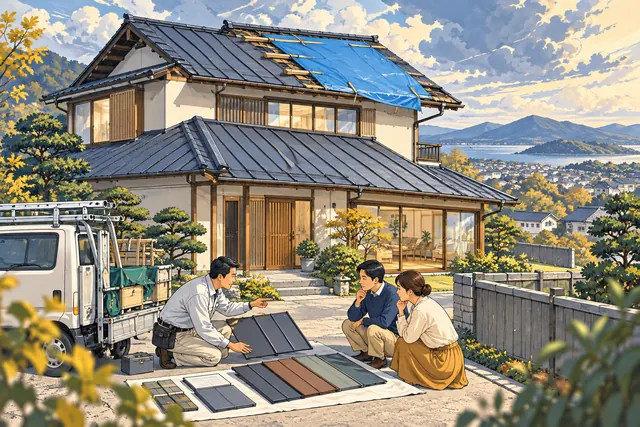
Roof damage repairs: align conditions from temporary protection to permanent repair
Typhoon-shifted tiles or lifted ridge flashing: choose for materials and damage, and check temporary and permanent work separately.
Words used in this article
Short explanations, with the Japanese words you may hear in everyday life.
- Scaffolding 足場(ashiba)
A structure assembled so workers can carry out work safely at height.
Whether it is needed depends on the height and work location. Do not climb it yourself.
- Sheet-metal work 板金(bankin)
Building parts made by shaping thin metal sheets, often used at roof edges and joints.
Ask which metal parts and locations the estimate covers.
- Waterproofing 防水(bousui)
Materials or work that help keep water out of a building.
The right repair depends on the damage and its cause.
Plain-language explanations by Tatemono Fukkyu Note. They are not an assessment of your building or an individual evacuation decision.