
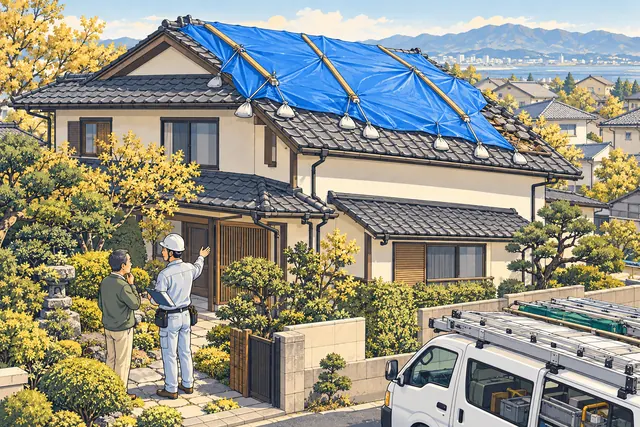
Roof tarping carries a fall risk. Do not climb yourself; ask a provider handling temporary roof protection about costs and its temporary nature.
Understand this article's terms in plain language
- Temporary measures
- Temporary measures to limit further damage. Check these separately from permanent repairs and fixing the cause.
- Scaffolding and protection
- Scaffolding supports work at height; protection shields surrounding items and areas. Check quote scope.
- Quote total
- Check how much travel, investigation, materials, work and disposal the price includes. Ask separately from the advertised minimum.
- 01
Ensure indoor safety without climbing onto the roof
- 02
Ask about availability, cost and timing for temporary protection
- 03
Check inspection and sheet reinstallation terms until permanent repair
What to explain before requesting work
Give floors, roof material, visible damage, leaks, occupancy, and vehicle or scaffolding space. Safe photos suffice. Even professionals may be unable to work in bad weather.
Ask separately about a visit today and a repair today
Check dates and costs separately for visits, temporary work and permanent repairs.
- 01Visit and cause investigation
Possible visit dates, call-out and inspection fees
- 02Temporary measures
Work limits, night charges and limits of effectiveness
- 03Permanent repairs
Parts, scaffolding, duration and extra-work terms
Sheeting prices alone are not enough for comparison
Check inclusion of travel, height work, safety measures, materials, removal, repeat visits, night and holiday fees. Before hiring post-disaster door-to-door sellers, request the company name, scope, and total in writing.
What to do while waiting for full repairs
Report renewed indoor leaks or wind-flapping sounds. Do not climb up to reinforce it yourself. Agree on covering checks, refitting fees, and who removes it.
Frequently asked questions about this topic
Will a sheet completely stop the leak?
It may not stop completely. Rain, wind and damage location limit effectiveness; it does not replace permanent repair.
FAQ and related guidance checked October 4, 2026. Ask relevant contacts about individual conditions, current acceptance, and programs.
Content errors, rights concerns or service information changes:Contact Kaneyoshi Miwa (Japan Product Management). Include the page URL and relevant passage. This is for routine inquiries, not emergency reporting.
What to learn next

Tiles displaced or blown off by a typhoon: first steps and providers
If tiles or ridge flashing blow away: ground-level records, surrounding safety, and the order for temporary work, repairs, and insurance.
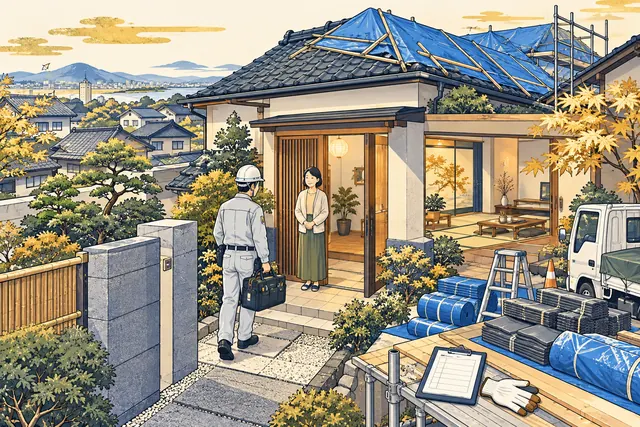
Urgent roof repairs: a visit today versus a completed repair today
Urgent repairs can blur reception, site checks, temporary measures and main work. Clarify which conditions take priority.

Roof damage repairs: align conditions from temporary protection to permanent repair
Typhoon-shifted tiles or lifted ridge flashing: choose for materials and damage, and check temporary and permanent work separately.
Words used in this article
Short explanations, with the Japanese words you may hear in everyday life.
- Scaffolding 足場(ashiba)
A structure assembled so workers can carry out work safely at height.
Whether it is needed depends on the height and work location. Do not climb it yourself.
Plain-language explanations by Tatemono Fukkyu Note. They are not an assessment of your building or an individual evacuation decision.