
Accepting a request, visiting, providing temporary measures, and permanent repair are different. Confirm exactly what can happen when.
Understand this article's terms in plain language
- Temporary measures
- Temporary measures to limit further damage. Check these separately from permanent repairs and fixing the cause.
- Cause investigation
- Investigation of water-entry routes and similar issues. Ask methods, cost, and uncheckable areas.
- Scaffolding and protection
- Scaffolding supports work at height; protection shields surrounding items and areas. Check quote scope.
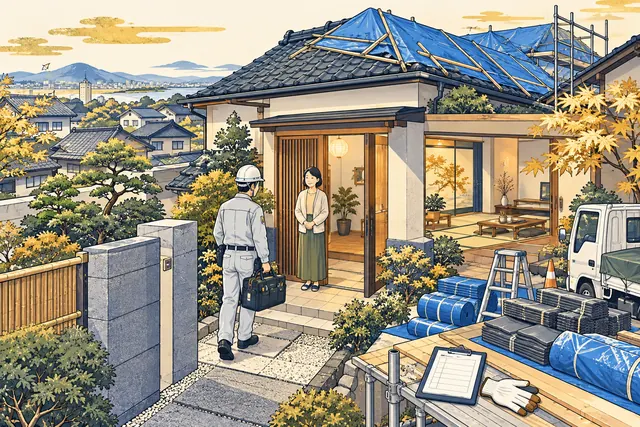
- 01
Explain whether you need safety measures or temporary repairs today
- 02
Ask separately about visit, initial work and full-repair dates
- 03
Check nighttime fees, cancellation fees and work scope
Do not mix up the four times
The time you reach someone by phone or web, the inspector's arrival, the time temporary protection can be provided and the completion of full repairs after parts are obtained are different. During disasters these depend on weather, access, materials and availability. Ask the conditions behind “fastest” claims.
Ask separately about a visit today and a repair today
Check dates and costs separately for visits, temporary work and permanent repairs.
- 01Visit and cause investigation
Possible visit dates, call-out and inspection fees
- 02Temporary measures
Work limits, night charges and limits of effectiveness
- 03Permanent repairs
Parts, scaffolding, duration and extra-work terms
Conditions not to skip in an urgent comparison
Even when urgent, check the total, scope, contracting party and how extra work will be communicated. Have verbal agreements recorded in messages or writing. If a high price is first explained on site, distinguish the need to avoid danger from immediately agreeing to all main work.
When you cannot quickly find a contractor
Avoid dangerous rooms and fall zones; stay elsewhere if needed. Check eligibility and conditions for any municipal temporary-response contact. This site does not accept rescue or emergency dispatch requests.
Frequently asked questions about this topic
Does 24-hour reception mean a nighttime visit?
Reception hours differ from on-site service hours. Check area, work and weather restrictions too.
FAQ and related guidance checked October 4, 2026. Ask relevant contacts about individual conditions, current acceptance, and programs.
Content errors, rights concerns or service information changes:Contact Kaneyoshi Miwa (Japan Product Management). Include the page URL and relevant passage. This is for routine inquiries, not emergency reporting.
What to learn next
Tiles displaced or blown off by a typhoon: first steps and providers
If tiles or ridge flashing blow away: ground-level records, surrounding safety, and the order for temporary work, repairs, and insurance.
Whom to hire for roof tarps: temporary protection precautions
Temporary roof protection after typhoon or earthquake damage. Do not climb yourself; check scope, costs and upkeep until permanent repair.

Roof-repair quotes: eight comparison items beyond price
A practical checklist for comparing equivalent quotes: inspections, scaffolding, repair scope, dates, warranty and extras.

Whom to hire for building repairs: contractors, comparison sites and Fukkyu Idaten
Warranty, rentals, routine work and urgent repairs: choose existing contacts, specialists or comparison services for your situation.
Before arranging repairs in Japan
You do not need to rush a decision when you do not understand the documents or explanation.
An estimate and a contract have different purposes
An estimate (見積書) describes proposed work and its price. If you do not understand what you would be agreeing to, ask about the work, extra charges and schedule before deciding.
If communicating in Japanese is difficult
Ask in advance whether an interpreter can help and which languages the provider supports. Translated articles do not mean that our phone service or contractors provide English or Vietnamese support.
Reference: Housing Renovation and Dispute Settlement Support Center — estimate consultations
Words used in this article
Short explanations, with the Japanese words you may hear in everyday life.
- Scaffolding 足場(ashiba)
A structure assembled so workers can carry out work safely at height.
Whether it is needed depends on the height and work location. Do not climb it yourself.
- Written estimate 見積書(mitsumorisho / mitsumori)
A document showing proposed work, materials and costs before you place an order.
Ask for explanations of Japanese wording you do not understand before signing an agreement.
- Additional charges 追加費用(tsuika hiyou / tsuika ryoukin)
Costs added later to the amount first proposed.
Confirm the extra work, reason and amount in writing before that work starts.
Plain-language explanations by Tatemono Fukkyu Note. They are not an assessment of your building or an individual evacuation decision.