
First move away from wet electrical fittings or a bulging ceiling and get to a safe place. If it is safe, catch the water indoors, move belongings and record the time, rain conditions and damaged areas. In a rental, contact the management company or landlord; for an owned home, contact the previous contractor or a provider who investigates the cause.
- 01
Keep people away from wet electrics and ceilings at risk of falling
- 02
Catch water and move belongings only where safe indoors
- 03
Record time, rainfall, and damage before consulting
Conditions requiring you to leave the room immediately
Do not use the area if the ceiling bulges or sags, parts fall, the surroundings of lights or sockets are wet, or there is a burning smell or smoke. Do not touch wet switches or electrical equipment, or enter a dangerous place to operate a breaker. If fire or rescue assistance is needed, call 119 from a safe location.
Check safety before reading the article
If there is danger or you cannot judge, move to safety.
Do not photograph or operate equipment in unsafe areas. Call 119 for fire or rescue.
Record times and symptoms, then contact management or a repair service. This is not a finding that safety is guaranteed.
Once you are safe, choose the guide that fits your situation.
If the area is safe, catch the water and move belongings
Only where you can confirm safety, put a container on the floor and use towels to limit splashes. Move belongings and documents somewhere dry. Forcing the water outlet shut or opening a hole in the ceiling may redirect water elsewhere. The visible drip location alone does not identify where water entered.
Keep a record and tell the right contact
A leak may stop temporarily when rain stops. Recording rain intensity, wind direction, hours between rain starting and leakage, and whether it happened before helps explain conditions for recurrence. Pair whole-room photos with close views of the damage.
For a rental, contact the manager or landlord. For your own home, share the facts you know with your existing contractor or a service that investigates causes. Do not approach a dangerous area just to take photographs.
Rain leak in a rental home in Japan? Who to tell first
- Get to safety before taking photos. Keep away from wet lights, outlets and switches, and move out from under any bulging ceiling. If you see fire or smoke, call 119 from a safe place.
- Tell the property manager or landlord promptly. Find their contact details in your lease or move-in guide. At night or on a holiday, use any after-hours contact listed there. Report the time, location, whether water is still dripping and whether it is near electrical fittings, as far as you can tell safely. You can report it before you have any photos.
- Take photos only from a safe spot. Show where the wet area is in the room and what the stain or dripping looks like. Skip any photo that would require going closer to a hazard or climbing a step ladder.
Japanese message to copy. Replace the parts in brackets.
件名:室内の水漏れのご連絡
[建物名・部屋番号、または住所]の[氏名]です。
[月日・時刻]ごろ、[場所]で水漏れに気づきました。現在は[水が落ち続けている/止まった/不明]状態です。
点検の手配と、それまでの対応を教えていただけますか。時間外に連絡する場合の窓口も教えてください。
折り返しは[電話番号またはメールアドレス]へお願いいたします。
What it says. Subject: Water leak inside the home. “This is [name] at [building and unit, or address]. I noticed a leak at [place] at about [date and time]. The water [is still dripping / has stopped / status unknown]. Could you arrange an inspection and tell me what to do in the meantime? Who should I contact outside business hours? Please reply to [phone or email].”
When they reply, ask when someone can inspect the leak and whether you can use the room or lights in the meantime. Keep a record. Share photos and contact details only with the recipient you verified in your lease or other tenancy documents.
MLIT rental housing Q&A, question 10 (Japanese) · Tokyo’s guidance on electrical safety near water (Japanese) · Government guide to photographing disaster damage (Japanese PDF)
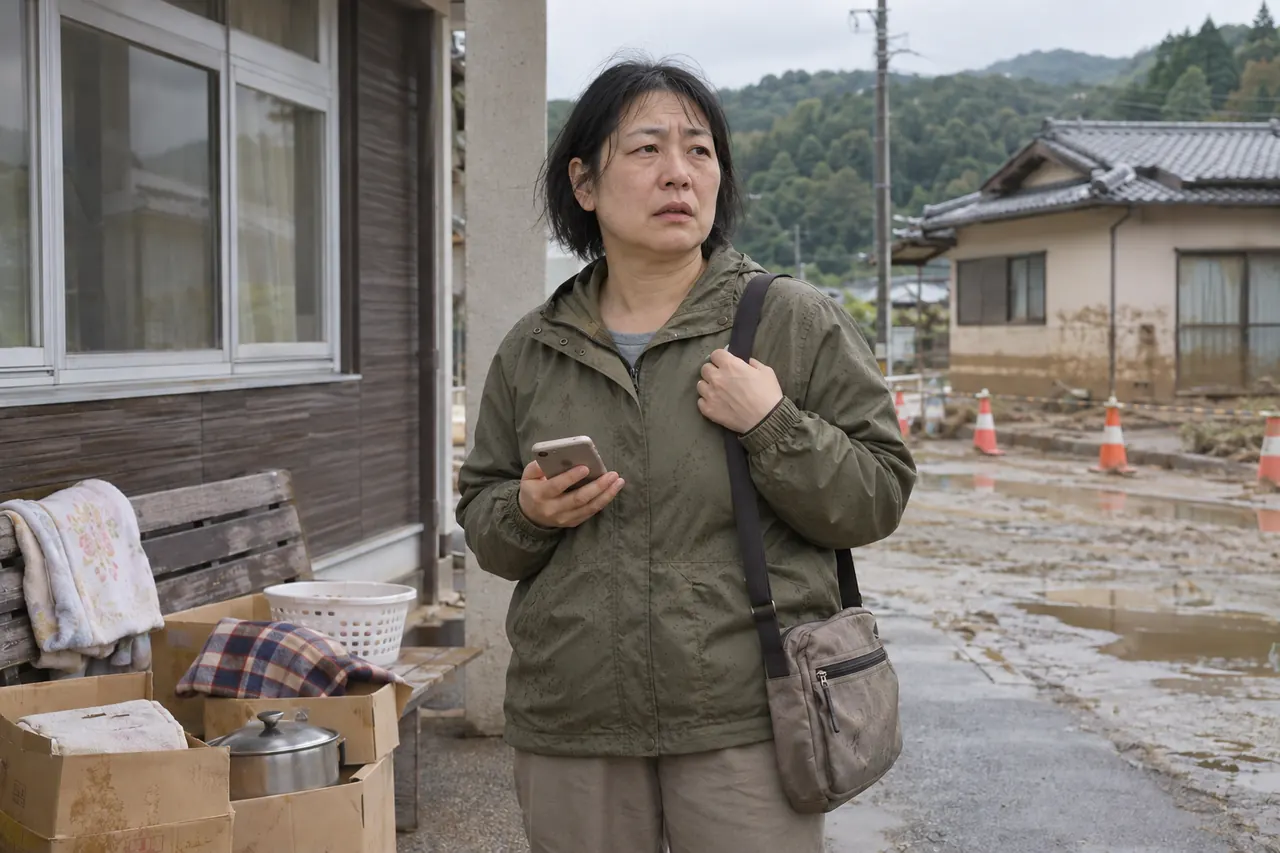
Understand this article's terms in plain language
- Temporary measures
- Temporary measures to limit further damage. Check these separately from permanent repairs and fixing the cause.
- Cause investigation
- Investigation of water-entry routes and similar issues. Ask methods, cost, and uncheckable areas.
- Inspection scope
- Which places and methods the investigation covers. Ask about inaccessible areas and fees beforehand.
Do not stop at repairing the rain stain alone.
Verify the cause and repair scope.
“The water stopped. But is it safe to keep living here?”
Ask them to address causes, electricity, hidden conditions, and post-repair checks separately.
Ceiling water location alone does not establish cause or damage extent. These are editors’ questions for experts, not diagnoses of risk or replacement need from symptoms alone.
Water near a light: must the electrics be checked too?
Rain or plumbing leaks can cause electrical leakage. Do not touch wet lights, wiring, outlets, or distribution boards; keep away. For smoke, fire, or sparks, prioritize evacuation and calling 119 over reading articles or finding providers.
Questions to ask:“Water may have reached electrical equipment. Is an electrician's inspection needed? Under what conditions can use resume?”
Stains alone do not prove electrical leakage or fire. Reference: Kansai Electrical Safety Inspection Association: leakage breaker Q&A&A。
Roof or pipes? Is the water outlet the cause?
Rainwater entry, plumbing leaks, and condensation may need to be distinguished. Safely note what you know about rainfall, timing, and water use upstairs. You do not need to climb onto the roof or open ceilings or walls to find the cause.
Questions to ask:“What causes are possible? What did you investigate and establish? Which areas remain unchecked?”
Whom to contact first when water appears in dry weather / Reference for specialist investigation:Technical reference materials for housing dispute resolution。
How much beyond visible stains needs repair?
Ask for separate explanations of work that stops water entering and checks, drying and repairs of wet areas. How far to examine ceiling spaces, inside walls, insulation and floors, and whether drying or replacement is appropriate, must be judged from the building's condition and investigation findings. If you are concerned about mould, do not open internal areas yourself; discuss what needs checking.
Questions to ask:“Can you explain the evidence for repair or replacement with photos or findings? What is excluded now, and when might extras arise?”
If electrical, plumbing, roof and interior trades are needed, check who arranges them and coordinates costs and stages.Costs separated into investigation, scaffolding, repairs, interiorsto.
What if it leaks again after repair? Do I pay twice?
Recurrence alone does not determine responsibility or entitlement to free repairs. Before work, confirm the investigation, work scope, warranty inclusions and exclusions, and fees for repeat investigation or visits, and keep written records. If it recurs, record conditions and contact the original contractor. If explanations conflict, you can also consult a third-party advice service.
Questions to ask:“What establishes completion? If symptoms recur, whom do I contact and when are charges due?”
Reference:Sumairu Dial case examples about recurring roof leaks. This is not our work example or a uniform liability decision.
Choose whom to ask after clarifying what you need.
For rentals and apartment buildings, contact the management company or manager. If there is an original contractor or warranty contact, you can start there. When choosing a contractor, compare the same investigation scope, total cost, extra-work conditions, and timing. A high quote alone does not establish reliability, and a low price is no reason to skip necessary checks.
Help finding repairers: Fukkyu Idaten’s role and terms
Fukkyu Idaten operator: Japan Product Management LLC. Originator: Naniya Co., Ltd. Check the service area, work type, cost and availability for your case.Call for advice (Miwa, 9:00–22:00) / Independent advice such as Sumairu DialYou can choose this too.
Additional guidance checked October 16, 2026. Editors organize preparation, not individual diagnosis or guarantees. Sources have not supervised or endorsed this site or Fukkyu Idaten.
Separate temporary measures from full repairs when placing an order
Work to limit damage today is not necessarily the same as investigating and repairing the cause. Ask the charge for temporary work alone, later investigation fees and whether any payment is credited toward full repairs. Do not climb roofs, use ladders or put up sheeting in strong winds yourself; ask a specialist.
Frequently asked questions about this topic
Can I just wait and see after the rain stops?
Stopping does not mean the cause is fixed. Keep damage records and discuss inspection dates.
Should I call a contractor even at night?
Prioritize safety and preventing further damage. Check visit necessity, nighttime fees, scope and weather-related work limits beforehand.
FAQ and related guidance checked October 4, 2026. Ask relevant contacts about individual conditions, current acceptance, and programs.
Content errors, rights concerns or service information changes:Contact Kaneyoshi Miwa (Japan Product Management). Include the page URL and relevant passage. This is for routine inquiries, not emergency reporting.
What to learn next
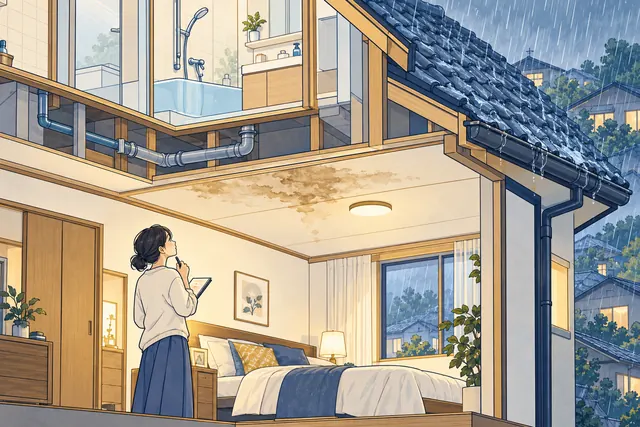
Does a ceiling stain always mean a rain leak?
Only on rainy days, or continuing in sunshine? Organize observations for inspectors without assuming the cause of ceiling stains.
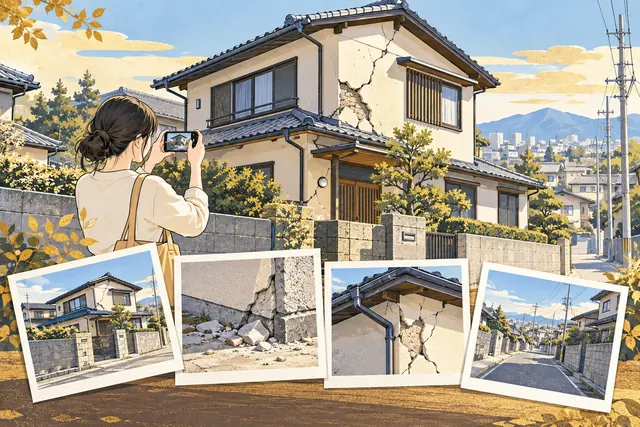
Pre-repair photos: building, location, close-ups, and wider views
Organize photos for provider consultations, damage records, and insurance checks. Avoid unsafe photography; show when, where, and what.
What does a rain-leak investigation fee include?
Why do low and high leak-repair quotes differ? Cost items affecting totals, site-inspection questions, and comparison tips.
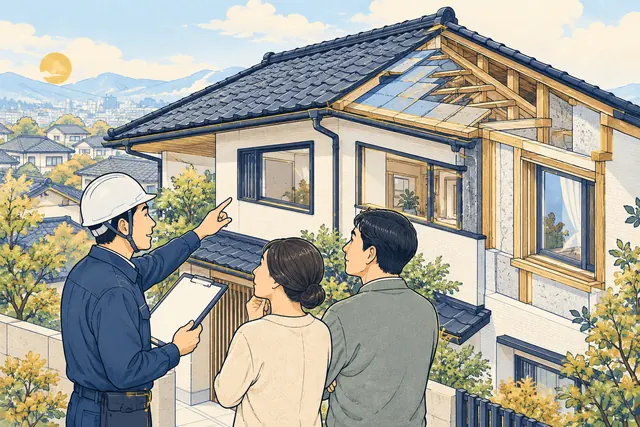
Finding rain leak repairers: check investigations, costs and availability
Organize leak photos and notes, compare methods, temporary measures, scope and dates, then consult Tatemono Fukkyu Note's operator.
Once safe, discuss the situation by phone
“I do not know where the water comes from” or “I do not know what to tell a repairer.” You can organize only what you know and ask for advice. There is no need to climb a roof or touch wet electrical equipment to check.
- The building's area and type, such as a detached home or apartment building
- Where water appears indoors, when it started and links to rain
- Contacting management or contractors, and warranty availability
- Pre-visit checks: inspection and travel fees and temporary-work scope
Call Miwa: 070-1503-2646 Hours: 9:00–22:00
For detailed reception information,Telephone consultation page. To discuss use with photos and symptoms prepared,Prepare a note before contacting someone. Confirm visits, work timing and scope individually.
Things to know about housing in Japan
Rules differ by building and rental agreement. Ask your property manager or local municipality if you are unsure.
In a rented home, contact the manager before ordering repairs
Tell your property manager or landlord about the problem first. Before making your own contract, check who to contact, who pays and what work is covered.
Corridors and balconies may form part of an escape route
Keep shared corridors, balcony partitions (隔て板) and escape hatches (避難ハッチ) clear of belongings. Ask the property manager about your building's rules. Do not break partitions or open escape equipment for practice on your own.
An evacuation site and a shelter may serve different purposes
A designated emergency evacuation site (指定緊急避難場所) is a place to escape immediate disaster danger. A designated evacuation shelter (指定避難所) is a facility for staying after evacuation. Check the disaster type and your municipality's instructions.
Read current official disaster information in your language
JMA / English
Reference: Cabinet Office guidance on evacuation sites and shelters
Words used in this article
Short explanations, with the Japanese words you may hear in everyday life.
- Property management company 管理会社(kanri gaisha)
A company appointed to manage a building and handle contact on the owner's behalf.
For a rented home or apartment building, check the contact details in your agreement or building notices.
- Landlord 大家(ooya / kashinushi)
The person or company renting out a room or home.
Check whether repairs should be reported to the landlord or management company before arranging work yourself.
- Recurrence 再発(saihatsu)
A problem happening again after it appeared to have stopped.
Record when it happens and the weather, then check the previous work and warranty when asking for advice.
- Electrical leakage 漏電(rouden)
Electric current flowing somewhere it should not.
It can cause shock or fire. Do not touch wet equipment or wiring to test it; ask a professional.
- Condensation 結露(ketsuro)
Moisture in the air turning into drops on a cold window, wall or other surface.
It differs from rain or pipe leaks, but a stain alone may not show which is responsible.
- Warranty 保証(hoshou)
Conditions describing how certain problems after the work will be handled.
Check coverage, period, exclusions and contact details in writing; a warranty does not make every repair free.
- Multi-unit housing 集合住宅(shuugou juutaku)
A building containing homes for several households, such as an apartment building.
Distinguish your own unit from shared areas and check building rules for repairs and evacuation.
- Local authority 自治体(jichitai / shikuchouson)
The administration of your city, ward, town, village or prefecture.
Use your area's official website or office to check evacuation sites and post-disaster procedures.
- Shared corridor 共用廊下(kyouyou rouka)
A passage used by multiple residents in a multi-unit building, sometimes also an escape route.
Check rules for belongings and bicycles and do not block passage or evacuation.
- Balcony partition panel 隔て板(hedateita / shikiri ita)
A panel between neighbouring balconies; some are designed as part of an emergency escape route.
Ask the manager whether it is for escape and how to use it; keep it clear and do not break it for practice.
- Emergency escape hatch 避難ハッチ(hinan hacchi)
A covered opening in a balcony floor or similar location used for escape to a lower floor.
Check building instructions with the manager, keep it clear, and do not open or descend it alone for practice.
- Emergency escape equipment 避難器具(hinan kigu)
Equipment such as ladders installed to help people escape a building in an emergency.
Ask the manager about its location and use beforehand, keep it clear, and do not open or descend it alone just to practise.
- Designated emergency evacuation site 指定緊急避難場所(shitei kinkyuu hinan basho)
A place officially designated for escaping an immediate disaster danger.
Sites are designated by disaster type. Check suitability for the current hazard, not just distance.
- Evacuation shelter 避難所(hinanjo / shitei hinanjo)
A facility where people unable to return home after a disaster can stay temporarily.
Its purpose differs from an immediate escape site. Check which shelters are open with local authorities.
Plain-language explanations by Tatemono Fukkyu Note. They are not an assessment of your building or an individual evacuation decision.