
Local certificate offices, insurers and repairers have different roles. Support may require advance consultation/application; ask local government before work contracts.
Understand this article's terms in plain language
- Disaster damage certificate
- Issued by a municipality certifying residential damage; separate from insurance assessment or assistance eligibility.
- Quote total
- Check how much travel, investigation, materials, work and disposal the price includes. Ask separately from the advertised minimum.
- Inspection scope
- Which places and methods the investigation covers. Ask about inaccessible areas and fees beforehand.
- 01
Check your local authority's disaster-assistance information
- 02
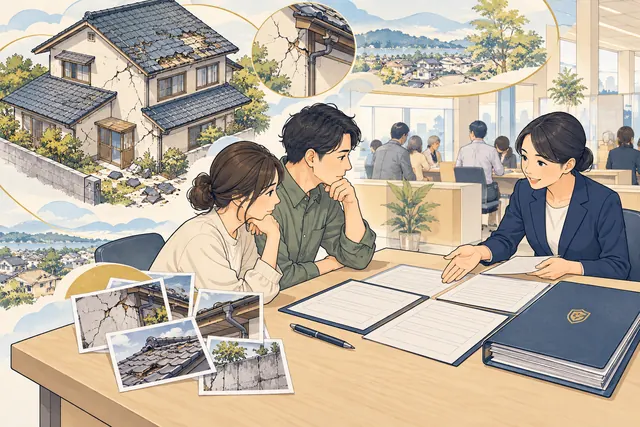
Organize damage photos and application information
- 03
Check prerequisites before signing or starting, and application deadlines
A disaster certificate is not a repair estimate
Municipal residential-damage assessments differ from investigations of repair scope and costs. Certificate classifications alone do not set repair prices. Ask the relevant municipal office about certificates for nonresidential buildings or business premises.
Pair photos showing the location with photos showing the symptoms
Photos safely taken indoors or from ground level are enough.
Which building and surface?
Exterior appearance and orientation. Do not climb onto the roof for photos.
Which room and which location?
Show damage locations, including windows, walls, and equipment.
What is happening
Stains, cracks, detached parts and more. Keep away if unsafe.
When and under what conditions
Keep the discovery time, rain intensity and changes alongside photos.
Questions for local government
Check application methods and deadlines, photo locations, rules for temporary work before inspection, available assistance, whether application must precede contracting or work, contractor requirements, and documents. Amounts and conditions are not necessarily uniform nationwide.
Do not confuse it with insurance claims
Ask your insurer whether a disaster damage certificate is mandatory for a claim. Municipalities and insurers have different purposes and checks, so one result does not automatically determine the other. Keeping photos, estimates and receipts together is useful.
If cleanup or temporary work has already been done
Do not assume you cannot apply; gather remaining photos, videos, receipts, and work records and ask the relevant office. Do not delay necessary safety work, and retain whatever records you can.
Frequently asked questions about this topic
What support is available?
It depends on the disaster, municipality, damage, household, and building conditions. Check current municipal guidance.
FAQ and related guidance checked October 4, 2026. Ask relevant contacts about individual conditions, current acceptance, and programs.
Insurance guide: questions for your insurer and consultation notes
Content errors, rights concerns or service information changes:Contact Kaneyoshi Miwa (Japan Product Management). Include the page URL and relevant passage. This is for routine inquiries, not emergency reporting.
What to learn next
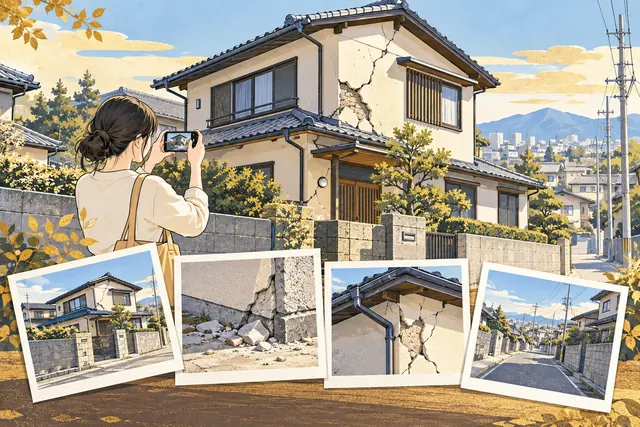
Pre-repair photos: building, location, close-ups, and wider views
Organize photos for provider consultations, damage records, and insurance checks. Avoid unsafe photography; show when, where, and what.

Does fire insurance cover rain leaks? Ask your insurer before signing
A rain leak alone does not establish insurance cover. Prepare questions about cause, policy terms, deductibles, photos and quotes.

Flooded homes, restoration order before cleanup.
Evacuation, safety, damage records, cleanup/drying, electrical checks and interiors: steps for calm flood recovery.
Words used in this article
Short explanations, with the Japanese words you may hear in everyday life.
- Local authority 自治体(jichitai / shikuchouson)
The administration of your city, ward, town, village or prefecture.
Use your area's official website or office to check evacuation sites and post-disaster procedures.
- Disaster damage certificate 罹災証明書(risai shoumeisho)
A document issued by a municipality after assessing the degree of disaster damage to a home.
Ask your municipality about applying and required records; the certificate alone does not guarantee aid or insurance payment.
Plain-language explanations by Tatemono Fukkyu Note. They are not an assessment of your building or an individual evacuation decision.