
Disaster certificates, insurer contact, and repair contracts are separate procedures. Ask municipality and insurer about documents; distinguish urgent safety work from work requiring prior applications.
Understand this article's terms in plain language
- Disaster damage certificate
- Issued by a municipality certifying residential damage; separate from insurance assessment or assistance eligibility.
- Quote total
- Check how much travel, investigation, materials, work and disposal the price includes. Ask separately from the advertised minimum.

- 01
Ensure safety before recording
- 02
Check separately with your municipality and insurer
- 03
Ask about scheme conditions before work starts
One document does not determine everything
Residential-damage assessments, insurer reviews, and construction quotes serve different purposes. A disaster certificate does not automatically fix insurance or repair amounts. List each program’s contact and required documents.
From the current situation to the next request
These steps are general guidance organized by the editors.
- 01Ensure safety before recording
Do not inspect or take photos in dangerous places.
- 02Check separately with your municipality and insurer
Separate known facts from what remains unknown.
- 03Ask about scheme conditions before work starts
Agree on the person responsible, cost, timing and way to check.
Take photos safely
Safely record building, damage and indoor water levels. If removal/emergency work is needed, save before/after photos, details and receipts. Do not return to danger for photos.
Questions before work starts
Ask your municipality about assistance, eligible households and work, prior applications, contractors, deadlines, and combining programs. Do not sign solely because a provider says subsidies cover everything.
Consider payments separately
Separate contract amount and payment dates from insurance or assistance decisions and payout timing. If work proceeds before a decision, confirm your payment obligations if support is denied.
Frequently asked questions about this topic
Does applying for a disaster certificate determine repair costs and insurance too?
Municipal damage assessment, public assistance, insurance review, and construction contracts are separate. Check eligibility, application contact, deadline, and documents for each; one document does not settle everything.
Will starting work before applying make me ineligible for support?
Some programs require checks or applications before work. Ask the municipality and insurer about conditions. Prioritize danger avoidance; for work that cannot wait, retain photos, work details, and receipts where possible.
FAQ and related guidance checked October 4, 2026. Ask relevant contacts about individual conditions, current acceptance, and programs.
Content errors, rights concerns or service information changes:Contact Kaneyoshi Miwa (Japan Product Management). Include the page URL and relevant passage. This is for routine inquiries, not emergency reporting.
What to learn next
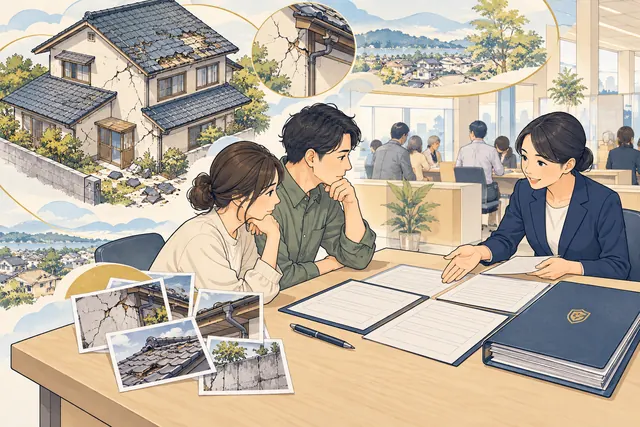
Disaster certificates, insurance and support: what to ask local government before repairs
Home damage certification, insurance claims and disaster support are separate procedures. Identify contacts and pre-work requirements.

Does fire insurance cover rain leaks? Ask your insurer before signing
A rain leak alone does not establish insurance cover. Prepare questions about cause, policy terms, deductibles, photos and quotes.
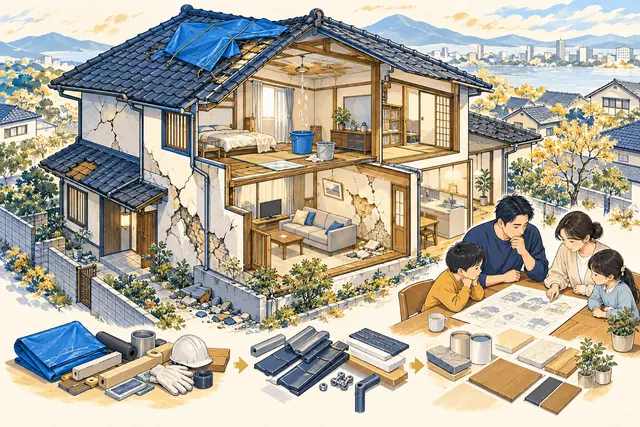
Multiple home problems, budgeting and repair priorities.
Organize safety, limiting damage, equipment checks, drying, and interiors in order. Separate urgent work from work decidable later before combining totals.
Words used in this article
Short explanations, with the Japanese words you may hear in everyday life.
- Local authority 自治体(jichitai / shikuchouson)
The administration of your city, ward, town, village or prefecture.
Use your area's official website or office to check evacuation sites and post-disaster procedures.
Plain-language explanations by Tatemono Fukkyu Note. They are not an assessment of your building or an individual evacuation decision.