
Organize safety, limiting damage, equipment checks, drying, and interiors in order. Separate urgent work from work decidable later before combining totals.
Understand this article's terms in plain language
- Temporary measures
- Temporary measures to limit further damage. Check these separately from permanent repairs and fixing the cause.
- Cause investigation
- Investigation of water-entry routes and similar issues. Ask methods, cost, and uncheckable areas.
- Quote total
- Check how much travel, investigation, materials, work and disposal the price includes. Ask separately from the advertised minimum.
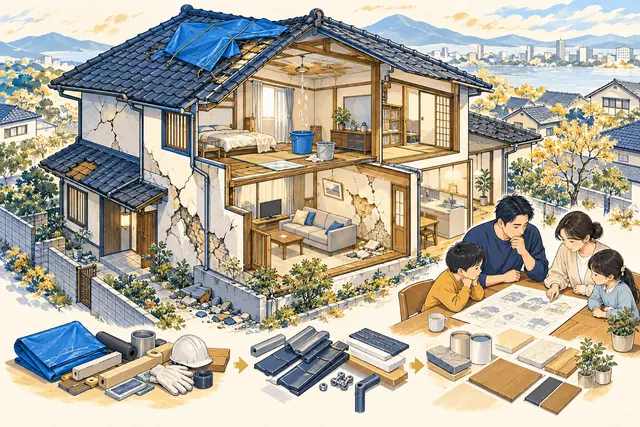
- 01
Check which areas cannot be used
- 02
Separate temporary and full repairs
- 03
Align stages, responsibility and approval of additions
Safety takes priority over appearance
Check falling objects, wet electrics and escape routes with specialists/managers. Owners need not investigate dangerous areas first. Ensure people are safe before inspecting the whole home.
From the current situation to the next request
These steps are general guidance organized by the editors.
- 01Check which areas cannot be used
Do not inspect or take photos in dangerous places.
- 02Separate temporary and full repairs
Separate known facts from what remains unknown.
- 03Align stages, responsibility and approval of additions
Agree on the person responsible, cost, timing and way to check.
Cause-related and finish-related work
Sequence roof/pipe cause repairs, wet equipment checks, cleaning/drying and wallpaper restoration. With separate firms, decide who confirms each prior stage is complete.
Explain your budget by work stage
State your limit, whether temporary measures come first, and what to decide after investigation. Discuss phased timing and contracts rather than discounts omitting necessary safety.
Comparison notes
List each area’s symptoms, downtime, responsible person, budget, temporary and main dates, and extras. Using the same photos makes scope differences easier to assess.
Frequently asked questions about this topic
Limited budget: start with cosmetic repairs?
First consider safety, damage spread, and causes. Separate temporary measures, cause repairs, and finishing; ask specialists what can wait and the interim risks.
Is combining repairs at several locations always cheaper?
Scaffolding or travel may be shared, but savings are not assured. Ask each area’s need, timing, shared costs, and responsibilities; compare combined and phased plans on equal terms.
FAQ and related guidance checked October 4, 2026. Ask relevant contacts about individual conditions, current acceptance, and programs.
Content errors, rights concerns or service information changes:Contact Kaneyoshi Miwa (Japan Product Management). Include the page URL and relevant passage. This is for routine inquiries, not emergency reporting.
What to learn next
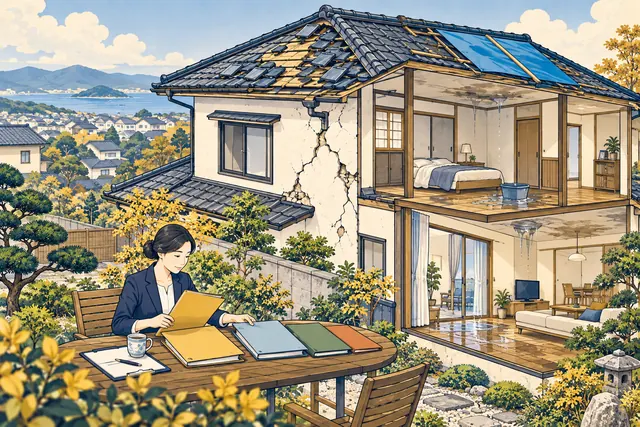
Multiple building damages: roof, wall and interior restoration
Multiple typhoon or flood damage: organize safety, investigation, restoration priorities, and coordination.
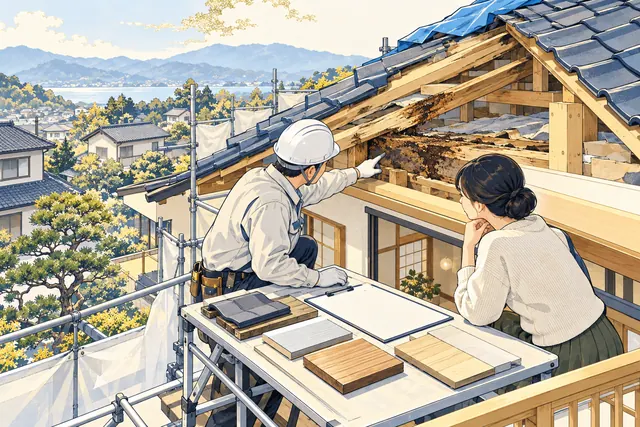
Extra repair costs: five checks before approval
If told extra substrate repairs are needed, check photos, reasons, price, duration, and alternatives.
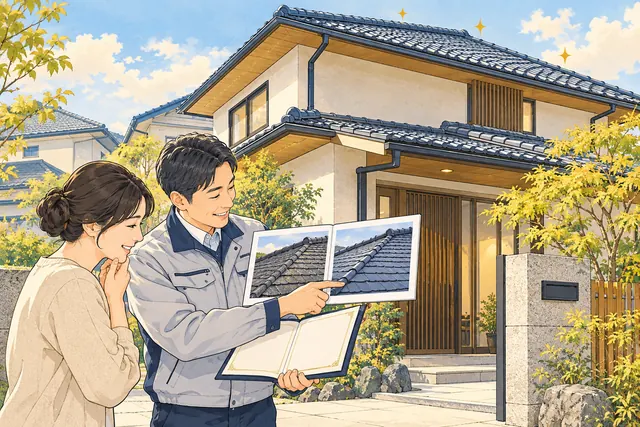
After repairs: completion, warranty, and recurrence records
Roof and leak-repair completion checks: keep photos and documents without climbing onto the roof.
Words used in this article
Short explanations, with the Japanese words you may hear in everyday life.
- Evacuation route 避難経路(hinan keiro)
The route for moving from a dangerous place to a safer place.
Check it with your household and keep passages and exits clear.
- Restoration 復旧(fukkyuu)
Work to make something usable again after a disaster or other damage.
Check the necessary order with professionals, including safety checks, finding the cause and repairs.
- Scaffolding 足場(ashiba)
A structure assembled so workers can carry out work safely at height.
Whether it is needed depends on the height and work location. Do not climb it yourself.
Plain-language explanations by Tatemono Fukkyu Note. They are not an assessment of your building or an individual evacuation decision.