
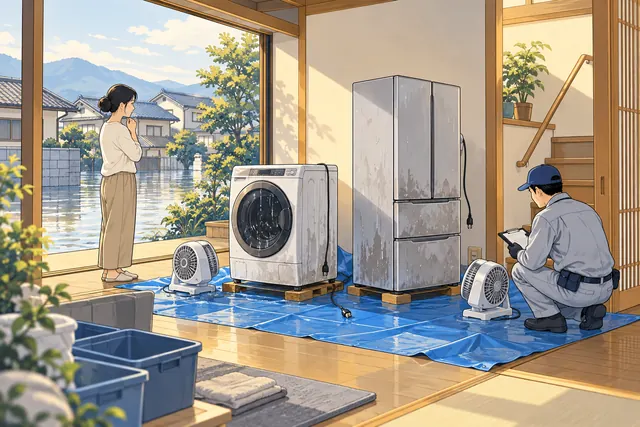
Do not switch on to test even if dry-looking. Ask manufacturers or qualified specialists whether flooded appliances, wiring, and boards need inspection or replacement.
Understand this article's terms in plain language
- Quote total
- Check how much travel, investigation, materials, work and disposal the price includes. Ask separately from the advertised minimum.
- 01
Stop use without touching wet equipment
- 02
Safely record the model number and floodwater location
- 03
Confirm inspection and disposal providers
Working does not necessarily mean safe
Water or mud inside may cause failure or accidents. Do not plug equipment in to test it. If power cannot be reached safely, do not return to operate it; consult the relevant specialist.
From the current situation to the next request
These steps are general guidance organized by the editors.
- 01Stop use without touching wet equipment
Do not inspect or take photos in dangerous places.
- 02Safely record the model number and floodwater location
Separate known facts from what remains unknown.
- 03Confirm inspection and disposal providers
Agree on the person responsible, cost, timing and way to check.
Use different contacts for equipment and building issues
Separate appliance issues for manufacturers and building electrical issues for electricians. For rental fixtures, contact management first. Tell maintenance about solar or batteries; do not judge the electrical system yourself.
Order of insurance checks and records
Before disposal, safely record overall views, model numbers, and damage locations, and ask your insurer about documents. Do not bring dangerous equipment indoors merely to preserve it. Check municipal disaster-waste guidance too.
What to ask about a replacement quote
Ask inspection fees, replacement reasons, equipment/installation/removal costs, wiring checks and reuse timing. Equipment replacement alone does not complete building electrical checks.
Frequently asked questions about this topic
Can I use a dried appliance if it powers on?
Working does not mean safe to use. Do not reuse wet equipment yourself; give models and wetted areas to the manufacturer or qualified inspection service.
Do appliances and wall sockets have the same inspection contact?
Separate equipment repairs by manufacturers/repair contacts from wiring or board checks by qualified electricians. In rentals, tell management and agree who arranges work.
FAQ and related guidance checked October 4, 2026. Ask relevant contacts about individual conditions, current acceptance, and programs.
Content errors, rights concerns or service information changes:Contact Kaneyoshi Miwa (Japan Product Management). Include the page URL and relevant passage. This is for routine inquiries, not emergency reporting.
What to learn next

Electrical equipment wet from leaks or flooding—do not touch; consult before powering.
Wet lights/outlets, flooded distribution boards and power restoration: avoid danger and know what to tell professionals.
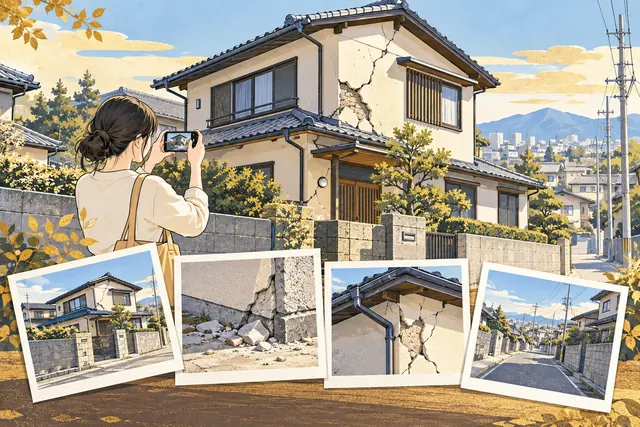
Pre-repair photos: building, location, close-ups, and wider views
Organize photos for provider consultations, damage records, and insurance checks. Avoid unsafe photography; show when, where, and what.
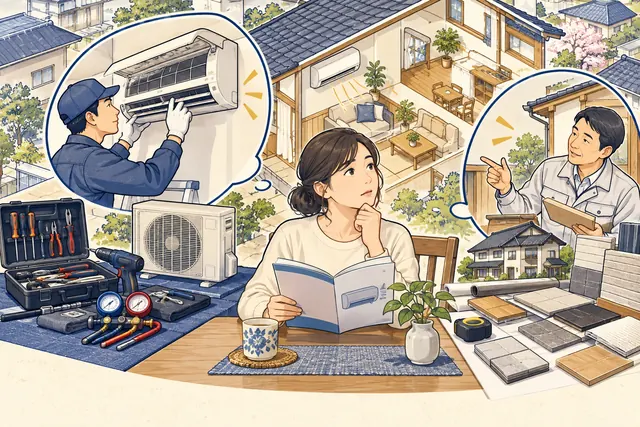
Manufacturer repairs or independent contractors? Check the warranty first
For equipment/buildings with warranties or maintenance contracts, check their contacts/procedures first. If excluded, compare new providers' inspection costs, scope and dates to reduce duplication.