
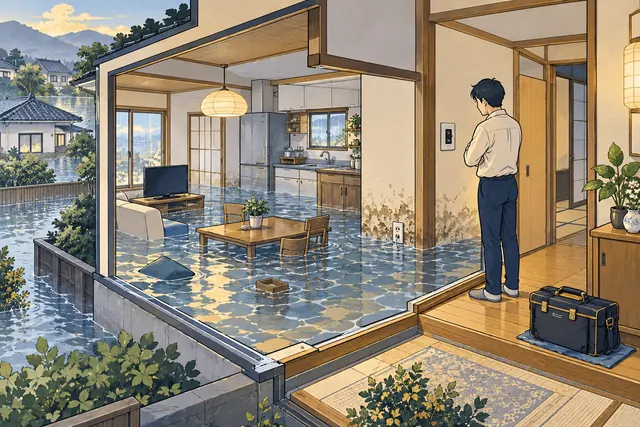
Do not touch wet switches, outlets, or equipment; move away. Do not reuse flooded equipment merely because it appears dry.
Understand this article's terms in plain language
- Cause investigation
- Investigation of water-entry routes and similar issues. Ask methods, cost, and uncheckable areas.
- Inspection scope
- Which places and methods the investigation covers. Ask about inaccessible areas and fees beforehand.
- 01
Keep away from wet electrical equipment and keep others away
- 02
Do not enter dangerous areas to operate equipment
- 03
Ask an electrician or similar professional to inspect and assess safe reuse
A power outage does not guarantee safety
Restored electricity can cause fires. Operate a breaker only if reachable from a dry, safe location; if you cannot touch it safely or do not know how, stay away and ask. For smoke or fire, call 119 from safety.
Check safety before reading the article
If there is danger or you cannot judge, move to safety.
Do not photograph or operate equipment in unsafe areas. Call 119 for fire or rescue.
Record times and symptoms, then contact management or a repair service. This is not a finding that safety is guaranteed.
Distinguish local outages from building faults
If the neighborhood also has an outage, check your electricity transmission and distribution company’s outage information. If only certain rooms or equipment are affected, tell a specialist those facts. Avoid repeatedly resetting breakers to test them.
Information to share during inspection
Report wet locations, flood height, outage time, burning smells or unusual sounds, and equipment in use. You do not need to go to dangerous places to take photos. Also check who handles electrical inspections and repairs to the rain-leak cause.
Frequently asked questions about this topic
Can I use it once dry?
Internal damage or dirt may remain. Do not reconnect power yourself; arrange an inspection.
FAQ and related guidance checked October 4, 2026. Ask relevant contacts about individual conditions, current acceptance, and programs.
Content errors, rights concerns or service information changes:Contact Kaneyoshi Miwa (Japan Product Management). Include the page URL and relevant passage. This is for routine inquiries, not emergency reporting.
What to learn next
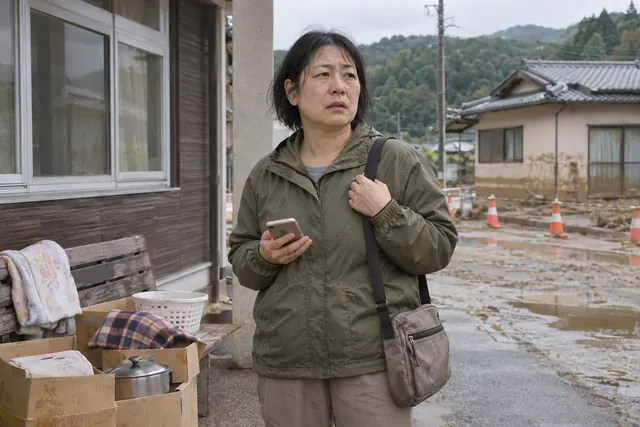
What should you do first when rain leaks into your home?
When water drips from the ceiling, organize what you can and must not do: safety, moving belongings, photos, and explaining the problem to providers.
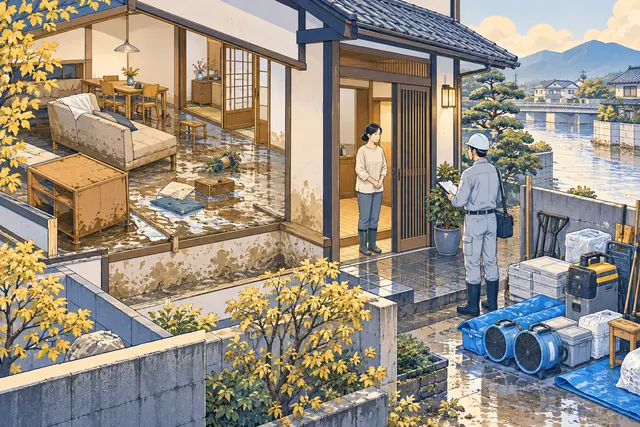
Flooded homes, restoration order before cleanup.
Evacuation, safety, damage records, cleanup/drying, electrical checks and interiors: steps for calm flood recovery.
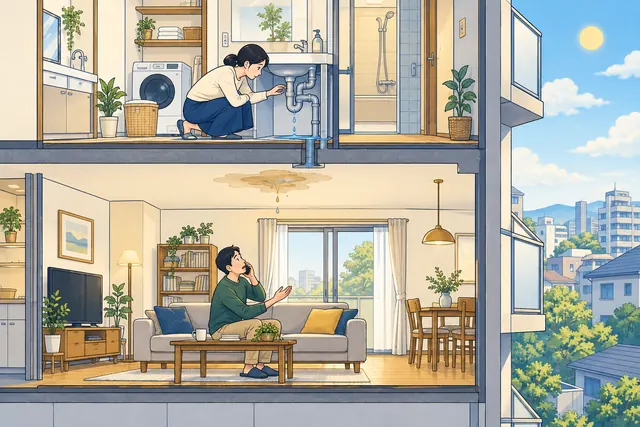
Ceiling water in sunny weather: contacts for suspected pipe leaks
Suspected plumbing leaks: safety, management contact, and pre-repair checks.
Words used in this article
Short explanations, with the Japanese words you may hear in everyday life.
- Circuit breaker ブレーカー(bureekaa)
A device that interrupts the electricity supply, for example when abnormal current is detected.
Do not operate it if it is wet, surrounded by floodwater or unsafe to reach; contact the power company or a professional.
Plain-language explanations by Tatemono Fukkyu Note. They are not an assessment of your building or an individual evacuation decision.