
Prioritize safety; keep obtainable photos and discovery dates. Ask your insurer about documents and temporary measures, and separately confirm repair scope, cost, and contract with providers.
Understand this article's terms in plain language
- Quote total
- Check how much travel, investigation, materials, work and disposal the price includes. Ask separately from the advertised minimum.
- Approve additions
- Approve unplanned work only after receiving an explanation of the reason and cost.
- Inspection scope
- Which places and methods the investigation covers. Ask about inaccessible areas and fees beforehand.
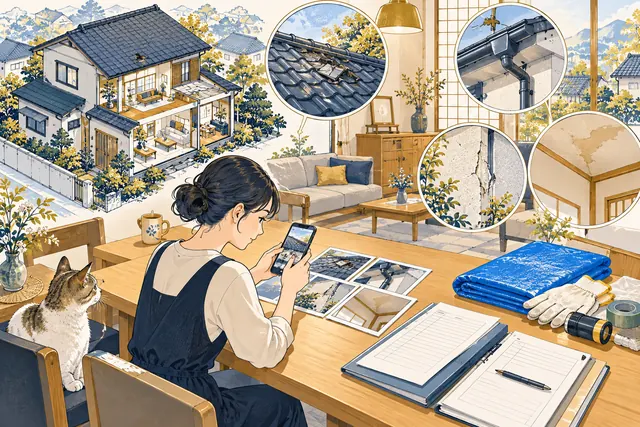
- 01
Leave danger and record damage within safe limits
- 02
Ask your insurer about required documents and emergency repairs
- 03
Contract only after checking the repair estimate and out-of-pocket costs
Should I wait for insurance while danger continues?
People’s safety comes first. Stay away from roofing that could fall and wet electrical equipment; prioritize rescue and evacuation as needed. Even when asking a provider for temporary measures to limit damage, confirm the scope and cost and record conditions before and after as far as safely possible. Ask your insurer whether coverage applies.
Check safety before reading the article
If there is danger or you cannot judge, move to safety.
Do not photograph or operate equipment in unsafe areas. Call 119 for fire or rescue.
Record times and symptoms, then contact management or a repair service. This is not a finding that safety is guaranteed.
What to say in the first call
Prepare the policyholder and how to verify the policy, discovery date and time, damage location, preceding weather, current symptoms, and need for temporary measures. Say the cause is unknown if unconfirmed. Ask which safely obtainable photos, quotes, and reports are needed, how to submit them, and what happens next.
How detailed should the estimate breakdown be?
Separating investigation, temporary measures, cause repairs, interior and equipment restoration, scaffolding and disposal helps when explaining to your insurer and comparing contractors. This is an editorial suggestion for organizing information. Follow your insurer's forms and required items, and ask whether preparing estimates or photo reports also costs money.
Ask in advance who pays if the insurer does not pay
Insurance review and the repair contract are separate. Before contracting, check payment if no benefit or less than expected is paid, cancellation and approval of extra work. If told “insurance makes it free”, do not rush the contract; ask your insurer.
Frequently asked questions about this topic
Does a disaster damage certificate guarantee an insurance payment?
Official damage assessment and insurance review are separate. Ask your insurer, including whether a certificate is needed.
Should I climb onto the roof for photos?
Do not climb. Take photos safely from ground level or indoors; ask qualified providers for further investigation.
FAQ and related guidance checked October 4, 2026. Ask relevant contacts about individual conditions, current acceptance, and programs.
Insurance guide: questions for your insurer and consultation notes
Content errors, rights concerns or service information changes:Contact Kaneyoshi Miwa (Japan Product Management). Include the page URL and relevant passage. This is for routine inquiries, not emergency reporting.
What to learn next
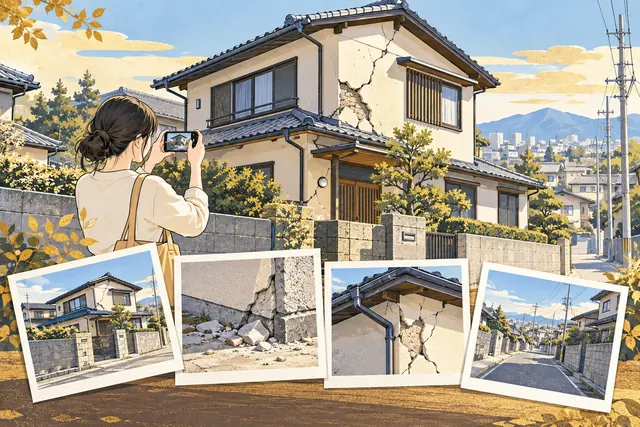
Pre-repair photos: building, location, close-ups, and wider views
Organize photos for provider consultations, damage records, and insurance checks. Avoid unsafe photography; show when, where, and what.

Does fire insurance cover rain leaks? Ask your insurer before signing
A rain leak alone does not establish insurance cover. Prepare questions about cause, policy terms, deductibles, photos and quotes.
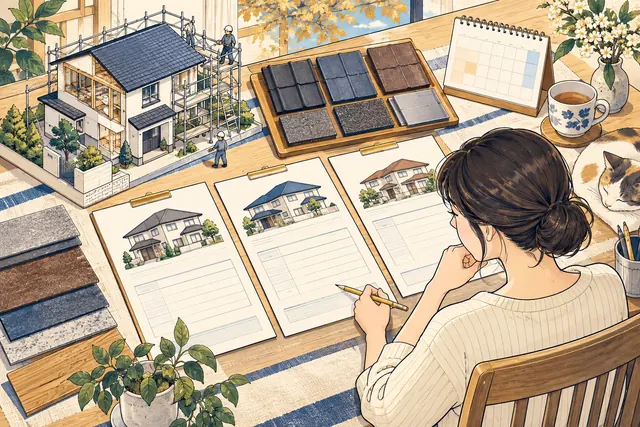
Roof-repair quotes: eight comparison items beyond price
A practical checklist for comparing equivalent quotes: inspections, scaffolding, repair scope, dates, warranty and extras.
Words used in this article
Short explanations, with the Japanese words you may hear in everyday life.
- Restoration 復旧(fukkyuu)
Work to make something usable again after a disaster or other damage.
Check the necessary order with professionals, including safety checks, finding the cause and repairs.
- Scaffolding 足場(ashiba)
A structure assembled so workers can carry out work safely at height.
Whether it is needed depends on the height and work location. Do not climb it yourself.
- Local authority 自治体(jichitai / shikuchouson)
The administration of your city, ward, town, village or prefecture.
Use your area's official website or office to check evacuation sites and post-disaster procedures.
Plain-language explanations by Tatemono Fukkyu Note. They are not an assessment of your building or an individual evacuation decision.