
An advertised minimum is not the total. Check travel, night, inspection, chemicals, removal, and revisits. For increases on site, agree reasons and total before work.
Understand this article's terms in plain language
- Removal and prevention
- Treating current pests differs from preventing recurrence. Check target species, scope and return-visit terms.
- Warranty and return visits
- Not everything is free during the term. Ask covered pests, recurrence, conditions, and costs before contracting.
- Quote total
- Check how much travel, investigation, materials, work and disposal the price includes. Ask separately from the advertised minimum.

- 01
Ask charges before the visit
- 02
Confirm the total in writing before work
- 03
Record conditions for extra work and return visits
Five things to ask by phone
Ask travel, inspection, night, refusal fees and conditions for minimum pricing. Unknown species/nest locations should be stated. Separate photo estimates from on-site totals.
Identify species → Take action → Prevent recurrence
Do not assume an unknown species; seek advice from safety.
- 01Check
Place, time, frequency. No dangerous close-ups needed.
- 02Check the total and method
Separate call-out, night, work and follow-up charges.
- 03Reassess the causes too
Food, water, gaps. Check separate contacts for leaks or repairs.
Why additions may arise on site
Ask for photos explaining height, wall interiors, multiple locations, demolition/restoration or disposal. Check approval before increases and payment if declined. Do not proceed with an unknown total just because “it is necessary.”
Distinguish recurrence from extra work
Ask about initial treatment, returning wasps, revisit fees, warranty and exclusions, and whether hole repairs are included. Do not directly equate extermination-only prices with repair-inclusive prices.
Advice when you need help
For excessive charges or conflicting explanations, save ads, contacts, quotes, and receipts and consult 188 or similar services. Content corrections to this publication and contract-dispute advice are separate channels.
Frequently asked questions about this topic
Is it normal for the on-site quote to differ from the advertised minimum?
Costs may vary with the pest, area, and conditions, but reasons for increases and the total must be explained. Separate travel, inspection, chemicals, removal, and follow-up visits; do not approve work while unconvinced.
Will pests returning after work be treated free?
It depends on the warranty and contract. Before contracting, check covered pests, duration, revisit fees, and how recurrence differs from new entry. Keep documents and consult Consumer Hotline 188 for excessive charges or conflicting explanations.
FAQ and related guidance checked October 4, 2026. Ask relevant contacts about individual conditions, current acceptance, and programs.
Content errors, rights concerns or service information changes:Contact Kaneyoshi Miwa (Japan Product Management). Include the page URL and relevant passage. This is for routine inquiries, not emergency reporting.
What to learn next

Compare pest control: local advice, specialists and booking services
Species identification, public advice, pest treatment, and building repairs serve different roles. Choose by symptoms; consider Fukkyu Idaten for provider searches and repairs within confirmed availability.

Before signing repairs: record scope, payments, and warranties
Before contracting roof/leak repairs, check scope, schedule, payment, extras, warranty and cancellation terms.
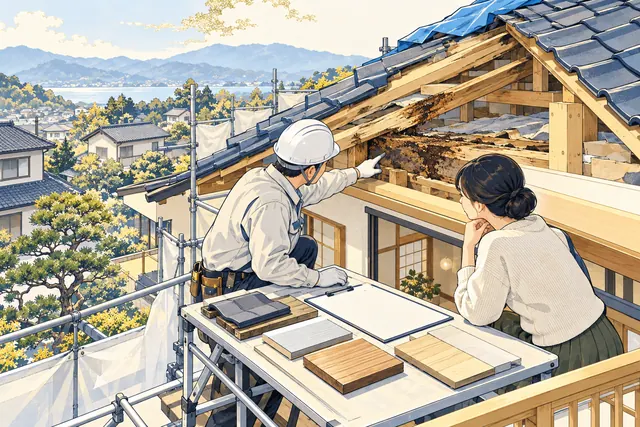
Extra repair costs: five checks before approval
If told extra substrate repairs are needed, check photos, reasons, price, duration, and alternatives.
Before arranging repairs in Japan
You do not need to rush a decision when you do not understand the documents or explanation.
An estimate and a contract have different purposes
An estimate (見積書) describes proposed work and its price. If you do not understand what you would be agreeing to, ask about the work, extra charges and schedule before deciding.
If communicating in Japanese is difficult
Ask in advance whether an interpreter can help and which languages the provider supports. Translated articles do not mean that our phone service or contractors provide English or Vietnamese support.
Reference: Housing Renovation and Dispute Settlement Support Center — estimate consultations
Words used in this article
Short explanations, with the Japanese words you may hear in everyday life.
- Recurrence 再発(saihatsu)
A problem happening again after it appeared to have stopped.
Record when it happens and the weather, then check the previous work and warranty when asking for advice.
- Restoration 復旧(fukkyuu)
Work to make something usable again after a disaster or other damage.
Check the necessary order with professionals, including safety checks, finding the cause and repairs.
- Warranty 保証(hoshou)
Conditions describing how certain problems after the work will be handled.
Check coverage, period, exclusions and contact details in writing; a warranty does not make every repair free.
- Written estimate 見積書(mitsumorisho / mitsumori)
A document showing proposed work, materials and costs before you place an order.
Ask for explanations of Japanese wording you do not understand before signing an agreement.
- Additional charges 追加費用(tsuika hiyou / tsuika ryoukin)
Costs added later to the amount first proposed.
Confirm the extra work, reason and amount in writing before that work starts.
Plain-language explanations by Tatemono Fukkyu Note. They are not an assessment of your building or an individual evacuation decision.