
Species identification, public advice, pest treatment, and building repairs serve different roles. Choose by symptoms; consider Fukkyu Idaten for provider searches and repairs within confirmed availability.
Understand this article's terms in plain language
- Removal and prevention
- Treating current pests differs from preventing recurrence. Check target species, scope and return-visit terms.
- Warranty and return visits
- Not everything is free during the term. Ask covered pests, recurrence, conditions, and costs before contracting.
- Quote total
- Check how much travel, investigation, materials, work and disposal the price includes. Ask separately from the advertised minimum.
- 01
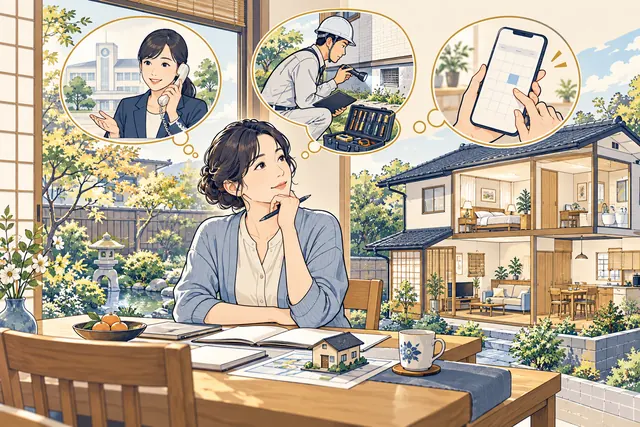
Record the type and location as far as you can tell
- 02
Check local government, management and warranty contacts
- 03
Compare quotes by removal and repair scope
Local authorities and pest companies have different roles
Environmental health offices offer advice/information/local guidance, not guaranteed free treatment. Rentals: check management first; confirm actual work/cost with the responsible provider.
Whom to call? Check existing contacts first
Consider building responsibilities and warranty or maintenance coverage.
Property manager or landlord
Start with the emergency number in your contract. Share symptoms and photos.
Manufacturer or contract contact
Check coverage and the specified request procedure.
Contractors able to investigate causes
Ask about methods, inspection fees and the steps toward repair.
Ask about using Fukkyu Idaten
Check area, trade, and acceptance before considering.
Specialists and reservation services
Wasps, termites, cockroaches, and bedbugs require different experience and methods. Compare explanations of relevant experience, work plans, follow-up visits, chemical labels, and warranties. Kurashi no Market and third-party marketplaces also help find candidates, but service locations and work categories require individual confirmation.
Fukkyu Idaten's introduction scope
A pest category listing does not establish availability for each pest or area. Check reception with the operator and consider currently available services. For leaks or entry repairs, identify the separate trade and responsible provider.
Explain when each option is suitable
Choose by the pest, location, and follow-up terms that fit, rather than “cheapest” or “No. 1.” Check the minimum-price and on-site increase problems flagged by the National Consumer Affairs Center. Compare responses identifying the contract party and total.
Comparison table by purpose
Japan Product Management LLC groups these options by use case. This is neither a ranking nor an exhaustive comparison. Check current availability and prices with each provider.
| Contacts and services | Purpose of considering the service | Checks before hiring |
|---|---|---|
| Local environmental health office | Ask for guidance on pest types and local options | Whether on-site or free pest control is available |
| Warranty provider or property manager | Existing agreements and arrangements | Target pests, warranty and approval |
| A specialist handling the insect involved | Investigation, treatment and return visits | Total, chemicals and warranty coverage |
| Reservation and estimate services | Check listing conditions for several providers | Target pests, areas and on-site price increases |
| Fukkyu Idaten | Possible providers within confirmed coverage and repair advice | Check service by pest type and building trade |
Frequently asked questions about this topic
Can the same pest-control provider handle every insect species?
Check pest specialties and investigation and treatment scope. Wasps, termites, and bedbugs differ in work and follow-up needs. Ask providers directly about experience and warranties for each pest.
What should you ask local government versus private firms?
Ask municipalities about guidance and assistance, and private providers about investigation, actual work, and fees. Municipal work is not necessarily free or available. Check management or warranties first for rentals or existing coverage.
FAQ and related guidance checked October 4, 2026. Ask relevant contacts about individual conditions, current acceptance, and programs.
Content errors, rights concerns or service information changes:Contact Kaneyoshi Miwa (Japan Product Management). Include the page URL and relevant passage. This is for routine inquiries, not emergency reporting.
What to learn next

Pest-control quote checks, distinguishing low advertised prices from on-site totals.
An advertised minimum is not the total. Check travel, night, inspection, chemicals, removal, and revisits. For increases on site, agree reasons and total before work.

Found a wasp nest? Information for requesting help without approaching
Do not hit/block the nest or spray nearby; keep people away. From a safe distance, explain location and daily impacts, then check local advice or specialists.
Flying ants or termites? Photos, locations and requesting inspections
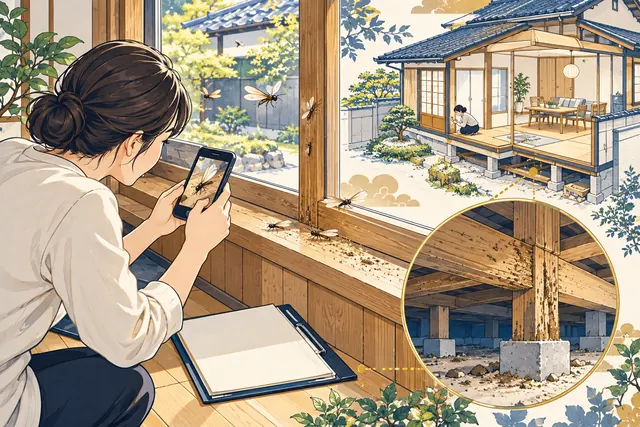
Flying ants alone do not prove termite damage or work needs. Safely record date/location/photos and consult a firm able to identify species and building effects.

A cockroach at night: first steps for cleaning, entry routes and hiring help
Start with managing food, water and rubbish and recording sightings. Follow chemical labels; if pests persist or gaps worry you, discuss causes and prevention scope.
Before arranging repairs in Japan
You do not need to rush a decision when you do not understand the documents or explanation.
An estimate and a contract have different purposes
An estimate (見積書) describes proposed work and its price. If you do not understand what you would be agreeing to, ask about the work, extra charges and schedule before deciding.
If communicating in Japanese is difficult
Ask in advance whether an interpreter can help and which languages the provider supports. Translated articles do not mean that our phone service or contractors provide English or Vietnamese support.
Reference: Housing Renovation and Dispute Settlement Support Center — estimate consultations
Words used in this article
Short explanations, with the Japanese words you may hear in everyday life.
- Recurrence 再発(saihatsu)
A problem happening again after it appeared to have stopped.
Record when it happens and the weather, then check the previous work and warranty when asking for advice.
- Local authority 自治体(jichitai / shikuchouson)
The administration of your city, ward, town, village or prefecture.
Use your area's official website or office to check evacuation sites and post-disaster procedures.
- Warranty 保証(hoshou)
Conditions describing how certain problems after the work will be handled.
Check coverage, period, exclusions and contact details in writing; a warranty does not make every repair free.
- Property management company 管理会社(kanri gaisha)
A company appointed to manage a building and handle contact on the owner's behalf.
For a rented home or apartment building, check the contact details in your agreement or building notices.
- Written estimate 見積書(mitsumorisho / mitsumori)
A document showing proposed work, materials and costs before you place an order.
Ask for explanations of Japanese wording you do not understand before signing an agreement.
- Additional charges 追加費用(tsuika hiyou / tsuika ryoukin)
Costs added later to the amount first proposed.
Confirm the extra work, reason and amount in writing before that work starts.
Plain-language explanations by Tatemono Fukkyu Note. They are not an assessment of your building or an individual evacuation decision.