
Confirm contracting party, scope, tax-inclusive total, payment timing, schedule, extras and warranty in writing. Separate urgent temporary-work contracts from permanent repairs.
Understand this article's terms in plain language
- Temporary measures
- Temporary measures to limit further damage. Check these separately from permanent repairs and fixing the cause.
- Cause investigation
- Investigation of water-entry routes and similar issues. Ask methods, cost, and uncheckable areas.
- Scaffolding and protection
- Scaffolding supports work at height; protection shields surrounding items and areas. Check quote scope.

- 01
Check the company's name, address and contact details
- 02
Check that quote assumptions match the contract
- 03
Ask about unclear conditions before signing
What will be repaired and what is excluded
Match the quote against locations, materials, methods, quantities, scaffolding, protection, disposal, interior work, and investigation scope. If causes remain unresolved despite the goal of stopping leaks, ask for an explanation and the next investigation fee.
Align quote contents before comparing totals
Example comparison. Check actual company quotes using the same items.
Ask about missing items before comparing costs and timing.
Payment and schedule terms
Confirm deposits, installments, completion payment, method, duration, bad-weather delays, missing parts, and owner changes. Put agreed verbal discounts or extras in writing too.
Do not judge a warranty only by its length
Check covered areas and defects, exclusions, inspection conditions, and contacts. Do not rely on “long-term warranty” alone; ask about investigation fees and repairs if the problem recurs. Check whether the guarantor and contractor are the same company.
If a door-to-door seller pressures you to sign
Do not let someone onto the roof or rush a contract on the spot; consult an independent adviser or your existing contractor. For problems after contracting, retain the contract and sales history and contact a consumer advice centre. Whether cancellation is possible depends on the contract circumstances.
Leak-repair warranties: scope matters more than years—agreements for recurrence
If the same spot gets wet again after repair, before immediately hiring another provider,This job's scope and warranty contact. Similar symptoms do not necessarily have the same cause or contract coverage. Photos alone cannot determine liability or free repair eligibility.
Keep the affected item
Confirm repaired areas and methods, covered defects, exclusions, and warranty start date. Clarify whether coverage is whole-building rain leaks or only specific work locations.
Keep contact arrangements on record
Check recurrence contacts, records, and fees for visits, investigations, and repairs. Do not assume everything is free under warranty; verify the contract and circumstances.
Keep evidence of completion
Obtain before-and-after photos, repair locations, inspection details, and unresolved points. Retain explanations if other work may be needed.
Whom to contact if a rain leak returns after repairs
- Safely record recurrence date, rain and wind, and wet locations. Do not touch wet lights or wiring.
- Show the original contractor contracts, quotes, reports and records; ask about links to their work, investigation and costs.
- If explanations conflict or investigation stalls, consult third-party services such as Sumairu Dial and consider expert investigation if needed.
Roof quotes: before sorting cheapest first
Roof repair quotes: an eight-point comparison guideshows the order for matching comparison conditions.
Send each company the same photos and circumstances. Compare matching investigation scope, full repairs, scaffolding, interiors, warranty, completion checks and conditions for approving extra work. Estimates based on different causes or methods cannot be compared by totals alone. Ask why proposals differ and keep documents that an independent adviser can also review.
Compare investigation and repair costs separately · Completion-check items · What to check before approving extra work
Reference:Sumairu Dial: consultation case of recurring rain leaks after repairs. An individual 2014 case, not a ruling for every contract. This prepares consultations without determining legal liability or free service. Checked October 20, 2026.
Frequently asked questions about this topic
Is a verbal agreement enough?
To avoid misunderstandings, record agreed terms in quotes, contracts or messages.
FAQ and related guidance checked October 4, 2026. Ask relevant contacts about individual conditions, current acceptance, and programs.
Content errors, rights concerns or service information changes:Contact Kaneyoshi Miwa (Japan Product Management). Include the page URL and relevant passage. This is for routine inquiries, not emergency reporting.
What to learn next
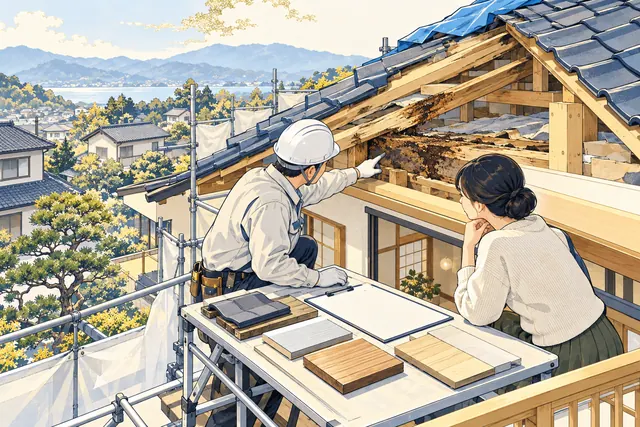
Extra repair costs: five checks before approval
If told extra substrate repairs are needed, check photos, reasons, price, duration, and alternatives.

After repairs: completion, warranty, and recurrence records
Roof and leak-repair completion checks: keep photos and documents without climbing onto the roof.
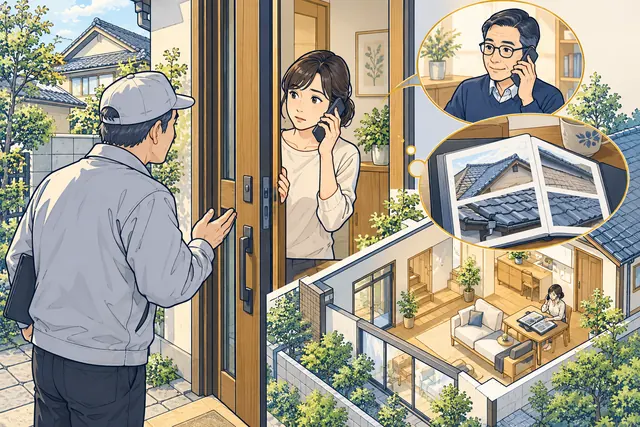
Do not panic over “unsafe roof” or “free with insurance”: handling inspection sales
Unexpected roof repair sales: checks and advice contacts before believing photos or insurance explanations.
Before arranging repairs in Japan
You do not need to rush a decision when you do not understand the documents or explanation.
An estimate and a contract have different purposes
An estimate (見積書) describes proposed work and its price. If you do not understand what you would be agreeing to, ask about the work, extra charges and schedule before deciding.
If communicating in Japanese is difficult
Ask in advance whether an interpreter can help and which languages the provider supports. Translated articles do not mean that our phone service or contractors provide English or Vietnamese support.
Reference: Housing Renovation and Dispute Settlement Support Center — estimate consultations
Words used in this article
Short explanations, with the Japanese words you may hear in everyday life.
- Warranty 保証(hoshou)
Conditions describing how certain problems after the work will be handled.
Check coverage, period, exclusions and contact details in writing; a warranty does not make every repair free.
- Scaffolding 足場(ashiba)
A structure assembled so workers can carry out work safely at height.
Whether it is needed depends on the height and work location. Do not climb it yourself.
- Contact details 連絡先(renrakusaki)
Information such as a telephone number or office for getting in touch.
Keep details for your property manager, previous contractor and insurer beforehand; check their languages and opening hours.
- Recurrence 再発(saihatsu)
A problem happening again after it appeared to have stopped.
Record when it happens and the weather, then check the previous work and warranty when asking for advice.
- Written estimate 見積書(mitsumorisho / mitsumori)
A document showing proposed work, materials and costs before you place an order.
Ask for explanations of Japanese wording you do not understand before signing an agreement.
- Additional charges 追加費用(tsuika hiyou / tsuika ryoukin)
Costs added later to the amount first proposed.
Confirm the extra work, reason and amount in writing before that work starts.
Plain-language explanations by Tatemono Fukkyu Note. They are not an assessment of your building or an individual evacuation decision.