
Repair entry points after confirming animals are gone and building functions are preserved. Compare work that protects ventilation, drainage, and roof waterproofing, plus reinspection.
Understand this article's terms in plain language
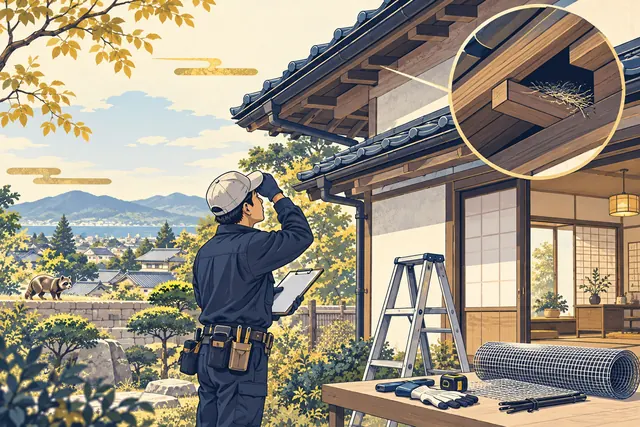
- Animal exit and entry-point repairs
- Separate confirming animals have left from building work to prevent reentry. Make sure holes are not sealed with animals inside.
- 01
Ask how animal exit is confirmed
- 02
Investigate entry points and building functions
- 03
Estimate repairs, cleaning and reinspection
Do not stop at driving animals out
Remaining holes or food sources can invite reentry; sealing alone may leave animals or dirt inside. Coordinate responsibilities and sequence for handling and repairs.
Separate dangerous close encounters from routine repairs
Fukkyu Idaten’s emergency animal capture is unconfirmed.
Safe location and reporting
Keep away and follow police or local guidance.
Check the species and laws
Consult the appropriate specialist before traps or blocking holes.
Cleaning and entry-point repairs
Confirm animals have left. Preserve ventilation and drainage.
Functions that must not be blocked
Some openings are needed for ventilation/drainage. Even mesh requires checks for material, fixing, corrosion and inspection. Discuss building-suitable methods with roof/wall contractors.
Obtain work photographs
Get photos of repaired holes, openings left and future check points. You need not climb the roof. Record cleaning/disposal scope separately.
Terms if the problem recurs
Check warranty coverage for other openings, building deterioration, and new species. Agree inspection fees, reporting deadlines, and temporary measures to reduce repeat explanations if sounds return.
Frequently asked questions about this topic
Is prevention complete once the animal is driven out?
Animals may reenter if openings or damage remain. Check whether work includes confirming departure, cleaning, repairing holes and components, and post-work records. Do not compare expulsion-only and repair-inclusive prices as equivalent.
What should I ask if someone recommends blocking a ventilation opening?
Check preservation of ventilation, drainage and waterproofing. Ask species, materials, fitting locations and inspection methods; get photos and recurrence warranty terms.
FAQ and related guidance checked October 4, 2026. Ask relevant contacts about individual conditions, current acceptance, and programs.
Content errors, rights concerns or service information changes:Contact Kaneyoshi Miwa (Japan Product Management). Include the page URL and relevant passage. This is for routine inquiries, not emergency reporting.
What to learn next
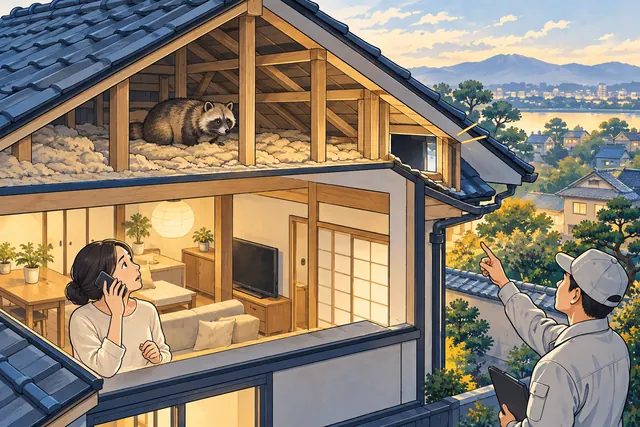
Sounds in the attic: checks before trapping animals inside
Do not identify animals by sounds alone or seal entries or set traps before advice. Arrange investigation, lawful handling, cleaning, and entry repairs separately.
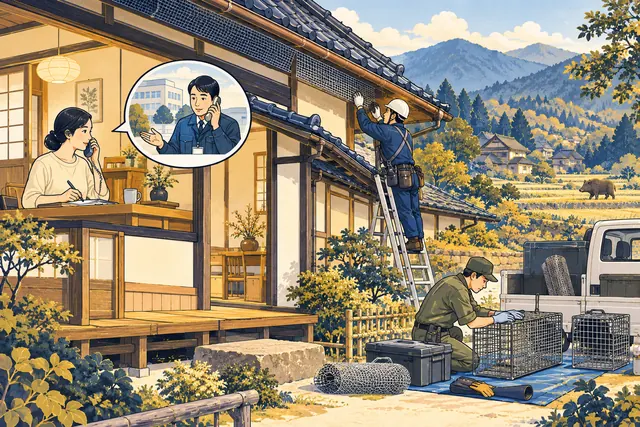
Wildlife-service comparisons, separating municipality, capture, and building repairs.
For dangerous wildlife, prioritize police/local government. Routine home entry needs a provider versed in species/laws; building contractors handle holes/roofs as separate roles.

After repairs: completion, warranty, and recurrence records
Roof and leak-repair completion checks: keep photos and documents without climbing onto the roof.
Words used in this article
Short explanations, with the Japanese words you may hear in everyday life.
- Waterproofing 防水(bousui)
Materials or work that help keep water out of a building.
The right repair depends on the damage and its cause.
- Warranty 保証(hoshou)
Conditions describing how certain problems after the work will be handled.
Check coverage, period, exclusions and contact details in writing; a warranty does not make every repair free.
- Recurrence 再発(saihatsu)
A problem happening again after it appeared to have stopped.
Record when it happens and the weather, then check the previous work and warranty when asking for advice.
Plain-language explanations by Tatemono Fukkyu Note. They are not an assessment of your building or an individual evacuation decision.