
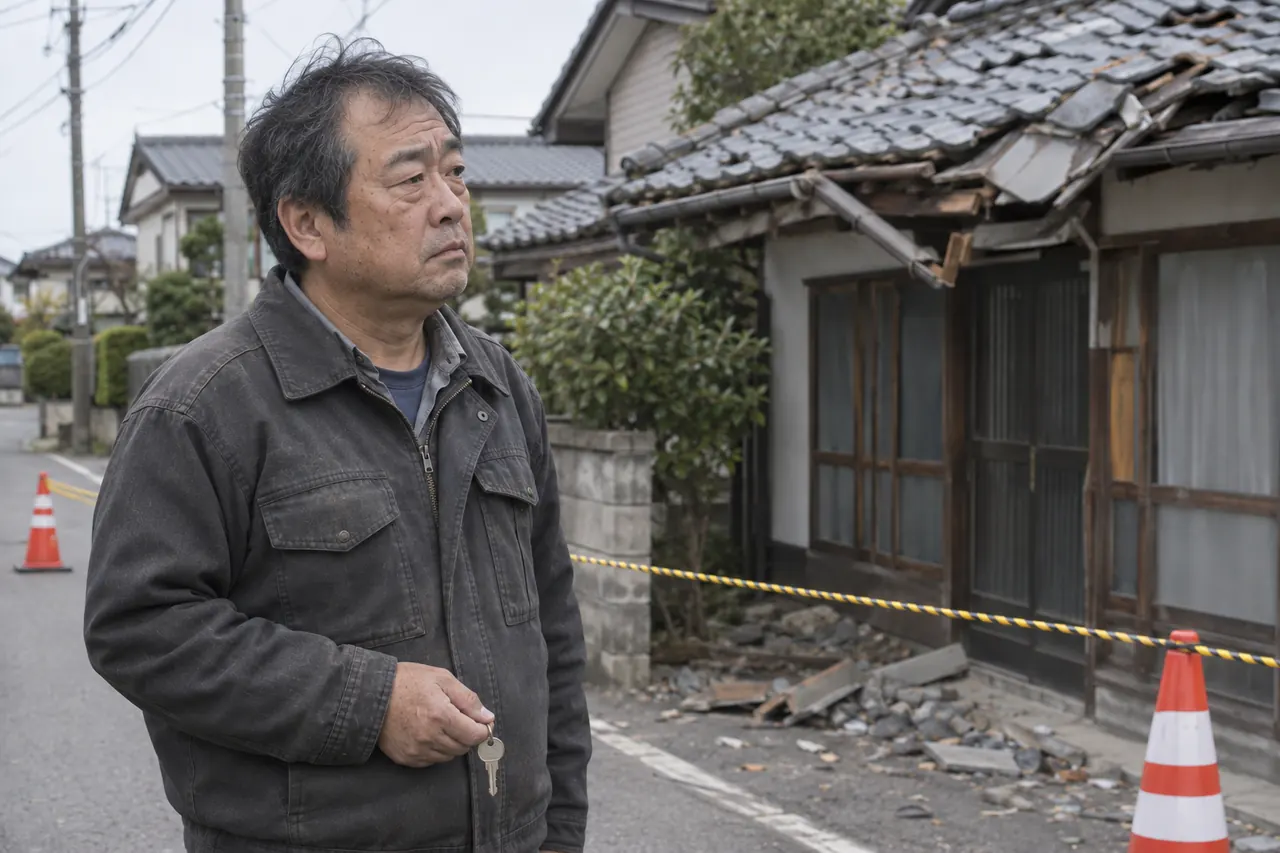
Do not enter if leaning, debris or badly deformed doors concern you. Ask local government or building specialists. Photos/crack widths alone cannot establish safety.
Understand this article's terms in plain language
- Temporary measures
- Temporary measures to limit further damage. Check these separately from permanent repairs and fixing the cause.
- Quote total
- Check how much travel, investigation, materials, work and disposal the price includes. Ask separately from the advertised minimum.
- 01
Watch for aftershocks and falling objects; do not enter unsafe buildings
- 02
Check local guidance on building safety
- 03
Handle safety, damage assessment, repairs and insurance separately
Crack width alone cannot establish safety
Structure, location, depth, and nearby deformation must be assessed together. Photos alone may not show whether damage is surface-only or structural. If you sense danger, do not approach even to document it.
Separate stopping the cause from restoring the interior
Before restoring appearance, check the cause and plans for drying and inspections.
- 01Safety checks and cause investigation
List unusable areas and affected equipment
- 02Address causes and necessary inspections
Discuss leak causes, drying and equipment inspections
- 03Interior restoration and resuming use
Restore finishes and check conditions for resuming use
The three assessments serve different purposes
Building safety, municipal residential-damage assessment, and insurer damage checks serve different purposes. One result does not necessarily determine the others. Confirm contacts and procedures separately.
Do not hide it with repairs first
First secure safety, then record cracks and displacement. Discuss repair steps before painting or interior finishes conceal areas requiring expert inspection. Prioritize temporary work needed to remove danger, recording before and after as far as possible.
Insurance contacts differ for homes and business premises
For earthquake, eruption or tsunami damage, check your earthquake or business insurance coverage. Repair estimates and insurance payments are not necessarily equal. Hotels and shops should also ask their insurer about business-interruption and other coverage.
Frequently asked questions about this topic
Can I stay if the crack is small?
This site cannot assess safety. If there is deformation or concern, leave the building and ask specialists or local government.
FAQ and related guidance checked October 4, 2026. Ask relevant contacts about individual conditions, current acceptance, and programs.
Content errors, rights concerns or service information changes:Contact Kaneyoshi Miwa (Japan Product Management). Include the page URL and relevant passage. This is for routine inquiries, not emergency reporting.
What to learn next
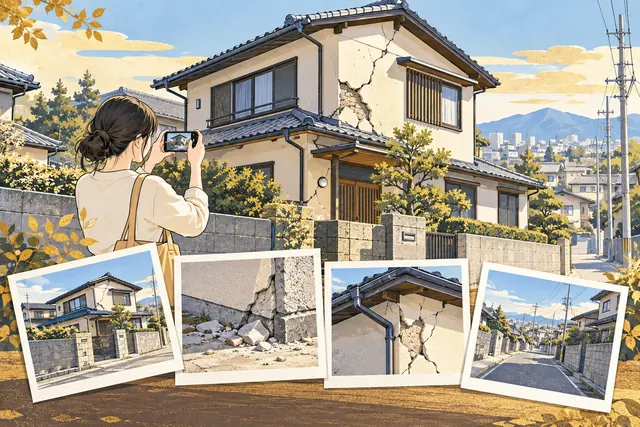
Pre-repair photos: building, location, close-ups, and wider views
Organize photos for provider consultations, damage records, and insurance checks. Avoid unsafe photography; show when, where, and what.
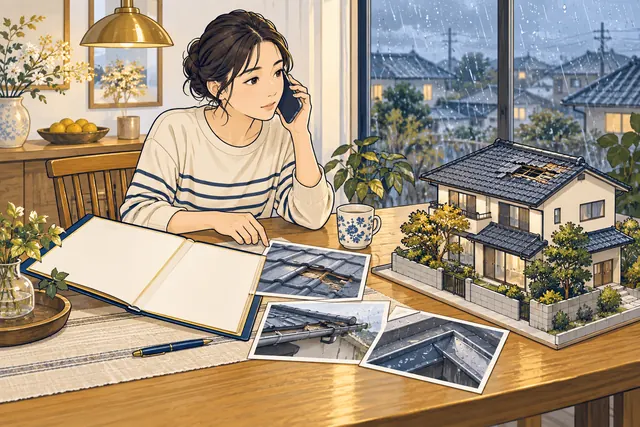
Does fire insurance cover rain leaks? Ask your insurer before signing
A rain leak alone does not establish insurance cover. Prepare questions about cause, policy terms, deductibles, photos and quotes.
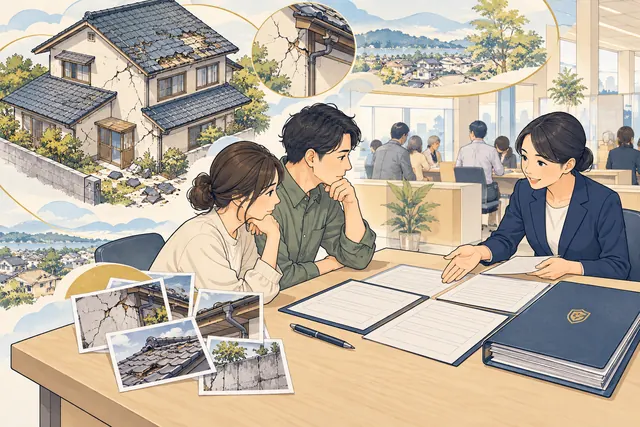
Disaster certificates, insurance and support: what to ask local government before repairs
Home damage certification, insurance claims and disaster support are separate procedures. Identify contacts and pre-work requirements.
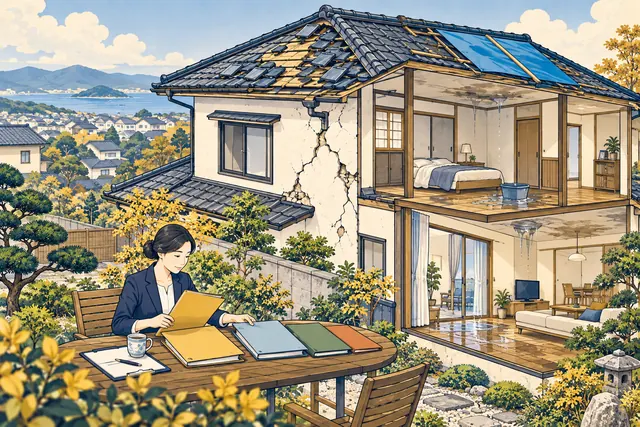
Multiple building damages: roof, wall and interior restoration
Multiple typhoon or flood damage: organize safety, investigation, restoration priorities, and coordination.
Words used in this article
Short explanations, with the Japanese words you may hear in everyday life.
- Local authority 自治体(jichitai / shikuchouson)
The administration of your city, ward, town, village or prefecture.
Use your area's official website or office to check evacuation sites and post-disaster procedures.
- Restoration 復旧(fukkyuu)
Work to make something usable again after a disaster or other damage.
Check the necessary order with professionals, including safety checks, finding the cause and repairs.
- Tsunami 津波(tsunami)
Waves caused by events such as an undersea earthquake that travel toward and reach the coast.
Do not go to the coast to look. Follow evacuation information from official authorities.
Plain-language explanations by Tatemono Fukkyu Note. They are not an assessment of your building or an individual evacuation decision.