
Loss is more than a count of damaged belongings: it includes waiting for repairs, relying on family and uncertain expenses. These public records help us look at recovery through everyday life.
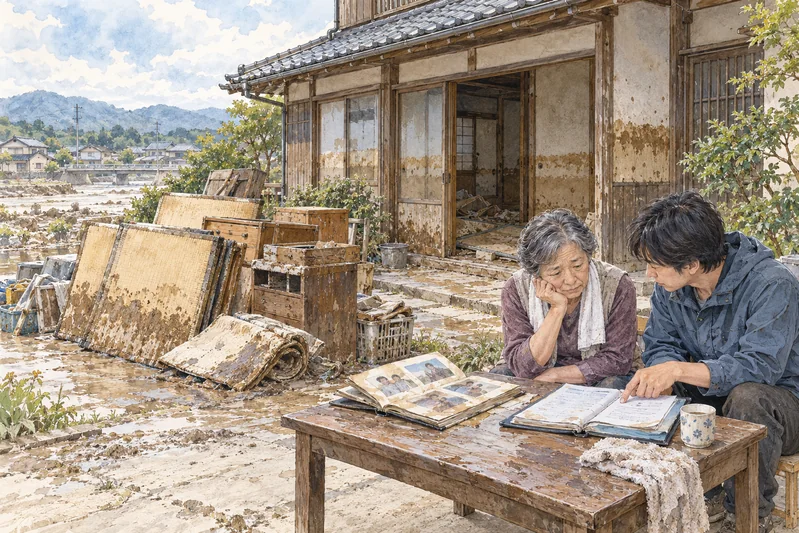
When insurance did not cover all repairs
She recalls that insurance and gifts did not cover repairs to walls and the roof. A loan in her grandson’s name also affected the family’s living arrangements afterward.
Read the Cabinet Office source
Check what your current policy covers and what you would pay.
Nine months after building, savings went into repairs
His new home and belongings flooded. He says replacing floors and walls used half the money saved for retirement. He was still comparing insurance quotes when the disaster struck.
Read the Cabinet Office source
Confirm the difference between requesting quotes and having active cover.
Recovery meant more than finishing the cleanup
The family stayed with relatives, then repaired the grandmother’s room and a room for everyone to sleep in. She recalls losing many belongings and needing over three months to return to normal life.
Read the Cabinet Office source
Include temporary housing and family care in your consultation notes.
A small bag preserved information needed for care
After a tsunami swept away her home, she had the small bag carried during evacuation. She recalls that items including her medication record helped with later care and identification.
Read the Cabinet Office source
Gather medication information and contacts. Never return after evacuating to collect them.
The bookcase stayed upright, but books flew out
His secured bookcase did not fall, but books piled up across the room. This account reminds us to consider items inside furniture as well as the furniture itself.
Read the Cabinet Office source
Check sleeping areas, exits and stored items alongside furniture anchoring.
At home, assistance information was harder to receive
She recalls difficulty getting food and assistance information to people sheltering at home. She copied notices from an evacuation shelter and distributed them to people staying in their homes.
Read the Cabinet Office source
Identify local assistance contacts and information channels even if staying at home.
A documentary photograph of disaster damage
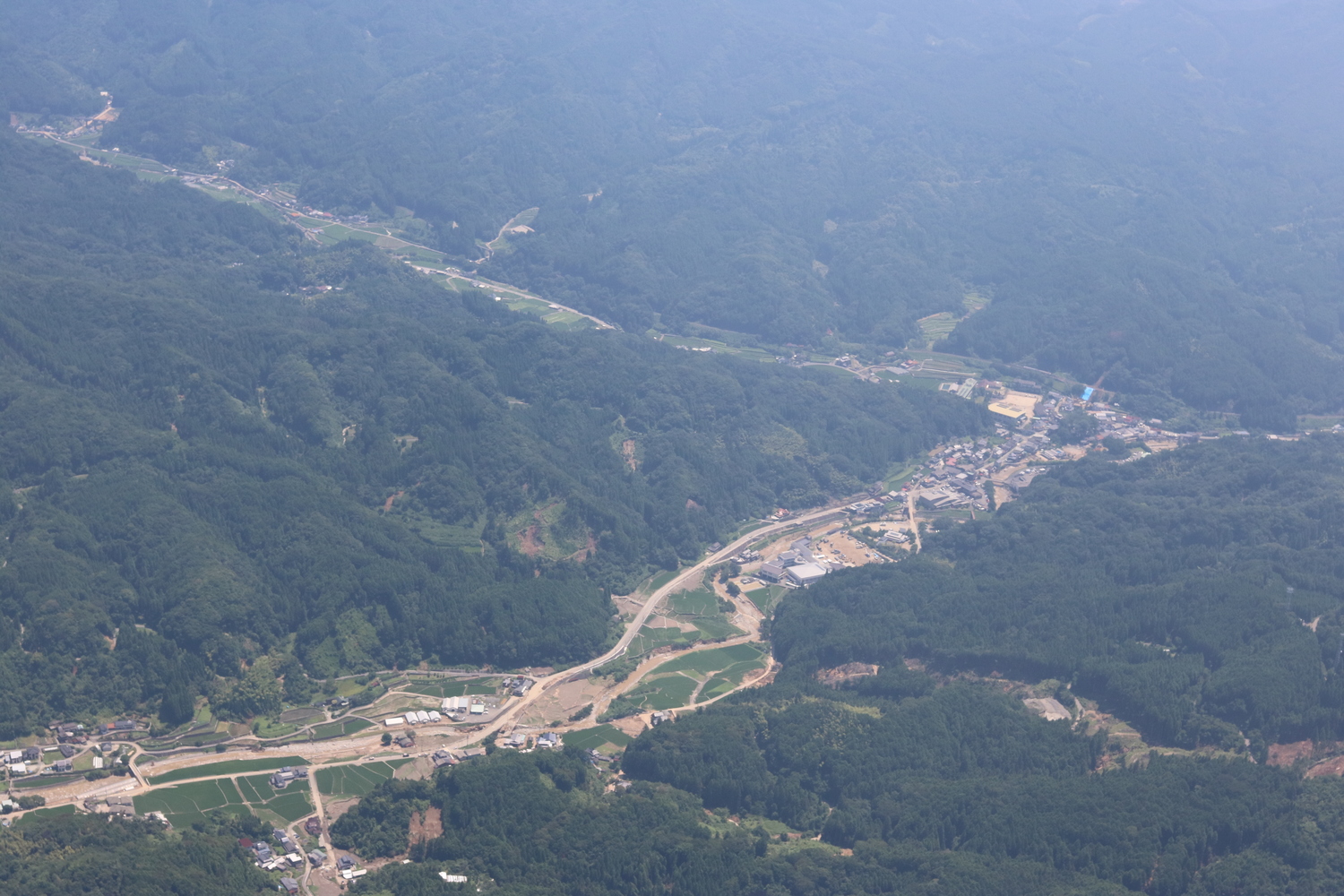
Photographed on 13 July 2017 in the Fukuoka–Oita area after the Northern Kyushu heavy rain (course 2, photo 0765). Source: Geospatial Information Authority of Japan. The image is unedited and displayed to fit the screen.
Original GSI page · Original photograph · Terms of use (PDL 1.0)
Read original reports from disaster-support organizations
These are editorial reference links, not partnerships, endorsements or agreed reciprocal links. Republishing photographs or text requires separate checks of terms and permission.
When money or housing is difficult, seek advice before rushing a repair contract
You can ask your municipality’s disaster assistance desk, property manager or existing contractor. Available support and eligibility vary. Explain separately where you can stay, what you can afford and which repairs are urgent.
How we handle accounts and images
Each summary links to its source. The Cabinet Office permits use of this project’s stories and illustrations. Photographs and reports from other organizations require separate terms and permission before republication.
Use guidance for the Cabinet Office project · For reporting, photo contributions and related resources
The operator is Japan Product Management LLC, which also operates Fukkyu Idaten. Naniya Co., Ltd. originated the service. People who shared their experiences and public agencies are not endorsing the service by appearing here.
Check your preparations, one step at a timeWords used in this article
Short explanations, with the Japanese words you may hear in everyday life.
- Tsunami 津波(tsunami)
Waves caused by events such as an undersea earthquake that travel toward and reach the coast.
Do not go to the coast to look. Follow evacuation information from official authorities.
- Evacuation shelter 避難所(hinanjo / shitei hinanjo)
A facility where people unable to return home after a disaster can stay temporarily.
Its purpose differs from an immediate escape site. Check which shelters are open with local authorities.
- Local authority 自治体(jichitai / shikuchouson)
The administration of your city, ward, town, village or prefecture.
Use your area's official website or office to check evacuation sites and post-disaster procedures.
- Property management company 管理会社(kanri gaisha)
A company appointed to manage a building and handle contact on the owner's behalf.
For a rented home or apartment building, check the contact details in your agreement or building notices.
Plain-language explanations by Tatemono Fukkyu Note. They are not an assessment of your building or an individual evacuation decision.