
Record when symptoms stopped and rain or wind conditions; confirm investigation plans and fees. Stopping alone does not mean no repair is needed.
Understand this article's terms in plain language
- Cause investigation
- Investigation of water-entry routes and similar issues. Ask methods, cost, and uncheckable areas.
- Inspection scope
- Which places and methods the investigation covers. Ask about inaccessible areas and fees beforehand.
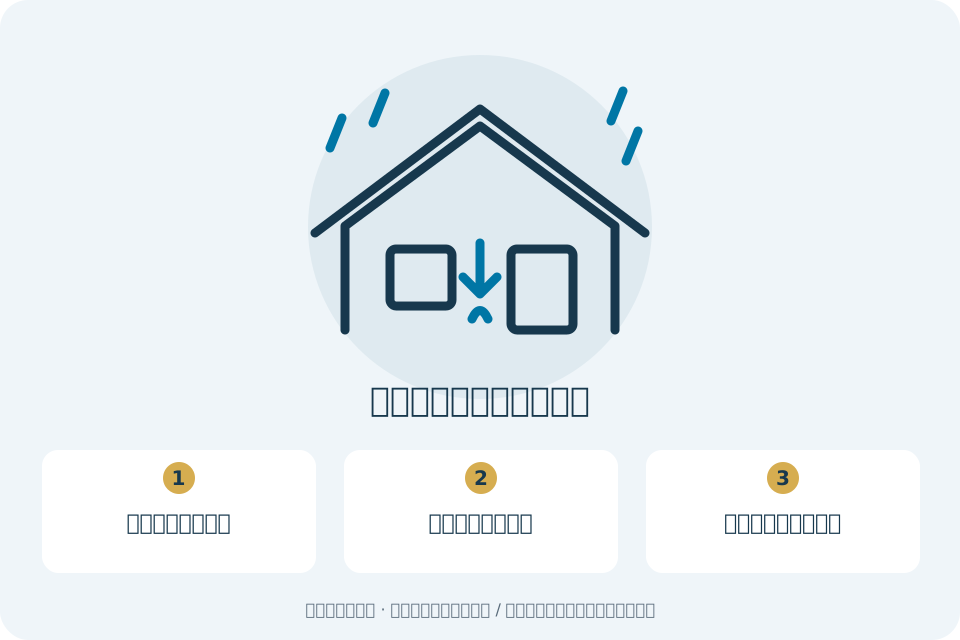
- 01
First check danger and existing contact points
- 02
Organize photos and the work you want
- 03
Check scope, total and schedule
Symptoms that disappear can still provide clues
Record rain intensity, wind direction, stain changes, and when dripping last occurred. Keep current and active-leak photos. If it happened there before, provide those dates too.
From the current situation to the next request
These steps are general guidance organized by the editors.
- 01First check danger and existing contact points
Do not inspect or take photos in dangerous places.
- 02Organize photos and the work you want
Separate known facts from what remains unknown.
- 03Check scope, total and schedule
Agree on the person responsible, cost, timing and way to check.
Distinguish observations from conclusions about causes
“Only in rain” and “near the window” describe symptoms. Visible signs alone do not establish a roof, wall, or pipe cause. Ask about methods and limits, plus opening and restoration costs if needed.
What to ask before canceling
Ask about surveying without symptoms, photo-only advice and postponement fees. Agree recurrence contact to avoid starting your search again during rain.
Avoid dangerous checks during the next rain too
Observe only safely indoors; stay away from wet lights or outlets and bulging ceilings. Do not climb onto roofs or open leak areas yourself to check.
Unknown leak cause: what to check after investigation?
No water during inspection does not mean the cause is gone. An unknown cause also does not necessarily justify an immediate broad repair contract.Confirmed facts, remaining questions, next conditions to checkSeparating these makes the next discussion more specific.
What you observed
Record when, which room and location, and weather or equipment use when wet, with safe photos and changes since last time.
Scope investigated
Ask for investigated locations and methods, reproduced symptoms, and unchecked areas. An indoor water location alone does not establish a roof cause.
Next decision
Ask whether to observe next rain or investigate pipes/condensation. Check separate costs for reinvestigation, temporary measures and permanent repairs.
Four questions when receiving the report
- Which evidence confirms the cause, and which parts remain hypotheses?
- If the problem did not recur, which conditions were missing and what should be checked next?
- Besides rain entering, do water supply pipes, drains or condensation need checking?
- Can photos and findings be shared when handing over to another specialist?
Water stains may come from rain leaks, equipment or pipe leaks, or condensation. Appearance alone cannot diagnose the cause. Do not open ceilings or walls, touch wet electrical equipment or spray water at height to check yourself; ask a professional.
If you own the home and are looking for a contractor, start by saying the leak has stopped. Ask what they can inspect under current conditions, what you would pay if they cannot find the cause and whether you will receive a report with photos. To find candidates, see therain leak and roofing contractor comparison (in Japanese)for the types of work covered and what to check in a quote.
If you are also considering a contractor network, read what to ask Amamori 119 when a spray test does not reproduce the leak (in Japanese) for photos, written findings and follow-up inspection terms. This is not a recommendation of a particular contractor. Ask the local member about availability and fees, and compare candidates on the same terms.
Organize ceiling-stain information by conditions · If you suspect a pipe leak · Ask about rain leaks versus condensation · Cost terms if the cause remains unknown
Basic information:Sumairu Dial: could it be something other than a rain leak?. Questions and record steps were organized by editors, not definitive diagnoses or repair decisions. Checked October 20, 2026.
Frequently asked questions about this topic
Can I throw away notes about water marks once the rain stops?
Keep them. Rain intensity, wind direction, start/stop times and places help reproduce conditions. Stopping alone does not prove the cause is resolved; share records with investigators.
Does keeping an inspection booking help after a leak stops?
Ask what investigation can establish, its limits, and what to check in the next rain. Confirm visit and inspection fees and cancellation terms; report current conditions before canceling on the assumption the cause is fixed.
FAQ and related guidance checked October 4, 2026. Ask relevant contacts about individual conditions, current acceptance, and programs.
Content errors, rights concerns or service information changes:Contact Kaneyoshi Miwa (Japan Product Management). Include the page URL and relevant passage. This is for routine inquiries, not emergency reporting.
What to learn next
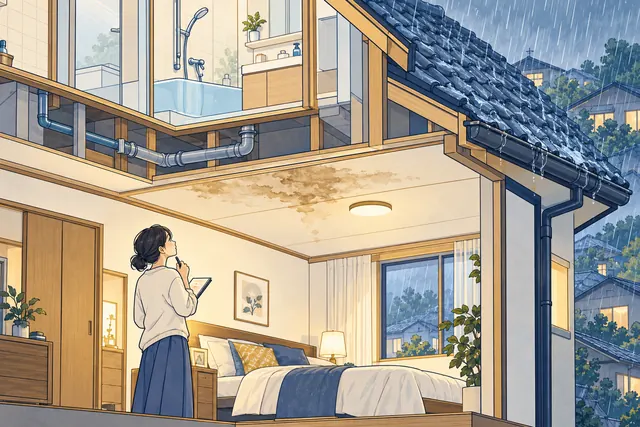
Does a ceiling stain always mean a rain leak?
Only on rainy days, or continuing in sunshine? Organize observations for inspectors without assuming the cause of ceiling stains.
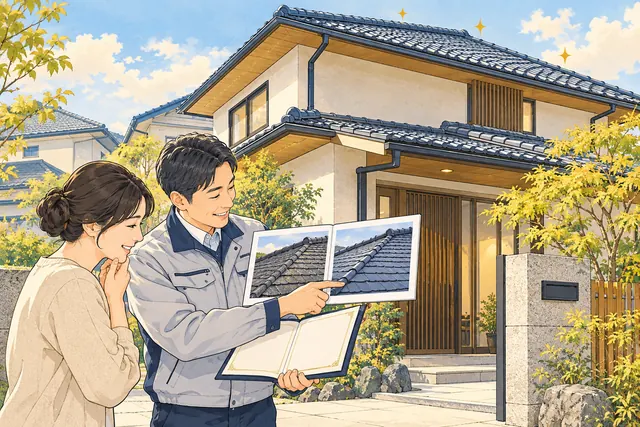
After repairs: completion, warranty, and recurrence records
Roof and leak-repair completion checks: keep photos and documents without climbing onto the roof.
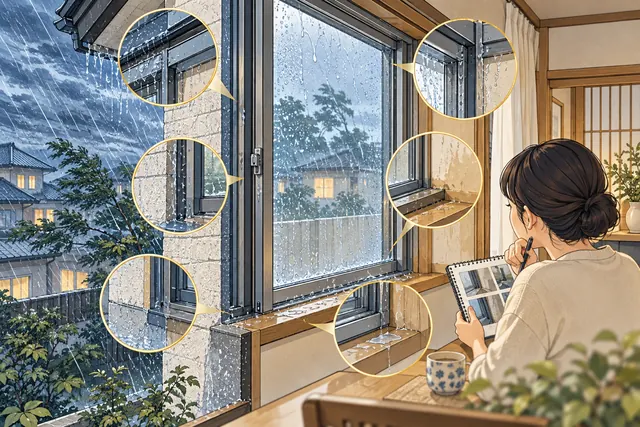
Rain around windows: do not assume frames, walls or condensation are the cause
Safely record rain intensity, wind, wet locations and indoor/outdoor photos. Before filling visible gaps, discuss checking frames, walls, waterproofing and drainage.
Words used in this article
Short explanations, with the Japanese words you may hear in everyday life.
- Restoration 復旧(fukkyuu)
Work to make something usable again after a disaster or other damage.
Check the necessary order with professionals, including safety checks, finding the cause and repairs.
- Recurrence 再発(saihatsu)
A problem happening again after it appeared to have stopped.
Record when it happens and the weather, then check the previous work and warranty when asking for advice.
- Condensation 結露(ketsuro)
Moisture in the air turning into drops on a cold window, wall or other surface.
It differs from rain or pipe leaks, but a stain alone may not show which is responsible.
Plain-language explanations by Tatemono Fukkyu Note. They are not an assessment of your building or an individual evacuation decision.