
Safely record rain intensity, wind, wet locations and indoor/outdoor photos. Before filling visible gaps, discuss checking frames, walls, waterproofing and drainage.
Understand this article's terms in plain language
- Temporary measures
- Temporary measures to limit further damage. Check these separately from permanent repairs and fixing the cause.
- Cause investigation
- Investigation of water-entry routes and similar issues. Ask methods, cost, and uncheckable areas.
- Inspection scope
- Which places and methods the investigation covers. Ask about inaccessible areas and fees beforehand.
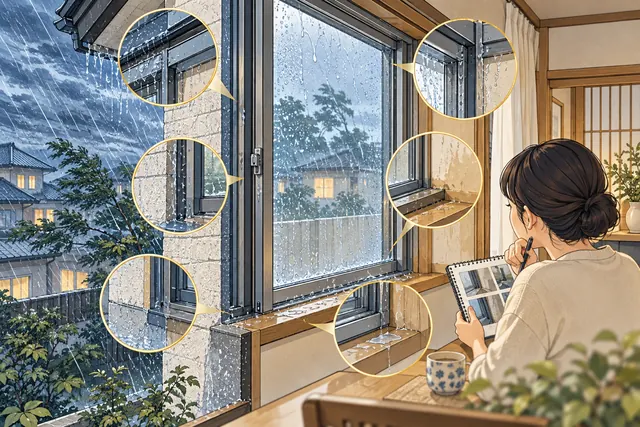
- 01
Check indoor electrical and falling-object hazards
- 02
Record rain, wind and wet areas
- 03
Request inspection of the window and surrounding wall
Only rainy days, or cold days too?
Report rain, wind, open windows, humidity, and equipment use. Condensation and rain entry may coexist; appearance alone does not establish one cause.
Check safety before reading the article
If there is danger or you cannot judge, move to safety.
Do not photograph or operate equipment in unsafe areas. Call 119 for fire or rescue.
Record times and symptoms, then contact management or a repair service. This is not a finding that safety is guaranteed.
Water's entry and exit points differ
Ask whether frames, walls, junctions, and waterproofing are checked. Avoid adding sealant uniformly to every gap; this may block drainage holes.
Emergency and permanent repairs
Safely catch water and move belongings indoors. Do not work outside windows in strong winds. Separate temporary measures, investigation, and permanent repair; ask water-test methods and indoor effects.
Questions needed for comparison
Ask the suspected cause location, unchecked areas, whether replacement/waterproofing/walls are included, and whether interiors are separate. Check warranties and existing contractors too.
Frequently asked questions about this topic
If water comes through a window, will replacing the frame fix it?
The water outlet does not establish its entry point. Check wall junctions, window surrounds, and condensation too. Ask about investigation methods, evidence, and exclusions as well as replacement proposals.
No rainy-day photos—can investigation still proceed?
Without photos, describe timing, rainfall, wind, and water location. No dangerous photography in the next rain is needed. Ask investigators about reproducing the leak safely.
FAQ and related guidance checked October 4, 2026. Ask relevant contacts about individual conditions, current acceptance, and programs.
Content errors, rights concerns or service information changes:Contact Kaneyoshi Miwa (Japan Product Management). Include the page URL and relevant passage. This is for routine inquiries, not emergency reporting.
What to learn next
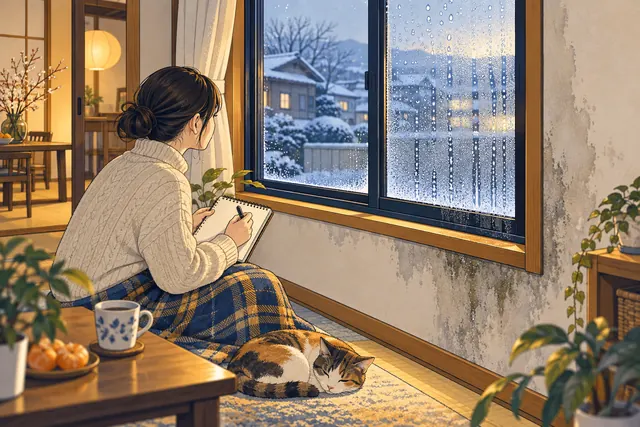
Rain leaks or condensation? Recording wet windows, walls and ceilings
Before assuming condensation, record rain, temperature, humidity, and equipment use: investigation points.
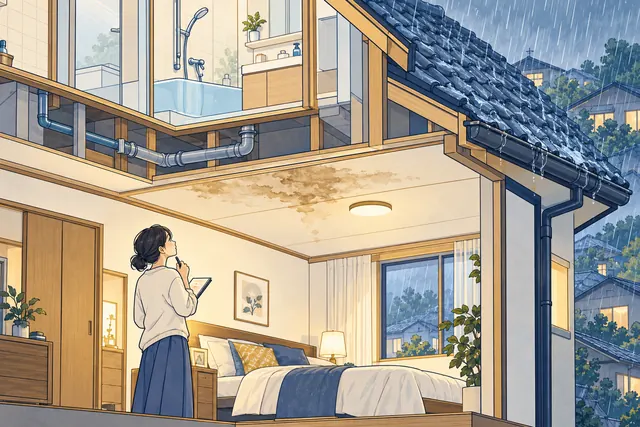
Does a ceiling stain always mean a rain leak?
Only on rainy days, or continuing in sunshine? Organize observations for inspectors without assuming the cause of ceiling stains.
What does a rain-leak investigation fee include?
Why do low and high leak-repair quotes differ? Cost items affecting totals, site-inspection questions, and comparison tips.
Words used in this article
Short explanations, with the Japanese words you may hear in everyday life.
- Waterproofing 防水(bousui)
Materials or work that help keep water out of a building.
The right repair depends on the damage and its cause.
- Condensation 結露(ketsuro)
Moisture in the air turning into drops on a cold window, wall or other surface.
It differs from rain or pipe leaks, but a stain alone may not show which is responsible.
- Joint sealant or caulking シーリング(shiiringu / kookingu)
Material, or work using that material, to fill gaps between building parts.
Filling a gap does not fix every roof leak; the cause still needs checking.
- Warranty 保証(hoshou)
Conditions describing how certain problems after the work will be handled.
Check coverage, period, exclusions and contact details in writing; a warranty does not make every repair free.
Plain-language explanations by Tatemono Fukkyu Note. They are not an assessment of your building or an individual evacuation decision.