
Location alone cannot distinguish rain leaks from condensation. Record weather, time, ventilation, heating and air conditioning; seek investigation if repeated.
Check safety before reading the article
If there is danger or you cannot judge, move to safety.
Do not photograph or operate equipment in unsafe areas. Call 119 for fire or rescue.
Record times and symptoms, then contact management or a repair service. This is not a finding that safety is guaranteed.
Understand this article's terms in plain language
- Cause investigation
- Investigation of water-entry routes and similar issues. Ask methods, cost, and uncheckable areas.
- Inspection scope
- Which places and methods the investigation covers. Ask about inaccessible areas and fees beforehand.
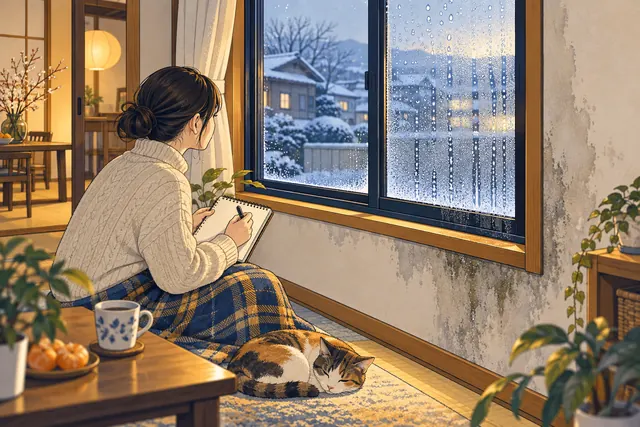
- 01
Record the wet area and when it appeared
- 02
Record rain, equipment use and indoor conditions together
- 03
If it recurs or spreads, investigate the cause
Observe changes
Record whether it happens only in rain, mainly mornings, on windows alone or also walls and ceilings, and repeatedly in the same place. Recurrence after wiping water is useful information, but stay away from dangerous ceilings and electrical equipment.
Organize window, wall and ceiling dampness by when it occurs
Describe when, where and after what activity it got wet, beyond saying “I think it is condensation,” to discuss inspection scope more easily.
The table organizes consultations, not diagnoses. Rain, plumbing leaks, and condensation can look alike and have overlapping causes.
| When you noticed it | Records to retain | Questions for the inspector |
|---|---|---|
| Water drops on windows on cold mornings | Time, location, heating, humidifying and indoor laundry conditions; temperature/humidity readings if available. Buying equipment is not required for advice. | What suggests condensation? Must rainwater or equipment leaks also be checked? Wet windows alone cannot reveal conditions inside walls. |
| Windows, walls or ceilings become wet after rain or wind | Rain time, discovery time, wet area and changes on dry days. Only safely taken photos are needed. | Could the water outlet be distant from the entry? Please explain possible causes, methods, and areas not verifiable this time. |
| It also gets wet after bathing, water use or air conditioning | Report equipment used, usage time, and when wetness was noticed; mention if there was no rain. No need to keep using equipment to reproduce it. | How will you distinguish equipment or pipe leaks from condensation? Who coordinates building and equipment investigations? |
It dried after ventilation, the rain stopped, or surface water was wiped away.That alone does not show the cause is fixed. If it recurs, spreads or hidden areas worry you, seek advice with records.
You need not decide on work before the cause is clear.
Ask what the investigation fee covers, next steps if inconclusive, why walls need opening and restoration costs, and whether extra work needs prior approval. Have investigation and repair explained separately.
Do not open walls or ceilings, climb onto roofs, or apply water to test causes yourself. In rentals and apartments, contact management or the landlord before ordering work. Homeowners can also ask their builder or previous contractor.
Whom to contact for pipe leaks, and consultation notes / Investigation scope to check for ceiling stains / Understanding work scope and costs
Evidence:Sumairu Dial: “Could it be condensation rather than a leak?”・“If you notice leaks / Could it be something other than rain?”as references, organized into records and questions by the editors. Public bodies do not thereby endorse this site or service.
For those ready to find a provider after organizing their request
Fukkyu Idaten operator: Japan Product Management LLC. Originator: Naniya Co., Ltd. Check areas, work types and conditions on the destination page. You can also check on the web without using the app.
See the iPhone app introduction View the web version
Contact the operator by phone or official LINE / Public housing advice — Sumairu Dial
Do not decide on waterproofing first
External entry, equipment leaks, and condensation in rooms or walls need different responses. Ask which causes are investigated and how. Be cautious of claims that paint or sealant alone solves an unknown cause.
If mold or deterioration is present
Check the moisture source as well as surface cleaning. Consult providers for large areas or inaccessible wall interiors and underfloors. For concerns about existing illness or health, consult a medical institution or other appropriate specialist.
Frequently asked questions about this topic
If ventilation improves it, does that rule out a rain leak?
That alone cannot establish the cause. Tell the inspector when it recurs too.
FAQ and related guidance checked October 4, 2026. Ask relevant contacts about individual conditions, current acceptance, and programs.
Content errors, rights concerns or service information changes:Contact Kaneyoshi Miwa (Japan Product Management). Include the page URL and relevant passage. This is for routine inquiries, not emergency reporting.
What to learn next
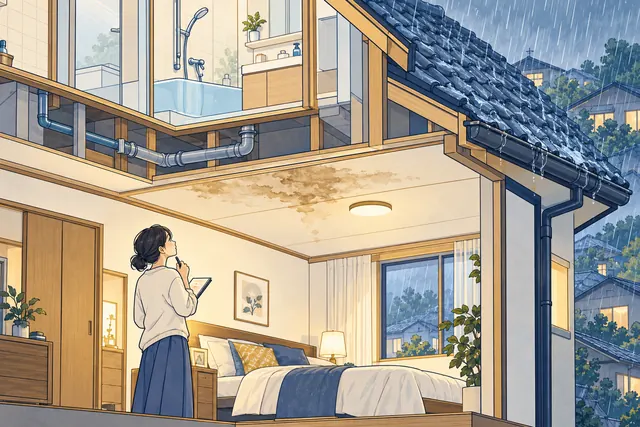
Does a ceiling stain always mean a rain leak?
Only on rainy days, or continuing in sunshine? Organize observations for inspectors without assuming the cause of ceiling stains.
What should you do first when rain leaks into your home?
When water drips from the ceiling, organize what you can and must not do: safety, moving belongings, photos, and explaining the problem to providers.
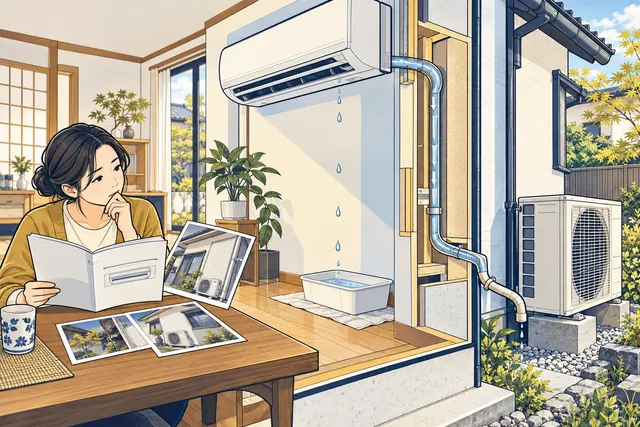
Air conditioner leaks: choosing manufacturer repair or building investigation
When air conditioning leaks, check warranty/maintenance contracts, electrical safety and building damage.
Words used in this article
Short explanations, with the Japanese words you may hear in everyday life.
- Condensation 結露(ketsuro)
Moisture in the air turning into drops on a cold window, wall or other surface.
It differs from rain or pipe leaks, but a stain alone may not show which is responsible.
- Recurrence 再発(saihatsu)
A problem happening again after it appeared to have stopped.
Record when it happens and the weather, then check the previous work and warranty when asking for advice.
- Restoration 復旧(fukkyuu)
Work to make something usable again after a disaster or other damage.
Check the necessary order with professionals, including safety checks, finding the cause and repairs.
- Multi-unit housing 集合住宅(shuugou juutaku)
A building containing homes for several households, such as an apartment building.
Distinguish your own unit from shared areas and check building rules for repairs and evacuation.
- Landlord 大家(ooya / kashinushi)
The person or company renting out a room or home.
Check whether repairs should be reported to the landlord or management company before arranging work yourself.
- Joint sealant or caulking シーリング(shiiringu / kookingu)
Material, or work using that material, to fill gaps between building parts.
Filling a gap does not fix every roof leak; the cause still needs checking.
Plain-language explanations by Tatemono Fukkyu Note. They are not an assessment of your building or an individual evacuation decision.