
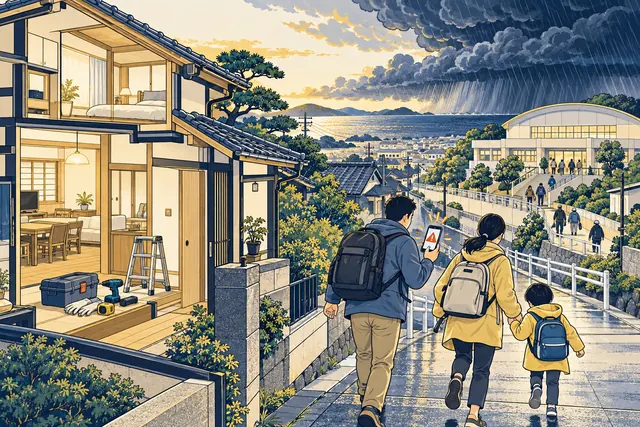
Do not wait on warning names alone: check home risks and local evacuation notices. When evacuation is needed, prioritize people over roof checks, sandbags or photos.
Understand this article's terms in plain language
- Evacuation and weather information
- Combine municipal evacuation and JMA information; consider your location and travel time when acting.
- Inspection scope
- Which places and methods the investigation covers. Ask about inaccessible areas and fees beforehand.
- 01
Check both meteorological and local authority information
- 02
Plan for older people and others needing longer to move
- 03
Check evacuation destinations and routes before danger approaches
Changes effective May 29, 2026
The Japan Meteorological Agency launched its new disaster-prevention weather information on May 29, 2026. Check the system of information names with levels, and distinguish weather information from municipal evacuation information. Use the official list rather than relying only on names in older articles.
From the current situation to the next request
These steps are general guidance organized by the editors.
- 01Check both meteorological and local authority information
Do not inspect or take photos in dangerous places.
- 02Plan for older people and others needing longer to move
Separate known facts from what remains unknown.
- 03Check evacuation destinations and routes before danger approaches
Agree on the person responsible, cost, timing and way to check.
How should I read alert levels and local information?
At alert level 3, people who need more time should evacuate; at level 4, the basic action is evacuation from dangerous places. Meteorological information is not itself a municipal evacuation instruction. Do not wait for level 5; also consider surroundings and hazard maps.
You can book repairs from your evacuation location
Do not delay evacuation for locking up or moving belongings. Tell providers you are evacuating and site access is unconfirmed. Do not return to danger merely to guarantee a visit.
Consultation notes for after things settle
Separate observed flooding, mudslides or roof damage from entry safety. Identify safety, survey, temporary and restoration responsibilities; photograph when safe to return.
Frequently asked questions about this topic
Should I call a repair contractor while a warning is in effect?
Prioritize your family’s safety over arranging visits. Check evacuation information and local danger; do not await a contractor in danger. You can arrange repairs from safety.
Can a new warning name alone determine when to evacuate?
Use current JMA explanations, local evacuation information and hazard maps together, beyond names. Prepare to act early, especially if family movement takes time.
FAQ and related guidance checked October 4, 2026. Ask relevant contacts about individual conditions, current acceptance, and programs.
Content errors, rights concerns or service information changes:Contact Kaneyoshi Miwa (Japan Product Management). Include the page URL and relevant passage. This is for routine inquiries, not emergency reporting.
What to learn next
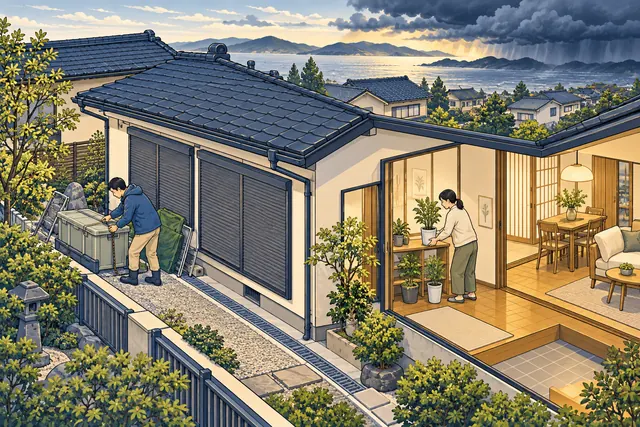
Before typhoons: building preparations without roof access
Ground checks before bad weather, contacts, and photos: an owner checklist to avoid post-disaster rush.
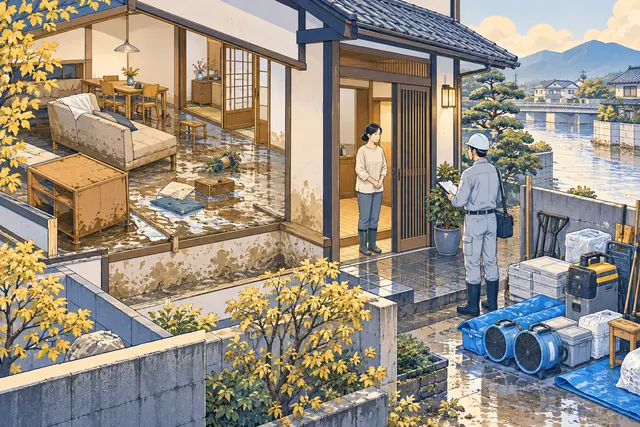
Flooded homes, restoration order before cleanup.
Evacuation, safety, damage records, cleanup/drying, electrical checks and interiors: steps for calm flood recovery.

Multiple building damages: roof, wall and interior restoration
Multiple typhoon or flood damage: organize safety, investigation, restoration priorities, and coordination.
Words used in this article
Short explanations, with the Japanese words you may hear in everyday life.
- Sandbags 土のう(donou)
Bags filled with soil or sand, used for purposes such as reducing water flow.
Prepare while conditions are calm; do not stay outdoors stacking them once flooding starts. Put evacuation first.
- Local authority 自治体(jichitai / shikuchouson)
The administration of your city, ward, town, village or prefecture.
Use your area's official website or office to check evacuation sites and post-disaster procedures.
- Alert level 警戒レベル(keikai reberu)
A scale used to communicate risks from heavy rain and the actions residents should take.
Check the affected area, information type and local guidance as well as the number.
- Evacuation instruction 避難指示(hinan shiji)
Information from local authorities calling on people in dangerous areas to evacuate.
Check the affected area and issue time. Put protecting life before checking the house or collecting belongings.
- Hazard map ハザードマップ(hazaado mappu)
A map showing places that may be affected under specified disaster conditions.
Check the disaster type and assumptions. An area without colour is not guaranteed safe.
- Restoration 復旧(fukkyuu)
Work to make something usable again after a disaster or other damage.
Check the necessary order with professionals, including safety checks, finding the cause and repairs.
Plain-language explanations by Tatemono Fukkyu Note. They are not an assessment of your building or an individual evacuation decision.