
US EPA IPM combines understanding conditions, prevention and needed action. In Japan, prioritize local pesticide/insecticide labels and hygiene guidance, adapting observation and home improvements.
Understand this article's terms in plain language
- Removal and prevention
- Treating current pests differs from preventing recurrence. Check target species, scope and return-visit terms.
- Warranty and return visits
- Not everything is free during the term. Ask covered pests, recurrence, conditions, and costs before contracting.
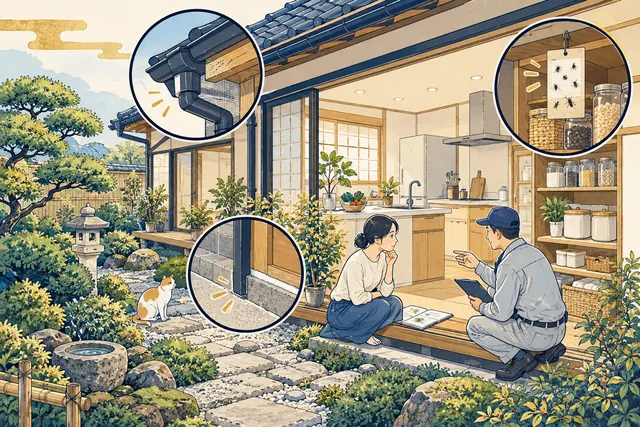
- 01
Record insect locations and frequency
- 02
Reduce food, water and hiding places
- 03
Agree on necessary measures and checking dates
Ideas that are easy to adopt
Rather than spraying the whole home whenever an insect appears, first establish what is where. Combine records, cleaning, food management, and leak repairs usable in Japanese homes.
From the current situation to the next request
These steps are general guidance organized by the editors.
- 01Record insect locations and frequency
Do not inspect or take photos in dangerous places.
- 02Reduce food, water and hiding places
Separate known facts from what remains unknown.
- 03Agree on necessary measures and checking dates
Agree on the person responsible, cost, timing and way to check.
Do not reuse foreign chemical charts
US products, qualifications, and dosages may not apply in Japan. Follow Japanese registrations, labels, sales conditions, and municipal guidance. Adapt ventilation and gap treatment to Japanese building construction.
Example of sharing tasks with family
Assign food and waste management, sighting-time records, management updates, and leak checks. Beyond applying chemicals, record when and what to check before the next response.
Agreement with the contractor
Align pests, monitoring, initial treatment, environmental improvements, and follow-up terms. The editors organized this for Japanese owners; it is not a transplanted US contract.
Frequently asked questions about this topic
Does overseas IPM mean using the same chemicals in Japanese homes?
Combining monitoring, food and water control, entry-point improvements, and necessary treatment is useful. Do not directly copy overseas products, concentrations, or methods; check Japanese product labels and specialist instructions.
How do I ask a contractor to use fewer chemicals?
Explain pests, locations/frequency, children/pets. Ask separately about nonchemical measures and why chemicals are needed. Agree observation, return-visit triggers and effectiveness checks.
FAQ and related guidance checked October 4, 2026. Ask relevant contacts about individual conditions, current acceptance, and programs.
Content errors, rights concerns or service information changes:Contact Kaneyoshi Miwa (Japan Product Management). Include the page URL and relevant passage. This is for routine inquiries, not emergency reporting.
What to learn next
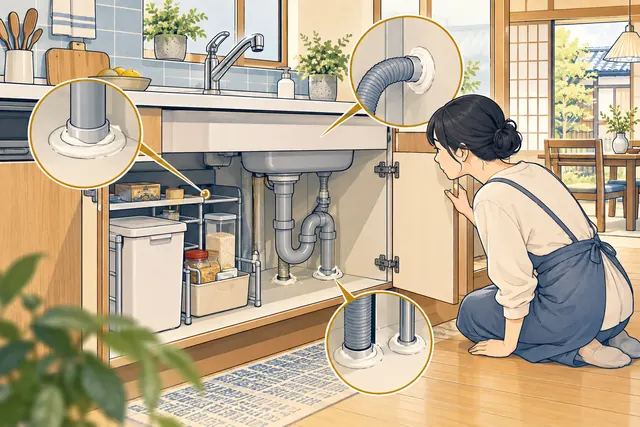
Preventing recurring cockroaches: water areas and gap checks
Review food, water, hiding places and entry routes in order. Before repeating chemicals alone, discuss leaks, building gaps and shared apartment areas too.
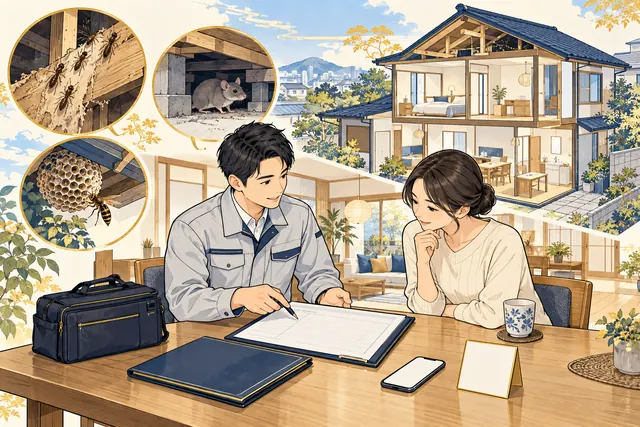
Pest-control quote checks, distinguishing low advertised prices from on-site totals.
An advertised minimum is not the total. Check travel, night, inspection, chemicals, removal, and revisits. For increases on site, agree reasons and total before work.
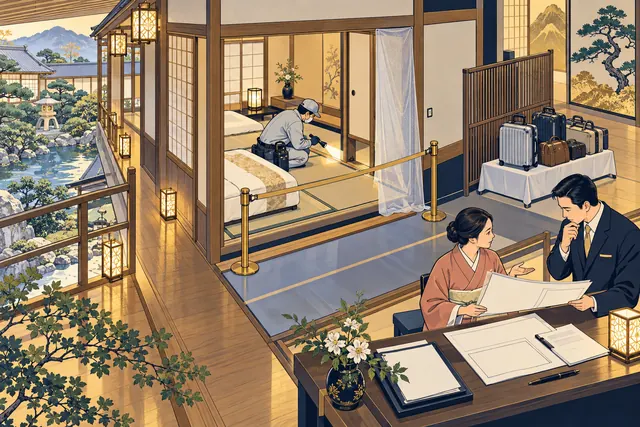
Pests in hotels and inns, separating rooms, luggage, and reopening decisions.
Report guest-room problems to the responsible manager; agree identification, spread prevention, treatment and reopening. Do not improvise room moves or furniture disposal.
Words used in this article
Short explanations, with the Japanese words you may hear in everyday life.
- Recurrence 再発(saihatsu)
A problem happening again after it appeared to have stopped.
Record when it happens and the weather, then check the previous work and warranty when asking for advice.
Plain-language explanations by Tatemono Fukkyu Note. They are not an assessment of your building or an individual evacuation decision.