
Report guest-room problems to the responsible manager; agree identification, spread prevention, treatment and reopening. Do not improvise room moves or furniture disposal.
Understand this article's terms in plain language
- Removal and prevention
- Treating current pests differs from preventing recurrence. Check target species, scope and return-visit terms.
- Warranty and return visits
- Not everything is free during the term. Ask covered pests, recurrence, conditions, and costs before contracting.

- 01
Record the room and staff member who found it
- 02
Check cleaning and moving arrangements with the person in charge
- 03
Agree on follow-up visits and conditions for resuming use
Keep information in one place
Share discovery time, guest room, insect or trace photos, cleaning history, and use with responsible staff. Ask specialists rather than identify species from symptoms alone. Avoid broadly sharing guest personal information with pest photos.
Check safety before reading the article
If there is danger or you cannot judge, move to safety.
Do not photograph or operate equipment in unsafe areas. Call 119 for fire or rescue.
Record times and symptoms, then contact management or a repair service. This is not a finding that safety is guaranteed.
Moving and cleaning sequence
Moving bedding, luggage or furniture may spread the problem. Follow specialist handling guidance; ask about inspection scope for linens and storage as well as rooms.
Explain business operating requirements too
Before signing, align access hours, noise, reuse, rooms, returns and staff instructions. Manage room-sale suspension and reopening decisions, beyond pest fees.
Building measures
Coordinate leaks, gaps, and food and waste control with relevant repair trades. Overseas IPM monitoring and prevention principles help, but prioritize Japanese labels and local information for chemicals and facility hygiene.
Frequently asked questions about this topic
Can luggage from a suspect room be moved to another guest room?
Do not move items yourself before checking species and spread risks. Agree room, belongings and linen handling with specialists; share one procedure with room management and cleaning staff.
Can guest rooms go back on sale immediately after pest treatment?
Separate work completion from reopening. Agree chemical use/access, effect checks, returns and internal communications with specialists; the facility manager defines reopening conditions.
FAQ and related guidance checked October 4, 2026. Ask relevant contacts about individual conditions, current acceptance, and programs.
Content errors, rights concerns or service information changes:Contact Kaneyoshi Miwa (Japan Product Management). Include the page URL and relevant passage. This is for routine inquiries, not emergency reporting.
What to learn next
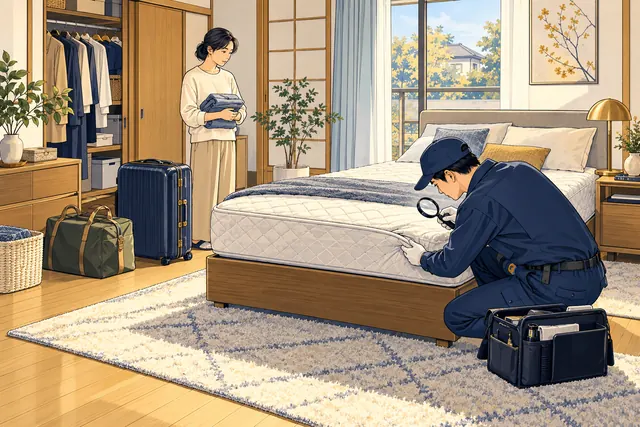
Worried about bedbugs: do not judge by bites alone or move belongings unnecessarily
Do not identify bedbugs from skin marks alone; safely record insects and nearby traces. Before spreading bedding or furniture to other rooms, consult specialists or public hygiene services.
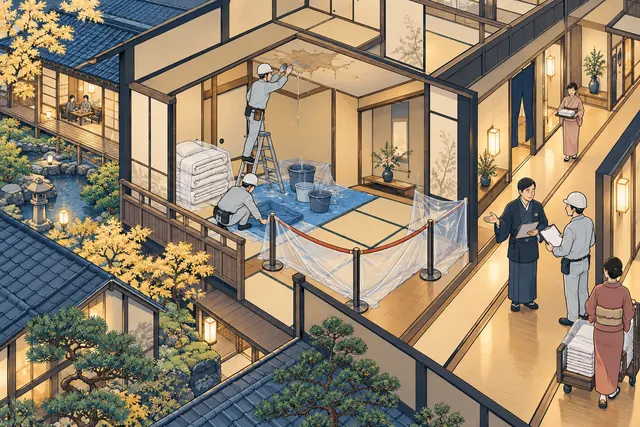
Hotel and ryokan rain leak repairs: organize requests around room and business impacts
Organize accommodation staff’s information for providers: unavailable rooms, guest safety, equipment recovery, working hours, and ordering authority.

Compare pest control: local advice, specialists and booking services
Species identification, public advice, pest treatment, and building repairs serve different roles. Choose by symptoms; consider Fukkyu Idaten for provider searches and repairs within confirmed availability.
Words used in this article
Short explanations, with the Japanese words you may hear in everyday life.
- Recurrence 再発(saihatsu)
A problem happening again after it appeared to have stopped.
Record when it happens and the weather, then check the previous work and warranty when asking for advice.
Plain-language explanations by Tatemono Fukkyu Note. They are not an assessment of your building or an individual evacuation decision.