
Review food, water, hiding places and entry routes in order. Before repeating chemicals alone, discuss leaks, building gaps and shared apartment areas too.
Understand this article's terms in plain language
- Quote total
- Check how much travel, investigation, materials, work and disposal the price includes. Ask separately from the advertised minimum.
- 01
Keep recording where they appear
- 02
Review water leaks and storage locations
- 03
Check the building repair scope
Check whether the location is always the same
Keep kitchen, washroom, and entrance records separately. Times and frequency help explain changes after treatment. Do not dismantle dangerous equipment to identify insects.
Identify species → Take action → Prevent recurrence
Do not assume an unknown species; seek advice from safety.
- 01Check
Place, time, frequency. No dangerous close-ups needed.
- 02Check the total and method
Separate call-out, night, work and follow-up charges.
- 03Reassess the causes too
Food, water, gaps. Check separate contacts for leaks or repairs.
Water problems that cleaning alone cannot solve
For supply/drain leaks, discuss plumbing repairs. If pest and plumbing contracts differ, agree the reinspection sequence after repairs. Do not merely conceal dampness.
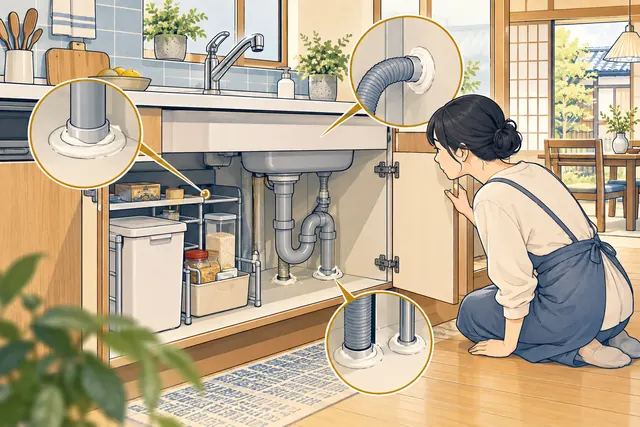
Check equipment before sealing gaps
Discuss pipe penetrations and door gaps without blocking needed air vents, drainage, or drain-down holes. Separate inspection, materials, work scope, and recurrence checks in quotes.
Roles in apartment buildings
Separate tenants' food/cleaning care from landlord/manager common areas and building repairs. If spreading, discuss whole-building management; do not presume damage in other units.
Frequently asked questions about this topic
Will blocking every gap prevent recurrence?
Do not block ventilation, drainage, or other necessary functions. Discuss cleaning and food and water control separately from equipment-compatible entry prevention. Visible gaps alone do not establish the entry route.
Can pests return after treating only my apartment?
Shared areas or pipes may need checking. Tell management the location and frequency and clarify inspections, arrangements, and costs for private and shared areas. Residents must not alter shared equipment independently.
FAQ and related guidance checked October 4, 2026. Ask relevant contacts about individual conditions, current acceptance, and programs.
Content errors, rights concerns or service information changes:Contact Kaneyoshi Miwa (Japan Product Management). Include the page URL and relevant passage. This is for routine inquiries, not emergency reporting.
What to learn next
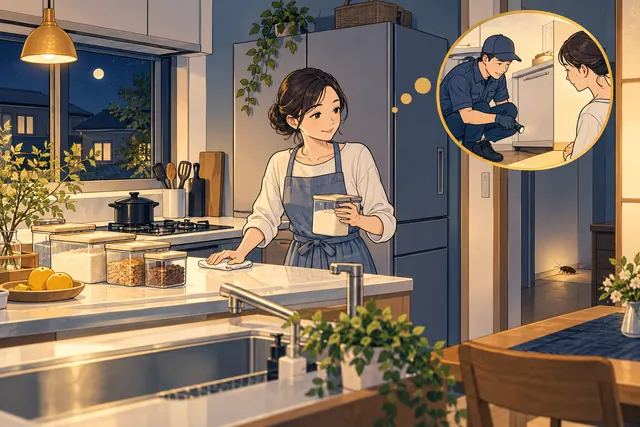
A cockroach at night: first steps for cleaning, entry routes and hiring help
Start with managing food, water and rubbish and recording sightings. Follow chemical labels; if pests persist or gaps worry you, discuss causes and prevention scope.
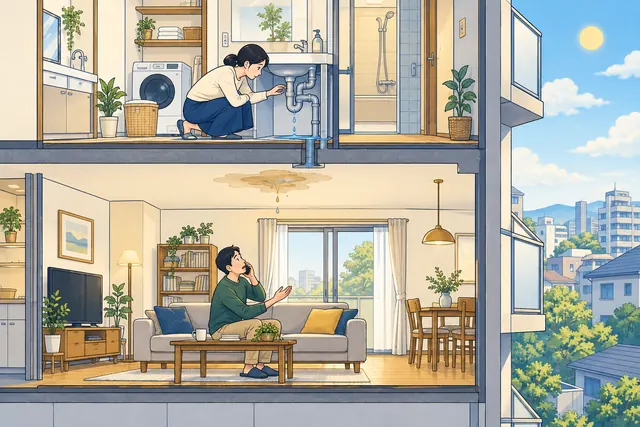
Ceiling water in sunny weather: contacts for suspected pipe leaks
Suspected plumbing leaks: safety, management contact, and pre-repair checks.
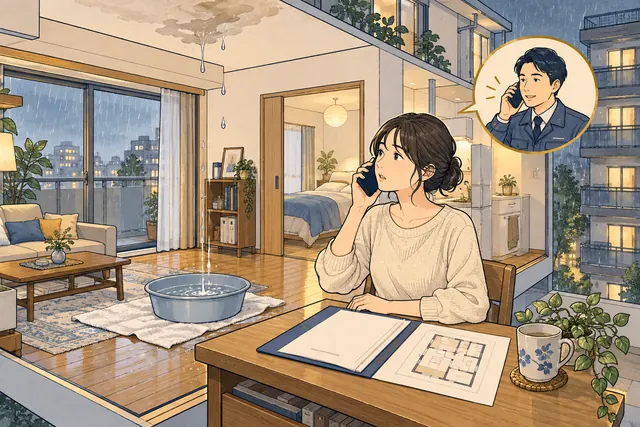
Rental rain or plumbing leaks, contacts before ordering repairs yourself.
When tenants notice problems: contacting management or landlords, photos, costs, and emergency actions.
Words used in this article
Short explanations, with the Japanese words you may hear in everyday life.
- Recurrence 再発(saihatsu)
A problem happening again after it appeared to have stopped.
Record when it happens and the weather, then check the previous work and warranty when asking for advice.
- Landlord 大家(ooya / kashinushi)
The person or company renting out a room or home.
Check whether repairs should be reported to the landlord or management company before arranging work yourself.
- Shared building areas 共用部分(kyouyou bubun)
Parts of an apartment building used by more than one resident, such as corridors and stairs.
Check with the property manager before making changes or arranging work yourself.
Plain-language explanations by Tatemono Fukkyu Note. They are not an assessment of your building or an individual evacuation decision.