
Insurance treatment of water damage is not determined solely by what got wet. Record where, when, and under what circumstances water entered, then ask your insurer or agent about coverage and exclusions.
Understand this article's terms in plain language
- Deductibles and out-of-pocket costs
- Policy conditions such as the portion paid by the insured. Check these alongside cover with your insurer.
- Approve additions
- Approve unplanned work only after receiving an explanation of the reason and cost.
- Inspection scope
- Which places and methods the investigation covers. Ask about inaccessible areas and fees beforehand.
- 01
Move away from water, electrical and falling-object hazards
- 02
Record how water entered and the extent of damage as facts
- 03
Seek advice on cause investigation and contract checks separately
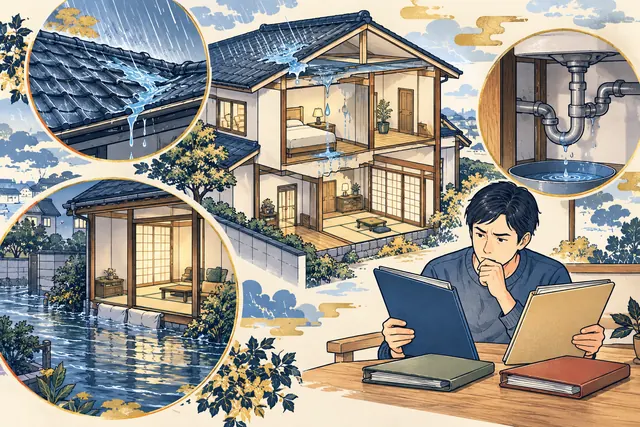
When you discover a roof leak
Explain the known history, including possible typhoon damage or leaks that existed earlier. Do not determine the cause from photos alone; ask about investigation. Do not report ordinary wear or deterioration as disaster damage.
Check safety before reading the article
If there is danger or you cannot judge, move to safety.
Do not photograph or operate equipment in unsafe areas. Call 119 for fire or rescue.
Record times and symptoms, then contact management or a repair service. This is not a finding that safety is guaranteed.
When river or surface-water flooding enters the home
Ask your insurer whether flood coverage is included and whether your policy covers the building, belongings, or both. Payment conditions and deductibles vary by product and contract. Do not infer coverage solely from “above-floor” or “below-floor” flooding; safely record water levels and damage to rooms, equipment, and belongings.
When a leak appears to come from plumbing or equipment
Investigation establishes whether equipment or plumbing caused it. Ask separately about repairing the cause and coverage for damaged floors, ceilings, and belongings. In rentals, inform management or landlords and clarify arrangements.
Be clear about what has not yet been confirmed
Separate facts from unknowns: “There is a ceiling stain, but the entry point is unknown,” or “Found after yesterday’s rain, but the start time is unknown.” Ask how to share investigation results or additional photos with your insurer. Do not change dates or causes to obtain coverage.
Frequently asked questions about this topic
Does the name “fire insurance” mean flood damage is excluded?
Some policies cover disasters beyond fire. Check flood cover and conditions with your insurer.
Does building insurance also cover belongings?
Check building and belongings coverage separately. Ask your insurer about insured items and records.
FAQ and related guidance checked October 4, 2026. Ask relevant contacts about individual conditions, current acceptance, and programs.
Insurance guide: questions for your insurer and consultation notes
Content errors, rights concerns or service information changes:Contact Kaneyoshi Miwa (Japan Product Management). Include the page URL and relevant passage. This is for routine inquiries, not emergency reporting.
What to learn next
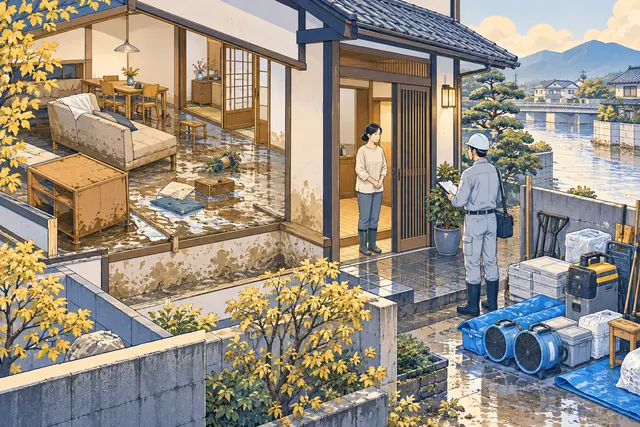
Flooded homes, restoration order before cleanup.
Evacuation, safety, damage records, cleanup/drying, electrical checks and interiors: steps for calm flood recovery.
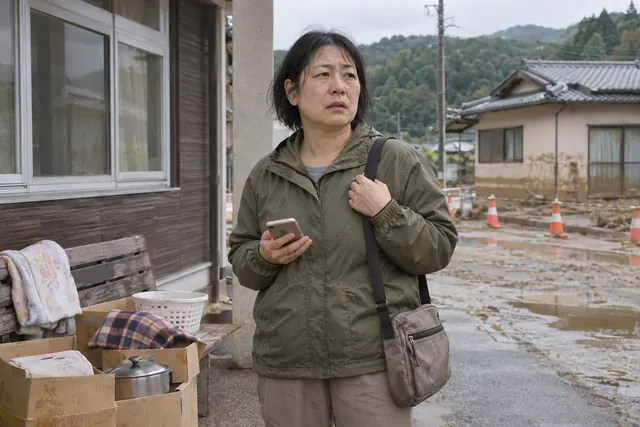
What should you do first when rain leaks into your home?
When water drips from the ceiling, organize what you can and must not do: safety, moving belongings, photos, and explaining the problem to providers.
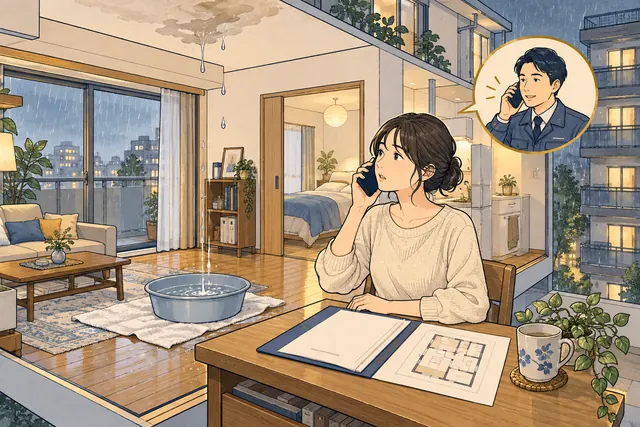
Rental rain or plumbing leaks, contacts before ordering repairs yourself.
When tenants notice problems: contacting management or landlords, photos, costs, and emergency actions.

Does fire insurance cover rain leaks? Ask your insurer before signing
A rain leak alone does not establish insurance cover. Prepare questions about cause, policy terms, deductibles, photos and quotes.
Words used in this article
Short explanations, with the Japanese words you may hear in everyday life.
- Landlord 大家(ooya / kashinushi)
The person or company renting out a room or home.
Check whether repairs should be reported to the landlord or management company before arranging work yourself.
- Local authority 自治体(jichitai / shikuchouson)
The administration of your city, ward, town, village or prefecture.
Use your area's official website or office to check evacuation sites and post-disaster procedures.
Plain-language explanations by Tatemono Fukkyu Note. They are not an assessment of your building or an individual evacuation decision.