
Prepare location, keys and access authority, building and garden condition, reports, and cost approver. Even remotely, agree pre-work photos and approval of extras before ordering.
Understand this article's terms in plain language
- Approve additions
- Approve unplanned work only after receiving an explanation of the reason and cost.
- Quote total
- Check how much travel, investigation, materials, work and disposal the price includes. Ask separately from the advertised minimum.

- 01
Choose who handles keys and access
- 02
Specify seasonal inspection points
- 03
Agree on before-and-after photos and approval procedures
What is needed when arranging work from far away
Share detailed addresses only with needed recipients, plus photos, parking, keys, utilities and neighbor notices. Verify who can authorize access; never arrange unauthorized entry.
Check safety before reading the article
If there is danger or you cannot judge, move to safety.
Do not photograph or operate equipment in unsafe areas. Call 119 for fire or rescue.
Record times and symptoms, then contact management or a repair service. This is not a finding that safety is guaranteed.
Separate seasonal problems
Check roofs/gutters/interiors in rain, snow/freezing in winter, weeds/pests in summer and animal entry year-round. One firm may not handle all; ask acceptance and responsibility by trade.
Photo-report items
Obtain overall and specific before-and-after records, remaining problems, and next actions. Photos alone do not establish building safety or internal conditions. Do not request dangerous photography.
Budget overruns and notification
Agree photos/reasons/totals before extras and where work stops without a reply. Separate routine care from one-time repairs; check key custody and relocking after completion.
Frequently asked questions about this topic
For distant vacant homes, can I hand over keys and leave everything?
Agree access limits, key handover/storage, before/after photos, extra approvals and emergency contact. Separate mowing, building checks and pests; confirm accepted tasks and fees.
Can typhoon, snow and weed care be combined into one contract?
Depends on provider scope. Specify seasonal frequency, tasks, postponement, reporting and budget cap; check exclusions. Ask separately about routine fees and extra disaster work.
FAQ and related guidance checked October 4, 2026. Ask relevant contacts about individual conditions, current acceptance, and programs.
Content errors, rights concerns or service information changes:Contact Kaneyoshi Miwa (Japan Product Management). Include the page URL and relevant passage. This is for routine inquiries, not emergency reporting.
What to learn next

Landlords’ leak response: tenant contact through completion checks
Recovery for rental owners: resident safety, management, investigation, ordering, extra approval, and records handover.
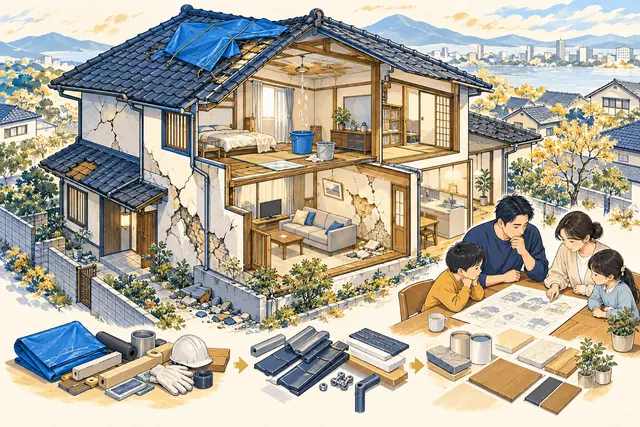
Multiple home problems, budgeting and repair priorities.
Organize safety, limiting damage, equipment checks, drying, and interiors in order. Separate urgent work from work decidable later before combining totals.

Create a home disaster file: photos, warranties and contacts on one sheet
Before disasters, organize building and belongings photos, warranties, maintenance, insurance, and management contacts. Afterward, safety comes first. Records assist consultations but do not guarantee coverage or safety.
Words used in this article
Short explanations, with the Japanese words you may hear in everyday life.
- Rain gutter 雨樋(amadoi)
A channel or pipe that collects rainwater from the roof and carries it down.
If it is loose, stay on the ground and tell a professional what you can see.
Plain-language explanations by Tatemono Fukkyu Note. They are not an assessment of your building or an individual evacuation decision.