
Prioritize resident safety and limiting damage; assign roles with management and arrange investigation. Clarify who contacts residents, orders work, and approves costs to help response progress.
Understand this article's terms in plain language
- Cause investigation
- Investigation of water-entry routes and similar issues. Ask methods, cost, and uncheckable areas.
- Scaffolding and protection
- Scaffolding supports work at height; protection shields surrounding items and areas. Check quote scope.
- Quote total
- Check how much travel, investigation, materials, work and disposal the price includes. Ask separately from the advertised minimum.

- 01
Check residents' safety and the current damage
- 02
Agree investigation, communication, and approval roles with management
- 03
Address the cause and restore interiors separately
Do not assign blame in the first contact
Do not assign resident responsibility before causes such as rain, upstairs plumbing, or shared pipes are known. Organize photos, discovery time, rainfall relationship, and affected rooms, then share findings.
Separate stopping the cause from restoring the interior
Before restoring appearance, check the cause and plans for drying and inspections.
- 01Safety checks and cause investigation
List unusable areas and affected equipment
- 02Address causes and necessary inspections
Discuss leak causes, drying and equipment inspections
- 03Interior restoration and resuming use
Restore finishes and check conditions for resuming use
Coordinate access and work dates
Confirm occupancy times, keys, protection, noise, and use of shared paths or parking. Decide what resident contact details may be given to contractors and who coordinates contact. If inspection and main work are on different days, tell residents early.
Make quote and extra-work approvals clear
Agree management’s spending authority, extra approvers, and night emergency contacts. Record building-cause repairs, interiors, and belongings separately; check costs and insurance against contracts and facts.
Add to property records after completion
Keep causes, work locations, materials, dates, costs, photos, warranties, and providers so records transfer if staff or management change. For recurrence in the same building, give investigators past repair history.
Frequently asked questions about this topic
What to check if a tenant called a provider first?
Check safety, then organize who requested what and work and costs incurred. Verify causes and contracts; share records with management and others without presuming liability.
Does a contractor referral also include tenant support and key management?
Referrals/matching differ from property management. Name responsibility for scheduling, access, keys, tenant messages, extras and reports; check each contact's scope.
FAQ and related guidance checked October 4, 2026. Ask relevant contacts about individual conditions, current acceptance, and programs.
Content errors, rights concerns or service information changes:Contact Kaneyoshi Miwa (Japan Product Management). Include the page URL and relevant passage. This is for routine inquiries, not emergency reporting.
What to learn next

Rental rain or plumbing leaks, contacts before ordering repairs yourself.
When tenants notice problems: contacting management or landlords, photos, costs, and emergency actions.
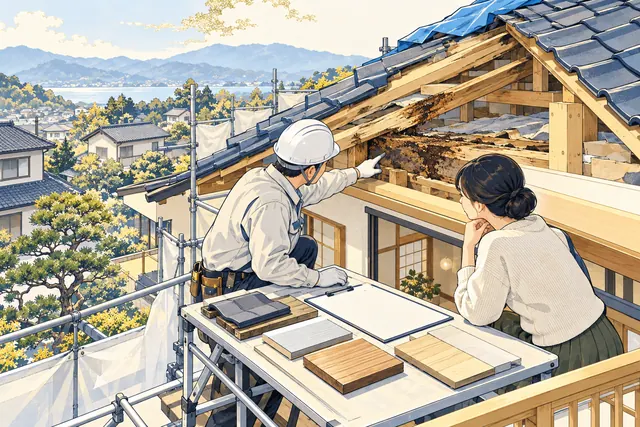
Extra repair costs: five checks before approval
If told extra substrate repairs are needed, check photos, reasons, price, duration, and alternatives.

After repairs: completion, warranty, and recurrence records
Roof and leak-repair completion checks: keep photos and documents without climbing onto the roof.

What to say about repairs: ready-to-use request notes
A consultation template for symptoms, locations, dates, photos and wishes, reducing repeated explanations to contractors.