
Separate needed jobs; record entry permissions, keys, photo reports and extra approval. Check local disaster/animal reports before arranging a visit.
Understand this article's terms in plain language
- Approve additions
- Approve unplanned work only after receiving an explanation of the reason and cost.
- 01
First check danger and existing contact points
- 02
Organize photos and the work you want
- 03
Check scope, total and schedule
Separate outside and inside the home
Separate mowing, leaf clearing, exterior checks, and indoor leak checks. If absent, specify permitted entry areas and purposes, and state that unrequested items must not be moved or discarded without approval.
From the current situation to the next request
These steps are general guidance organized by the editors.
- 01First check danger and existing contact points
Do not inspect or take photos in dangerous places.
- 02Organize photos and the work you want
Separate known facts from what remains unknown.
- 03Check scope, total and schedule
Agree on the person responsible, cost, timing and way to check.
Agree on photo reporting conditions beforehand
Discuss taking before-and-after photos from the same position, showing completed and uncompleted scope and adding location photos for concerning symptoms. Understand that photos alone may not establish causes or safety inside a roof or wall.
Do not authorize additions on the spot
Ask that newly discovered faults be explained with photos, reasons, and costs before approval and work. Agree in advance the scope and limit of emergency measures without contact and when to stop work.
Compare one-time and regular maintenance
One-off clearing and seasonal management differ in reports and pricing. Compare visit frequency, travel, waste disposal, key management, and emergency-visit extras. For properties with warranties or management contracts, also check the existing contact first.
Frequently asked questions about this topic
Absent from site: what photo reports to specify?
Agree same-location wide before/after photos, close-ups, work dates and excluded/unfinished tasks. Before signing, clarify outdoor/indoor access, keys and report recipients.
Should I accept additional work proposed on site?
Approve additions only after checking photos, reasons, charges, and effects of delay. Specify in writing beforehand which work may proceed without contact and its spending limit; avoid unrestricted authority.
FAQ and related guidance checked October 4, 2026. Ask relevant contacts about individual conditions, current acceptance, and programs.
Content errors, rights concerns or service information changes:Contact Kaneyoshi Miwa (Japan Product Management). Include the page URL and relevant passage. This is for routine inquiries, not emergency reporting.
What to learn next
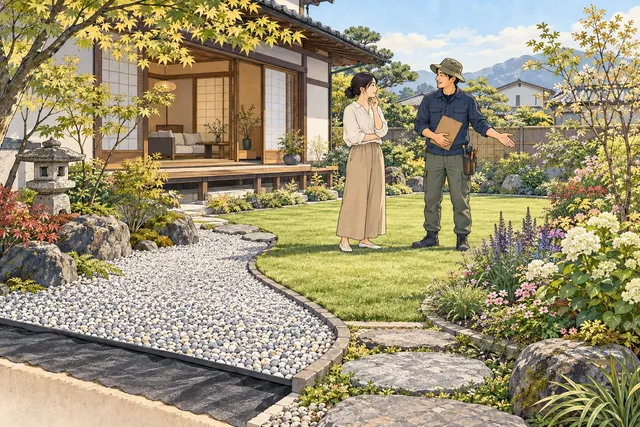
Weed barriers, gravel or regular mowing: choosing garden weed control
Choose by intended use, drainage, plants kept and upkeep. Weed fabric is not the end: compare groundwork, joints, edges and disposal too.

Create a home disaster file: photos, warranties and contacts on one sheet
Before disasters, organize building and belongings photos, warranties, maintenance, insurance, and management contacts. Afterward, safety comes first. Records assist consultations but do not guarantee coverage or safety.

Seasonal home-inspection calendar, preparing early for rain, typhoons, and snow.
Before the season, record visible changes and check contacts. Do not force roof/crawl-space checks yourself; book needed surveys. Weather varies yearly, so dates alone do not ensure safety.
Words used in this article
Short explanations, with the Japanese words you may hear in everyday life.
- Warranty 保証(hoshou)
Conditions describing how certain problems after the work will be handled.
Check coverage, period, exclusions and contact details in writing; a warranty does not make every repair free.
Plain-language explanations by Tatemono Fukkyu Note. They are not an assessment of your building or an individual evacuation decision.