
Before the season, record visible changes and check contacts. Do not force roof/crawl-space checks yourself; book needed surveys. Weather varies yearly, so dates alone do not ensure safety.
Understand this article's terms in plain language
- Cause investigation
- Investigation of water-entry routes and similar issues. Ask methods, cost, and uncheckable areas.
- Scaffolding and protection
- Scaffolding supports work at height; protection shields surrounding items and areas. Check quote scope.
- Approve additions
- Approve unplanned work only after receiving an explanation of the reason and cost.
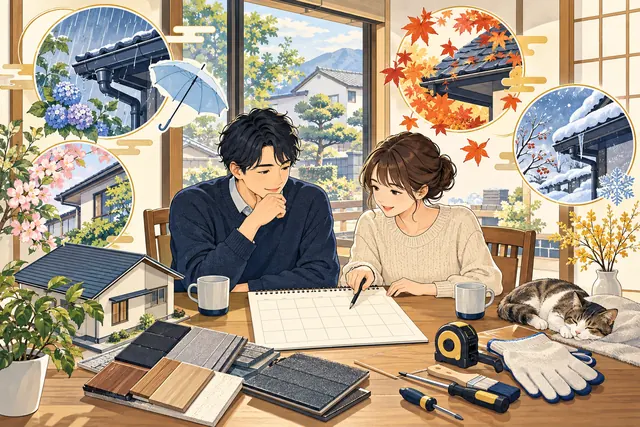
- 01
Compile your home's past problems
- 02
Discuss inspections and work before the season
- 03
Update completion records and contacts
Spring to before the rainy season
Check gutters/walls visible from the ground, old stains, garden weeds and flying-ant locations. Photograph symptoms and request investigation; yearly chemicals or roof access are not mandatory.
From the current situation to the next request
These steps are general guidance organized by the editors.
- 01Compile your home's past problems
Do not inspect or take photos in dangerous places.
- 02Discuss inspections and work before the season
Separate known facts from what remains unknown.
- 03Update completion records and contacts
Agree on the person responsible, cost, timing and way to check.
From summer to before typhoons
Check balcony items, drainage, windows, prior leaks, evacuation and contacts. Parts/scaffolding may be needed; do not assume all repairs finish on forecast day.
Autumn to before winter
Check snow-work candidates, storage areas, exposed pipes, and vacant-house procedures. For subsidized work, ask about prior applications and deadlines first. Record equipment hidden by snow before winter.
After disasters or repairs
Update damage, work photos, warranties, and unresolved areas. Add dated photos if rain or use changes conditions. Keep both annual and problem-triggered checks.
Frequently asked questions about this topic
Should every piece of equipment be professionally checked each season?
Not always needed. Prioritize past problems, equipment manuals/plans and local seasonal risks. Separate indoor/ground observations from specialist high-level/equipment inspections.
Can the inspection schedule stay the same after a disaster?
After disasters/repairs, consider abnormality and post-work checks separately. Update records once safe and agree with specialists what needs checking before rain/snow.
FAQ and related guidance checked October 4, 2026. Ask relevant contacts about individual conditions, current acceptance, and programs.
Content errors, rights concerns or service information changes:Contact Kaneyoshi Miwa (Japan Product Management). Include the page URL and relevant passage. This is for routine inquiries, not emergency reporting.
What to learn next
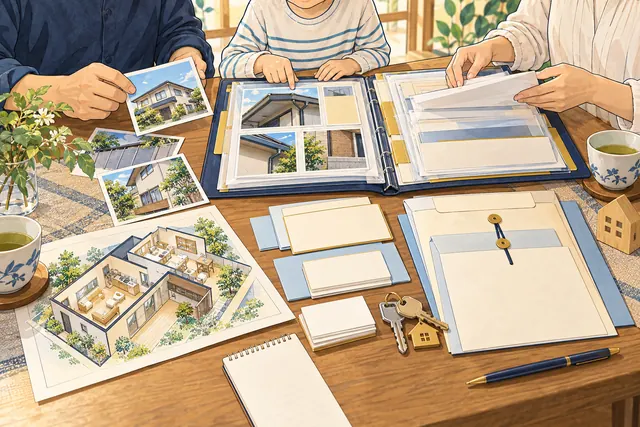
Create a home disaster file: photos, warranties and contacts on one sheet
Before disasters, organize building and belongings photos, warranties, maintenance, insurance, and management contacts. Afterward, safety comes first. Records assist consultations but do not guarantee coverage or safety.
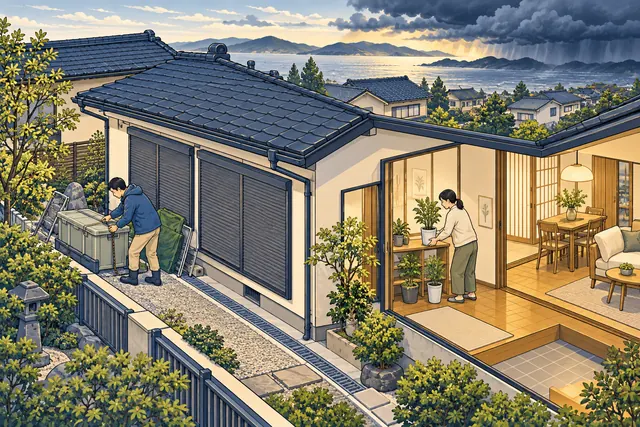
Before typhoons: building preparations without roof access
Ground checks before bad weather, contacts, and photos: an owner checklist to avoid post-disaster rush.
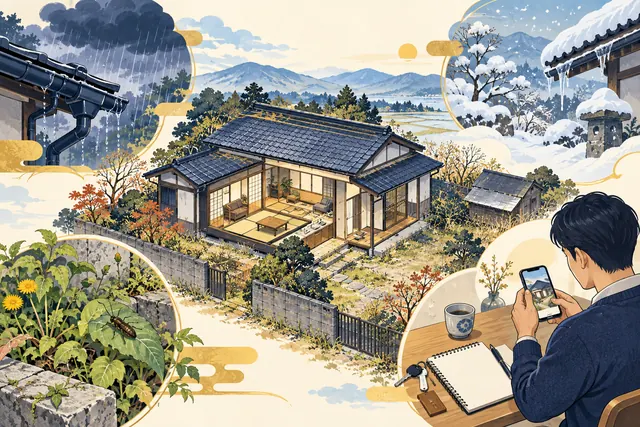
Typhoon, snow, weeds, and pest measures at vacant homes, with remote-request notes.
Prepare location, keys and access authority, building and garden condition, reports, and cost approver. Even remotely, agree pre-work photos and approval of extras before ordering.
Add outage preparations to your seasonal checks

Words used in this article
Short explanations, with the Japanese words you may hear in everyday life.
- Scaffolding 足場(ashiba)
A structure assembled so workers can carry out work safely at height.
Whether it is needed depends on the height and work location. Do not climb it yourself.
- Rain gutter 雨樋(amadoi)
A channel or pipe that collects rainwater from the roof and carries it down.
If it is loose, stay on the ground and tell a professional what you can see.
- Veranda or balcony ベランダ(beranda / barukonii)
An outdoor floor area reached from a room; it may contain equipment or routes for emergency escape.
Check building rules and keep escape routes and equipment clear rather than treating the whole area as private storage.
- Warranty 保証(hoshou)
Conditions describing how certain problems after the work will be handled.
Check coverage, period, exclusions and contact details in writing; a warranty does not make every repair free.
Plain-language explanations by Tatemono Fukkyu Note. They are not an assessment of your building or an individual evacuation decision.