
Check current evacuation and safety, then record damage/time from safe ground or indoors. Do not assume heavy rain caused it; separate symptoms, rain links and prior conditions.
Understand this article's terms in plain language
- Temporary measures
- Temporary measures to limit further damage. Check these separately from permanent repairs and fixing the cause.
- Cause investigation
- Investigation of water-entry routes and similar issues. Ask methods, cost, and uncheckable areas.
- Quote total
- Check how much travel, investigation, materials, work and disposal the price includes. Ask separately from the advertised minimum.
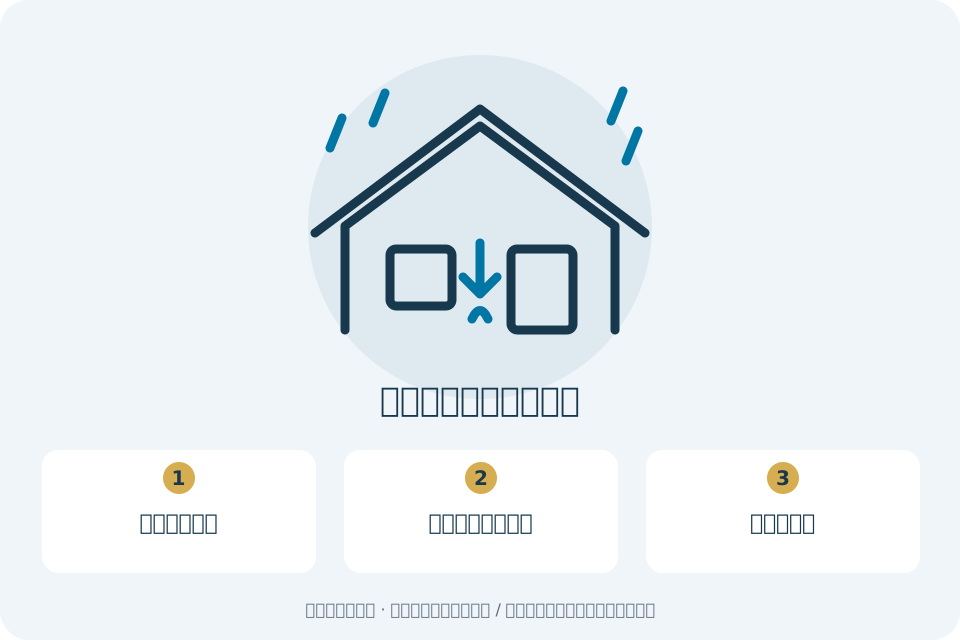
- 01
Check the latest warnings and evacuation notices
- 02
Safely record dates, times and photos
- 03
Separate cause investigation, insurance and local government checks
What happened: information published in September
The Japan Meteorological Agency's September weather summary describes heavy rain in the Izu Islands and Chiba as Typhoon No. 25 approached on the 21st, and heavy rain in northern Kyushu on the 27th from the autumn rain front and moist air associated with Typhoon No. 26. This summarizes past weather; it is not a current warning or evidence of the cause of damage to an individual building.
From the current situation to the next request
These steps are general guidance organized by the editors.
- 01Check the latest warnings and evacuation notices
Do not inspect or take photos in dangerous places.
- 02Safely record dates, times and photos
Separate known facts from what remains unknown.
- 03Separate cause investigation, insurance and local government checks
Agree on the person responsible, cost, timing and way to check.
Three times owners should record first
Distinguish when rain began, when you first noticed a problem, and when symptoms changed. If unsure, “Found in the morning; overnight condition unknown” is sufficient. A note separating knowns and unknowns helps investigations more than guessed dates.
Only photos that can be taken safely are needed
Record the whole room, stain location, and nearby symptoms together. In flooded homes, photograph conditions before cleanup where safe and list items to be discarded. Do not climb onto roofs or enter flooded roads for photos. Ask specialists about documenting dangerous areas.
Do not treat repairs, insurance and support schemes as one
Ask repair specialists about causes, your insurer about coverage, and your municipality about disaster certificates and assistance. Even when the same photos can be shared, decision-makers and required documents differ. If temporary measures are needed, contact the insurer and ask how to retain before-and-after records and receipts.
Share information with contractors in this format
Give your municipality, building type, discovery time, whether ongoing, dangerous inaccessible areas, and preferred inspection date. The cause can remain unconfirmed. Separate quotes for temporary measures and permanent repairs reduce what must be decided urgently.
Frequently asked questions about this topic
Do both discovery and rainfall times matter?
Separate known dates to explain progress: discovery, rain, start and end of water. Mark unknowns. Regional public reports alone do not establish individual causes.
Should I delay cleanup to preserve flood evidence?
Prioritize safety and preventing further damage. If possible, take safe wide and close-up photos and record cleanup or temporary work. Ask the insurer and municipality separately about documents needed for insurance and assistance.
FAQ and related guidance checked October 4, 2026. Ask relevant contacts about individual conditions, current acceptance, and programs.
Content errors, rights concerns or service information changes:Contact Kaneyoshi Miwa (Japan Product Management). Include the page URL and relevant passage. This is for routine inquiries, not emergency reporting.
What to learn next
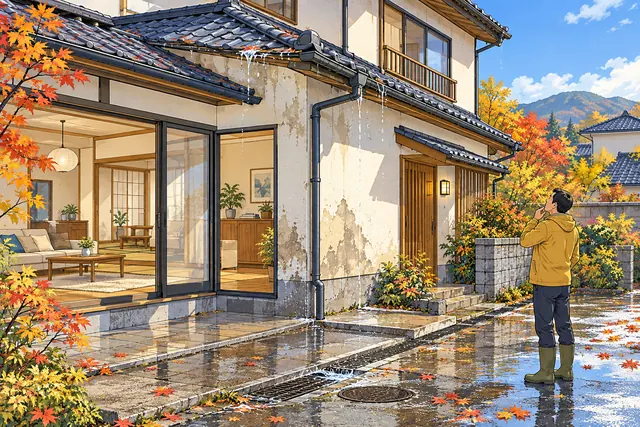
Home checks after record September 2026 rains.
After rain, record indoor stains, roof and gutter views from the ground, and flooded equipment separately. Avoid reusing wet electrical equipment or entering the roof; arrange investigation if conditions change.
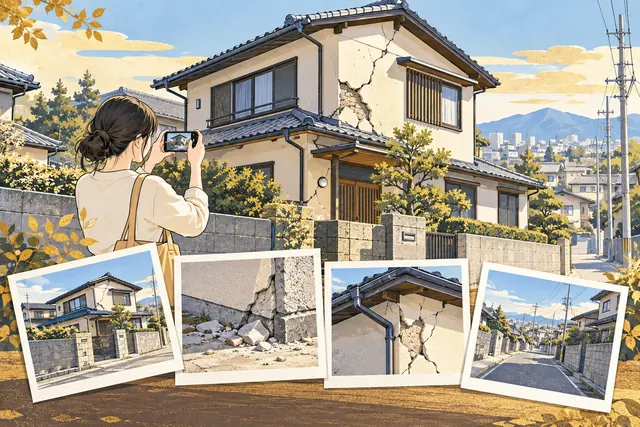
Pre-repair photos: building, location, close-ups, and wider views
Organize photos for provider consultations, damage records, and insurance checks. Avoid unsafe photography; show when, where, and what.
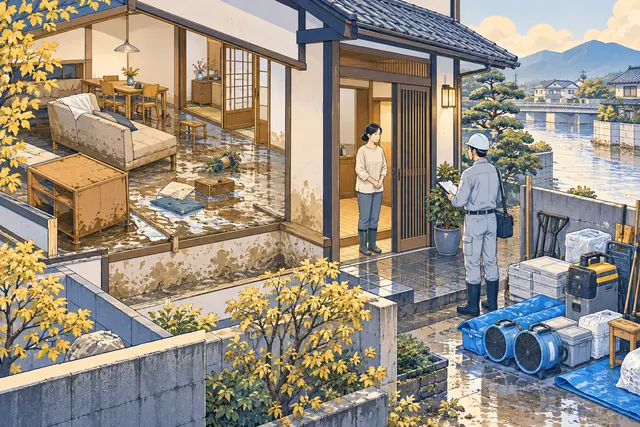
Flooded homes, restoration order before cleanup.
Evacuation, safety, damage records, cleanup/drying, electrical checks and interiors: steps for calm flood recovery.
Words used in this article
Short explanations, with the Japanese words you may hear in everyday life.
- Local authority 自治体(jichitai / shikuchouson)
The administration of your city, ward, town, village or prefecture.
Use your area's official website or office to check evacuation sites and post-disaster procedures.
Plain-language explanations by Tatemono Fukkyu Note. They are not an assessment of your building or an individual evacuation decision.