
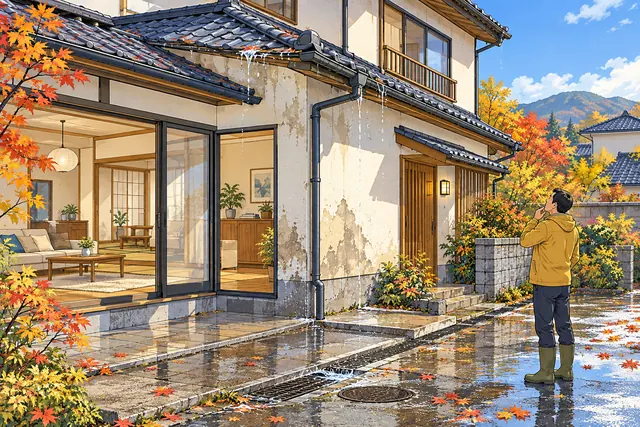
After rain, record indoor stains, roof and gutter views from the ground, and flooded equipment separately. Avoid reusing wet electrical equipment or entering the roof; arrange investigation if conditions change.
Understand this article's terms in plain language
- Temporary measures
- Temporary measures to limit further damage. Check these separately from permanent repairs and fixing the cause.
- Cause investigation
- Investigation of water-entry routes and similar issues. Ask methods, cost, and uncheckable areas.
- Quote total
- Check how much travel, investigation, materials, work and disposal the price includes. Ask separately from the advertised minimum.
- 01
Check the latest evacuation and weather information
- 02
Record visible changes indoors and from the ground
- 03
Discuss the inspection scope without waiting for more rain
What was announced?
On 1 October 2026, the Japan Meteorological Agency reported that September precipitation on eastern Japan's Pacific side was 236% of normal and sunshine duration 46% of normal. These are regional averages, not figures showing damage to a particular home or today's danger. Check current warnings and local information separately.
From the current situation to the next request
These steps are general guidance organized by the editors.
- 01Check the latest evacuation and weather information
Do not inspect or take photos in dangerous places.
- 02Record visible changes indoors and from the ground
Separate known facts from what remains unknown.
- 03Discuss the inspection scope without waiting for more rain
Agree on the person responsible, cost, timing and way to check.
Start by noticing what differs from normal
Note ceiling and wall stains by room, damp windows, door movement, and unusual odors. Do not enter ceiling spaces or underfloors to check. Report spreading changes compared with yesterday’s photos to investigators.
Check gutters and walls from the ground
Tiles and gutters may remain unstable in sunshine. Avoid standing beneath; photograph visible detachment, cracks, and water marks. Describe height and cleaning or repair scope for quotes rather than climbing a ladder to clear blockages.
Book during a break in autumn rain
Agree on how long temporary measures last, investigation timing, possible repair dates, and a contact if further rain worsens damage. In flooded homes, confirm drying and equipment checks before restoring finishes. Prolonged rain alone does not establish insurance coverage.
Frequently asked questions about this topic
After heavy rain, should I climb onto the roof even with no visible damage?
Do not climb up. Limit checks to indoor stains and gutter or wall changes visible from the ground. Ask specialists about methods and costs for dangerous or hidden areas.
How should I combine rain records with home photos?
Record discovery, heavy-rain times and rooms/parts together. Local weather explains context; it does not prove an individual building's cause or insurance cover.
FAQ and related guidance checked October 4, 2026. Ask relevant contacts about individual conditions, current acceptance, and programs.
Content errors, rights concerns or service information changes:Contact Kaneyoshi Miwa (Japan Product Management). Include the page URL and relevant passage. This is for routine inquiries, not emergency reporting.
What to learn next
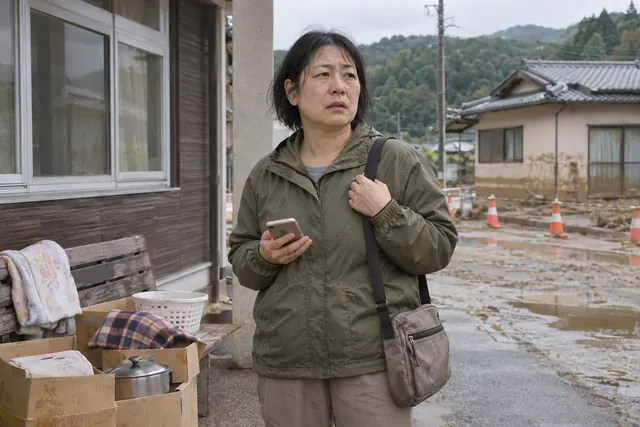
What should you do first when rain leaks into your home?
When water drips from the ceiling, organize what you can and must not do: safety, moving belongings, photos, and explaining the problem to providers.
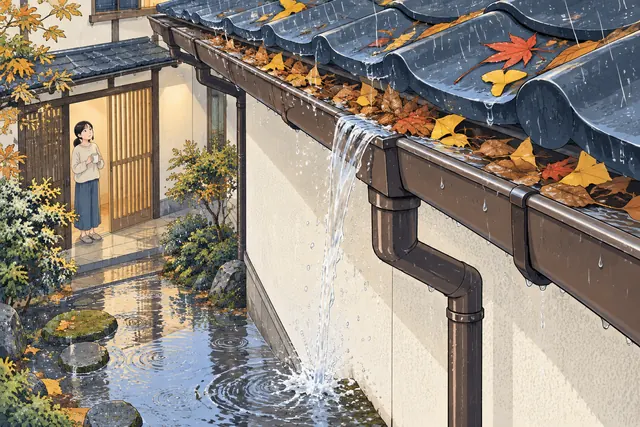
Overflowing gutters: ground-level checks for clogs or damage
Overflow only in heavy rain, or leaking joints: safely document gutter symptoms and seek cleaning or repair advice.
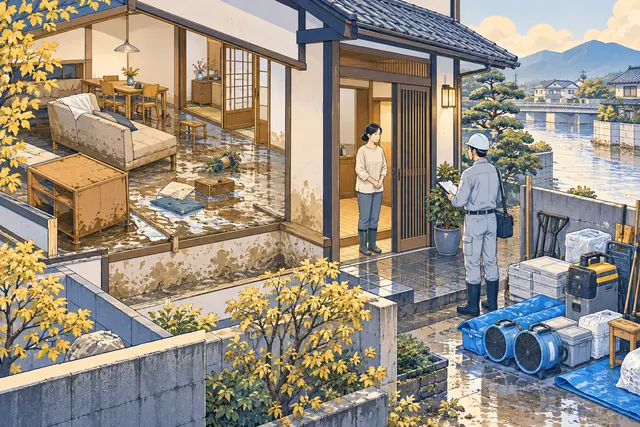
Flooded homes, restoration order before cleanup.
Evacuation, safety, damage records, cleanup/drying, electrical checks and interiors: steps for calm flood recovery.
Words used in this article
Short explanations, with the Japanese words you may hear in everyday life.
- Rain gutter 雨樋(amadoi)
A channel or pipe that collects rainwater from the roof and carries it down.
If it is loose, stay on the ground and tell a professional what you can see.
Plain-language explanations by Tatemono Fukkyu Note. They are not an assessment of your building or an individual evacuation decision.