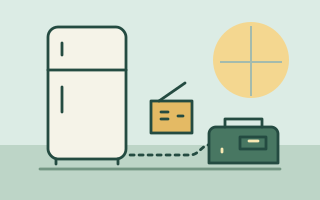
Do not use portable generators indoors or with poor ventilation. Check exhaust, rain, wiring, and fuel safety; choose another option if no safe setting is available.
Understand this article's terms in plain language
- Quote total
- Check how much travel, investigation, materials, work and disposal the price includes. Ask separately from the advertised minimum.
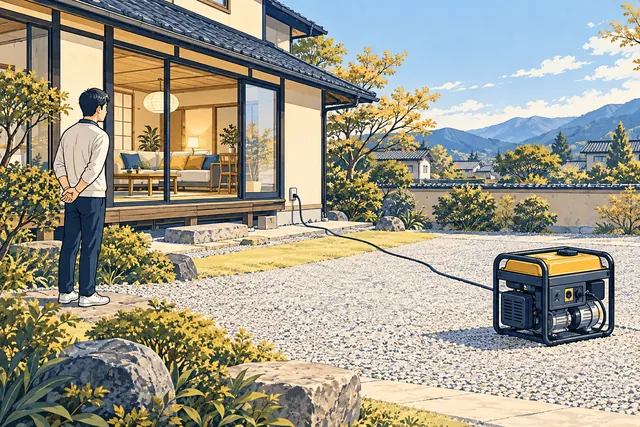
- 01
Do not run a generator indoors
- 02
Check installation and exhaust requirements in the manual
- 03
Identify power needs and alternatives
Do not assume opening the front door is enough
There is a carbon monoxide poisoning risk. Opening windows alone does not make it safe. Avoid exhaust entering your home or neighbors'; follow the manual and official warnings for placement.
From the current situation to the next request
These steps are general guidance organized by the editors.
- 01Do not run a generator indoors
Do not inspect or take photos in dangerous places.
- 02Check installation and exhaust requirements in the manual
Separate known facts from what remains unknown.
- 03Identify power needs and alternatives
Agree on the person responsible, cost, timing and way to check.
Do not take risks during heavy rain
Rain, flooding, tipping, and wet wiring are hazards too. Stop use if manual installation conditions cannot be met. Never improvise connections feeding electricity backward into a building outlet.
Decide what to move beforehand
For medical equipment, discuss alternatives with medical or supply contacts before an outage. Prioritize lighting, communications, and refrigeration, and check portable-power capacity and conditions. It may not power all appliances at once.
Before an outage, list the devices you want to keep running. Note how much power each needs and how long you plan to use it.See how to estimate your power needs and compare portable power stations (includes advertising and promotions).
What to discuss as equipment installation work
For fixed emergency power, discuss loads, switching, location, maintenance, and costs with a specialist. Planning and comparing quotes before disasters makes decisions easier than improvised wiring during one.
Frequently asked questions about this topic
Can a generator be used indoors with the front door open?
No. Exhaust can cause carbon monoxide poisoning. Avoid indoor areas and garages; even outdoors, follow the manual to prevent exhaust entering windows or doors.
Can I plug a generator into a home outlet?
Do not improvise connections to building wiring. List devices/power needs and follow specified product use. Ask specialists about equipment needing building connections.
FAQ and related guidance checked October 4, 2026. Ask relevant contacts about individual conditions, current acceptance, and programs.
Content errors, rights concerns or service information changes:Contact Kaneyoshi Miwa (Japan Product Management). Include the page URL and relevant passage. This is for routine inquiries, not emergency reporting.
What to learn next
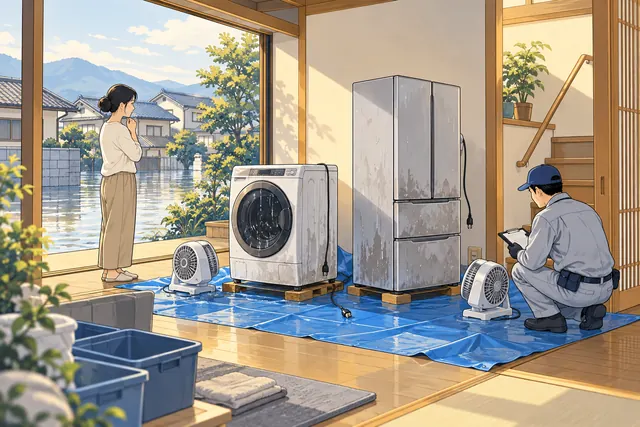
Can flooded appliances be used once dry? Checks before reconnecting power
Do not switch on to test even if dry-looking. Ask manufacturers or qualified specialists whether flooded appliances, wiring, and boards need inspection or replacement.

Electrical equipment wet from leaks or flooding—do not touch; consult before powering.
Wet lights/outlets, flooded distribution boards and power restoration: avoid danger and know what to tell professionals.

Create a home disaster file: photos, warranties and contacts on one sheet
Before disasters, organize building and belongings photos, warranties, maintenance, insurance, and management contacts. Afterward, safety comes first. Records assist consultations but do not guarantee coverage or safety.