
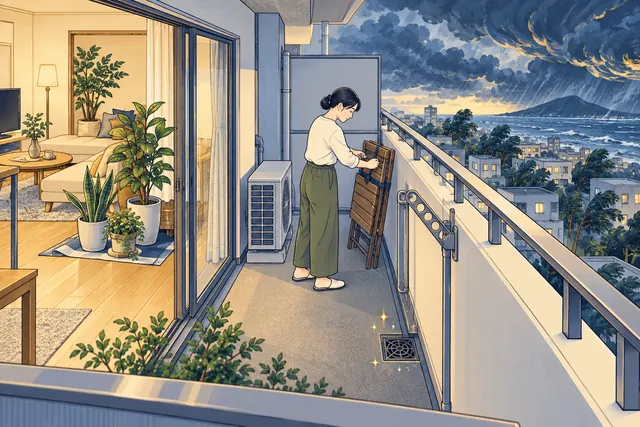
Before winds rise, check safely movable items and visible drainage. Avoid tidying in strong winds or outside railings. Ask management or specialists about waterproofing and drainage defects.
Understand this article's terms in plain language
- Cause investigation
- Investigation of water-entry routes and similar issues. Ask methods, cost, and uncheckable areas.
- Inspection scope
- Which places and methods the investigation covers. Ask about inaccessible areas and fees beforehand.
- 01
Check before the weather worsens
- 02
Safely move items that could blow away
- 03
Record drainage and existing stains
When to clean up
Check forecasts and evacuation information; do not go out after wind and rain intensify. Move pots, drying racks, or light furniture only safely. Do not lean outside to secure items.
From the current situation to the next request
These steps are general guidance organized by the editors.
- 01Check before the weather worsens
Do not inspect or take photos in dangerous places.
- 02Safely move items that could blow away
Separate known facts from what remains unknown.
- 03Record drainage and existing stains
Agree on the person responsible, cost, timing and way to check.
Visible areas around drains
Remove only safely reachable leaves/rubbish. Avoid poking deeply, dismantling equipment or blocking drains. Repeated overflow/clogs require drainage investigation.
Discuss standing water and waterproofing
Record post-rain pooling, cracks, upstands, and indoor stains. Work differs by waterproofing and substrate; investigate before applying more material yourself.
Arrangements for apartment buildings
Ask management about common-property/escape-route rules. Keep evacuation equipment clear. Agree authorization and cost responsibility before independently contracting work.
Frequently asked questions about this topic
Can I tidy the balcony after wind and rain grow strong?
Avoid outdoor work during storms. Tidy while safe; do not force handling of dangerous objects or equipment. Ask management or specialists and prioritize leaving the building or balcony when needed.
If water pools after drain cleaning, should I request waterproofing?
First investigate blockage, drainage, slope, or waterproofing causes. Record which rain, where, and how much water gathers, and discuss inspection scope. In apartments, ask management whether it is shared and who can arrange work.
FAQ and related guidance checked October 4, 2026. Ask relevant contacts about individual conditions, current acceptance, and programs.
Content errors, rights concerns or service information changes:Contact Kaneyoshi Miwa (Japan Product Management). Include the page URL and relevant passage. This is for routine inquiries, not emergency reporting.
What to learn next
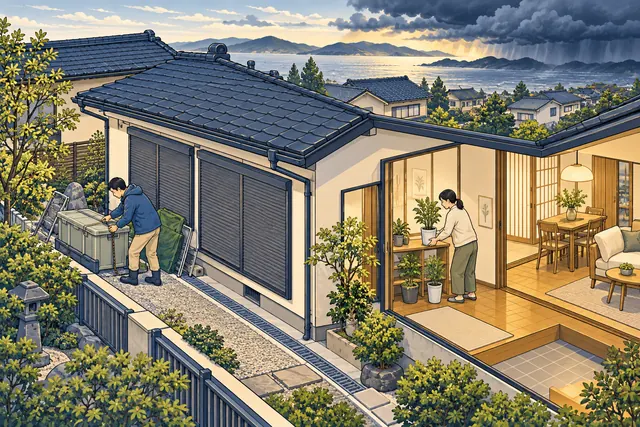
Before typhoons: building preparations without roof access
Ground checks before bad weather, contacts, and photos: an owner checklist to avoid post-disaster rush.
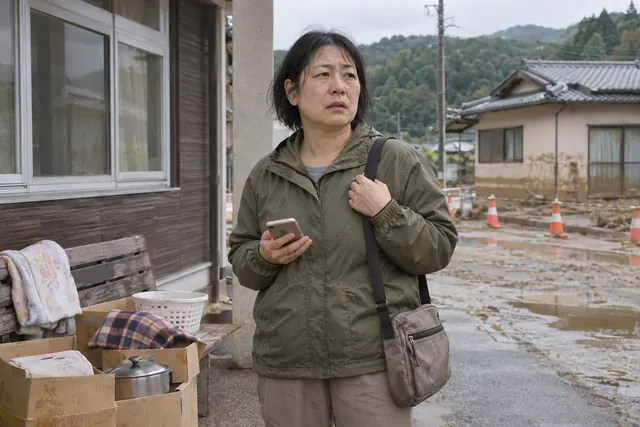
What should you do first when rain leaks into your home?
When water drips from the ceiling, organize what you can and must not do: safety, moving belongings, photos, and explaining the problem to providers.
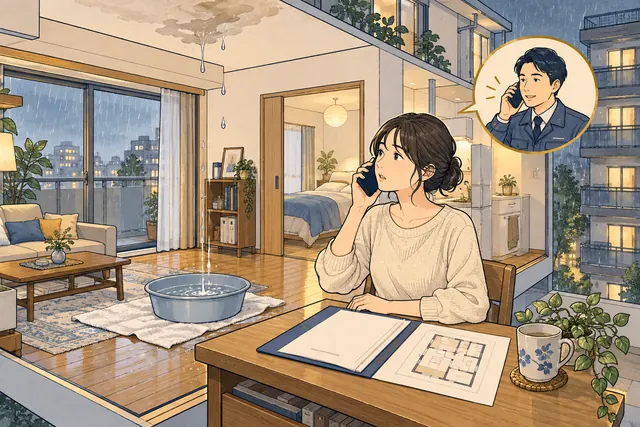
Rental rain or plumbing leaks, contacts before ordering repairs yourself.
When tenants notice problems: contacting management or landlords, photos, costs, and emergency actions.
After clearing the balcony, think about a night without power

Words used in this article
Short explanations, with the Japanese words you may hear in everyday life.
- Waterproofing 防水(bousui)
Materials or work that help keep water out of a building.
The right repair depends on the damage and its cause.
- Veranda or balcony ベランダ(beranda / barukonii)
An outdoor floor area reached from a room; it may contain equipment or routes for emergency escape.
Check building rules and keep escape routes and equipment clear rather than treating the whole area as private storage.
- Multi-unit housing 集合住宅(shuugou juutaku)
A building containing homes for several households, such as an apartment building.
Distinguish your own unit from shared areas and check building rules for repairs and evacuation.
Plain-language explanations by Tatemono Fukkyu Note. They are not an assessment of your building or an individual evacuation decision.